AI-assisted note, based on the text and a physical inspection of this copy.
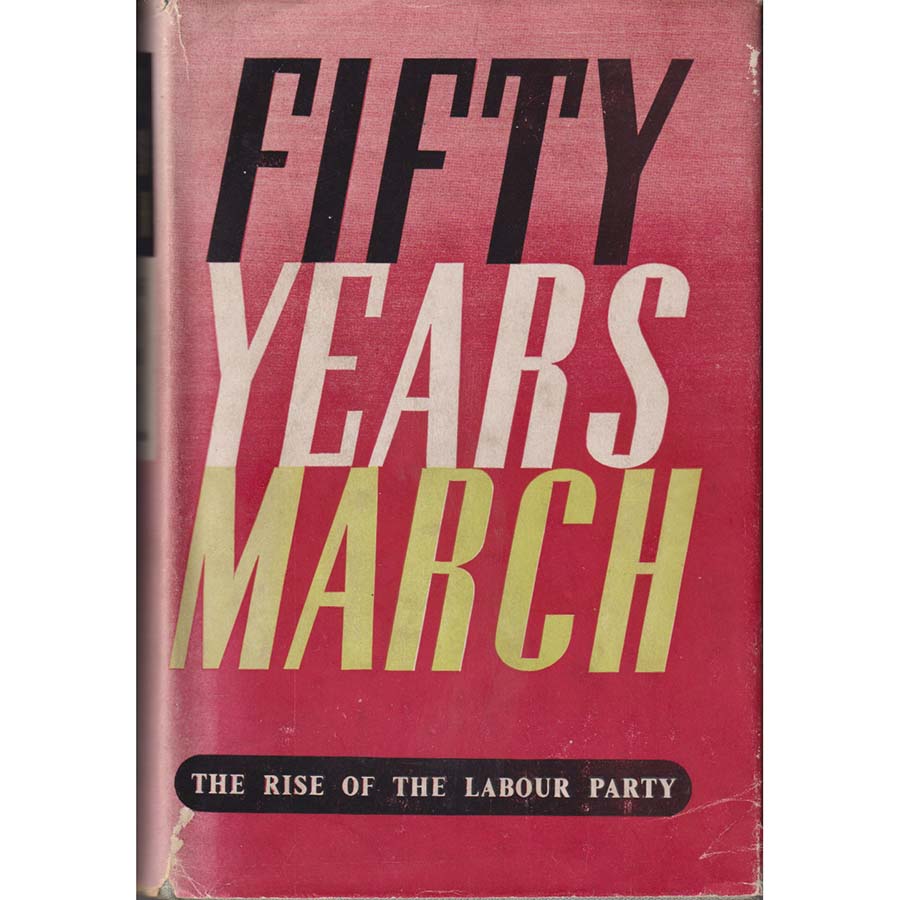
Fifty Years March - The Rise of the Labour Party, authored by Francis Williams and published in 1950 by Odhams Press, presents itself as a historical chronicle of the Labour Party's evolution over five decades. The cover design of the book is emblematic of its time, featuring bold typography and a somewhat austere colour palette that reflects the post-war sensibilities of the era. The paperback format, common in the mid-20th century, lends a certain accessibility to the text, allowing for widespread distribution among a populace eager to engage with contemporary political narratives. The feel of the pages and the typical glue-binding of the paperback serve as reminders of the era's print culture, where mass-market literature had begun to shape public discourse.
Williams, though not as widely recognised as some of his contemporaries, occupies a niche within the literary culture of the post-war period. His contributions to political commentary and history seem to have garnered him a degree of respect, though his biography appears limited in scope, revealing little about his life beyond his work. He is often associated with the Labour Party's narrative, but specific details regarding his career, influences, or other notable publications are scant. It raises questions about his standing in the literary canon and whether he was more of a chronicler than a thinker, suggesting that he might be a figure who has been eclipsed by more prominent voices in political literature.
The year 1950 was significant in British history, as it marked a time of reconstruction and social change following the devastation of World War II. The Labour Party, having won a decisive victory in the 1945 general election, was in the midst of implementing its ambitious agenda, which included the establishment of the National Health Service and various welfare reforms. This context is crucial for understanding the book's tone and purpose; it seeks to document the rise of a party that was not merely a political entity but a symbol of hope for many in a society grappling with the remnants of war and the promise of a new order. Williams' exploration of the Labour Party's journey reflects the zeitgeist of an era defined by the struggle for social justice and equality.
In terms of content, Fifty Years March is a blend of narrative history and political analysis. Williams chronicles the key events and figures that contributed to the Labour Party's rise, offering insights into the ideological battles and the socio-economic conditions that shaped its policies. The prose is straightforward, aimed at an audience that may not have extensive knowledge of political theory but is nonetheless interested in the developments surrounding the Labour movement. However, some readers may find the narrative lacking in depth or critical engagement with any counter-narratives, which could have enriched the text and provided a more rounded perspective on British politics during this transformative period.
The book's significance is further underscored by the fact that it was published just a few years after the end of the Second World War, a time when the nation was poised on the brink of new political realities. The Labour Party's achievements were fresh in the public's mind, and Williams' account served not only as a historical record but also as an affirmation of the party's promise and potential. This dual purpose—both chronicling historical events and celebrating political milestones—reflects a common trend in mid-20th century political literature, where authors often sought to inspire a sense of civic duty and engagement among their readers.
The cultural context surrounding the publication is also noteworthy. The immediate post-war years were marked by a burgeoning interest in social democracy and collective welfare, fuelled by the Labour Party's policies and their impact on everyday life. Williams, writing in this milieu, captures the fervour of the time while also attempting to provide a historical grounding for the Labour Party's ideology. Yet, as the political landscape has evolved, some of the optimism expressed in the text may feel dated, revealing the challenges of aligning historical interpretation with contemporary perspectives.
In examining Fifty Years March, one cannot overlook the limitations inherent in its publication. While it serves as a valuable historical document, its perspective is framed within the ideological confines of its time. Williams' work may not delve deeply into criticisms of the Labour Party or explore the complexities of its internal dynamics, which could leave modern readers wanting a more nuanced understanding of the party's legacy. The book’s straightforward narrative style might appeal to those seeking an introduction to the Labour Party's history but could frustrate those looking for a more critical analysis.
In conclusion, Francis Williams' Fifty Years March - The Rise of the Labour Party is a product of its time, encapsulating the spirit of optimism and change that characterised the immediate post-war years in Britain. Its place within the canon of political literature offers both a historical perspective and a reflection of the cultural milieu in which it was written. For those interested in the Labour Party's journey and the socio-political landscape of the mid-20th century, this book serves as a starting point, albeit one that may require supplementary readings to fully appreciate the complexities of the era. Crappy Old Books is proud to feature such works that reveal the layers of history and culture surrounding their publication.