AI-assisted note, based on the text and a physical inspection of this copy.
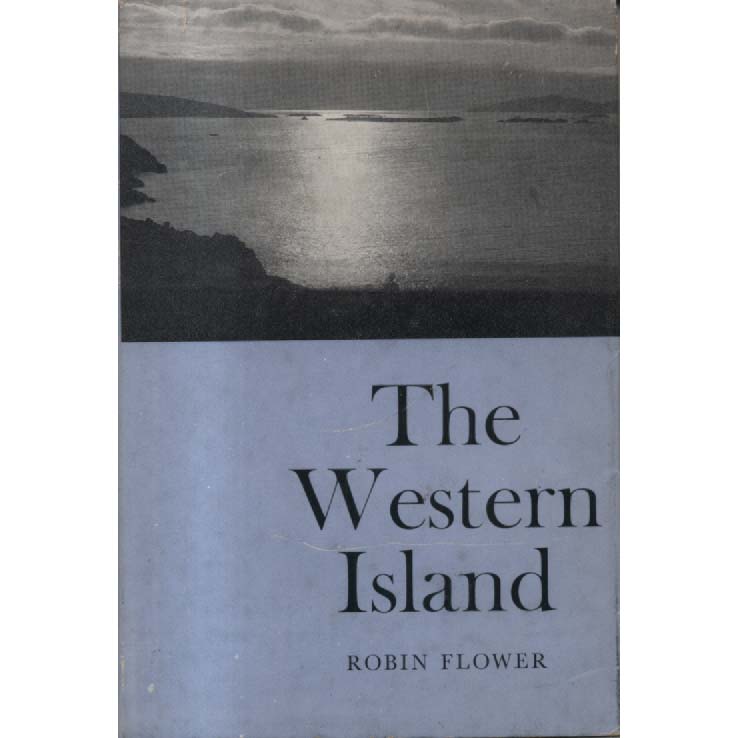
In the realm of mid-20th-century literature, Robin Flower's "The Western Island," published in 1946 by Oxford University Press, stands out as a curious artefact. This book, bearing a rather unassuming paperback cover that hints at its academic lineage, is a reflection of its time. The cover art, although simplistic by modern standards, encapsulates a certain period charm that is both nostalgic and slightly antiquated. The yellowed pages and the texture of the paper evoke a sense of history, inviting readers to delve into a work that, despite its age, retains an air of scholarly respectability.
The book itself presents a mix of cultural exploration and historical insight, likely intended for an audience that relishes the intersection of geography and cultural studies. The layout, typical of the era, features a clean, straightforward typography that prioritises readability over flamboyance, suggesting that the content is of paramount importance. The physical aspect of the book, with its modest size and weight, lends itself well to the notion of it being a companion for intellectual pursuits—perhaps a text to be carried along on a journey to the very landscapes it describes.
Robin Flower, the author, appears to be a somewhat obscure figure in the literary world, with limited documentation available about his life and career. What is discernible is that he had an involvement with Oxford University Press, a hallmark of academic credibility. However, details about his broader contributions to literature or his standing within literary culture remain elusive. This obscurity does not diminish the weight of his work but rather adds a layer of intrigue, prompting readers to ponder the life and thoughts of a writer who may have slipped through the cracks of literary history.
Published in 1946, "The Western Island" emerges from a post-war context marked by a yearning for exploration and understanding in a world reshaped by conflict. The immediate aftermath of World War II saw a heightened interest in travel literature and cultural studies, as societies sought to rebuild and reconnect with their histories and identities. This era was characterised by a burgeoning curiosity about the world beyond one’s immediate surroundings, making Flower’s work particularly resonant. The post-war optimism is palpable in the pages of this book, as it invites readers to consider not just the physical landscape of the Western islands but also the cultural and historical narratives that shape them.
The Western Island likely draws on the cultural zeitgeist of the time, echoing the sentiments of exploration embodied by other texts of the era. Readers in 1946 were increasingly aware of the complexities of identity, geography, and heritage, themes that Flower deftly weaves throughout his narrative. This work serves as both a geographical account and a cultural commentary, reflecting the curiosities of a world in transition. The style of writing, while perhaps not as flamboyant as contemporary prose, carries a weight of earnestness that resonates with the spirit of inquiry prevalent in the post-war period.
As one immerses in "The Western Island," one cannot help but feel a connection to the past, not just through the text itself but also through the very object of the book. The smell of aged paper and the tactile quality of the pages create an experience that goes beyond modern digital reading. It is a reminder of the time when books were cherished objects, meant to be physically engaged with and displayed proudly on a shelf. The paperback’s fading cover and delicate spine may suggest wear, but they also signify a history of readership, shared experiences, and the passage of knowledge through generations.
In summation, Robin Flower's "The Western Island" offers an intriguing glimpse into a specific cultural moment, wrapped within the tangible experience of a mid-century paperback. It stands as a testament to the enduring nature of printed literature amidst the shifting sands of time. While the author's obscurity may leave some gaps in understanding his full impact, the work itself remains significant, a cultural relic that continues to provoke thought about the connections between geography, culture, and history. For those seeking to explore scholarly texts from the past, Crappy Old Books serves as a delightful gateway to uncover such gems, reminding us that even the less celebrated works hold a value worth examining.