AI-assisted note, based on the text and a physical inspection of this copy.
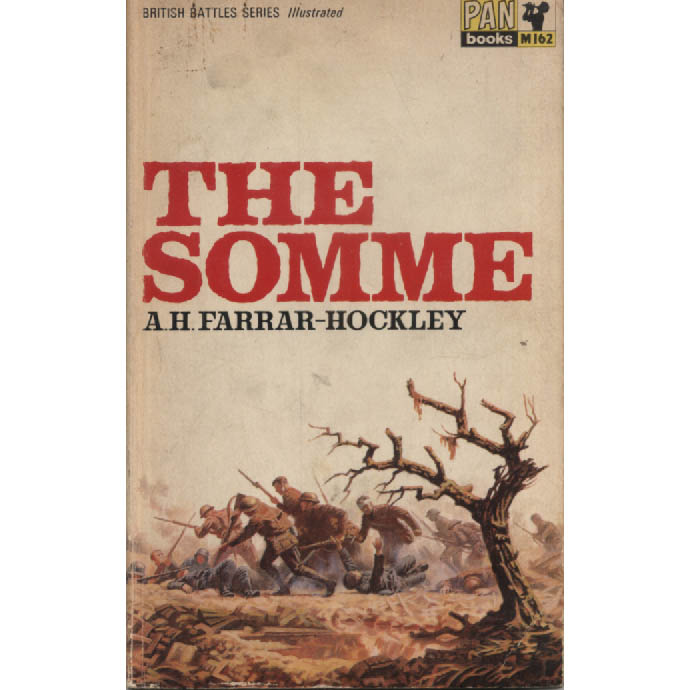
Published in 1966 by Pan Books, "The Somme" by AH Farrar-Hockley finds itself nestled in a specific cultural moment, one that oscillates between the lingering shadows of World War II and the burgeoning counterculture of the 1960s. The cover design, typical of its time, features a stark and somewhat gritty visual aesthetic that attempts to encapsulate the gravity of the subject matter. A sepia-toned image of the battlefield, perhaps, paired with bold text, beckons the reader into a world fraught with the echoes of history. This paperback vibe, though not particularly luxurious, aligns with the utilitarian publishing trends of the era, making it accessible to a broader audience, particularly those keen on military history.
The book itself presents a detailed examination of one of the most infamous battles of World War I, the Battle of the Somme. By focusing on the significant events and the human experiences within this context, Farrar-Hockley crafts a narrative that aims to educate as much as it intends to evoke emotion. However, the prose often stumbles into the realm of oversimplification, failing to capture the nuanced horrors and complexities that defined the battle. The text occasionally reads like a dry account, lacking a vivid engagement with the human condition, rendering it less impactful than it could be. The book is peppered with maps and photographs that serve as visual aids; however, these elements sometimes feel like mere afterthoughts, not fully integrated into the narrative fabric.
AH Farrar-Hockley appears to occupy a somewhat obscure position within the literary landscape. While not a household name, he is known primarily for his military writings. The details of his life remain sparsely documented, leaving readers with little context about his motivations or influences. This lack of biographical richness can detract from the reading experience; understanding the author's perspective often enhances the connection to the material. Nevertheless, Farrar-Hockley’s focus on military history has found a niche audience, indicating that there is a certain resonance with those particularly interested in the events of the Great War.
The year 1966 was a fascinating juncture in British history. The aftermath of World War II was still a prominent part of the national psyche, while the youth culture was beginning to flourish, influenced by the countercultural movements emerging in the United States. The public's engagement with history was often reflective as society grappled with the consequences of war and the meaning of peace. In this light, "The Somme" could have benefitted from the critical lens of its time; a deeper exploration of the war's impact on contemporary culture might have enriched its narrative. Instead, it presents itself as a more traditional historical account, perhaps missing the opportunity to engage with the evolving dialogue surrounding war and its implications.
As for the book’s reception, it seems to have found a home among enthusiasts of military history rather than achieving wide acclaim in literary circles. The prose, while informative, does not particularly sing, which may alienate readers who seek a more engaging narrative style. The book's utilitarian approach may serve as a double-edged sword—while it provides facts and figures, it often lacks the emotional resonance that can transform dry historical accounts into compelling stories. The work might be more beneficial as a reference point rather than a leisurely read.
In summary, "The Somme" by AH Farrar-Hockley is a culturally significant artefact from the 1960s, reflecting a time when Britain was still wrestling with its war-torn past. While it attempts to provide a comprehensive overview of a pivotal battle, it often falters in delivering a rich, engaging narrative. The book's presentation—both in terms of cover design and content—hints at the era's publishing culture, characterised by a focus on accessibility rather than artistic flourish. For those interested in military history, this book may hold some merit; however, for the casual reader, it may feel somewhat lacking. As part of the Crappy Old Books collection, it stands as a reminder of a specific historical moment, albeit one that might not resonate with the broader literary audience.