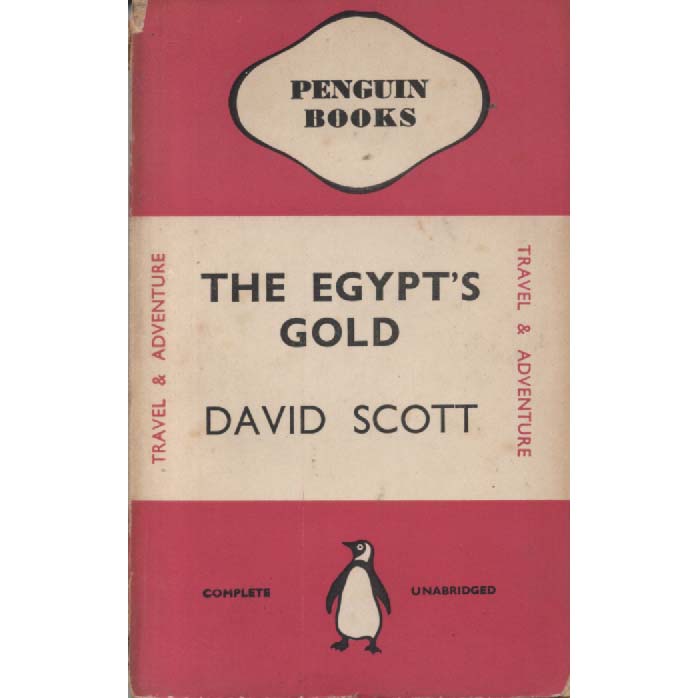
AI-assisted note, based on the text and a physical inspection of this copy.
Published in 1939, "The Egypts Gold" by David Scott emerges as a fascinating artefact from a time when the allure of Egyptology captivated the Western imagination. The cover design—typical of the period—features bold typography and a striking illustration that evokes the mystique of ancient Egypt, drawing readers into a world of treasure and adventure. The paperback format, with its slightly yellowed pages and a spine that hints at frequent reading, adds to its charm, encapsulating the essence of mid-20th century publishing culture. Penguin Books, known for making literature accessible, played a significant role in popularising genres like travel writing and historical fiction, and this title fits snugly into their catalogue as a reflection of both escapism and curiosity about the ancient world.
David Scott, the author of this tome, appears to be a somewhat obscure figure within literary circles. Information about him is scant, and his contributions to literature do not seem to have garnered significant attention outside of this title. While he may not be a household name, his work in "The Egypts Gold" reflects a broader interest in ancient civilisations that flourished in the 1930s, a period marked by archaeological discoveries and an increased fascination with Egypt's historical significance. Speculatively, one might surmise that Scott was keen to latch onto the zeitgeist of his time, contributing to a genre that brought the wonders of the past to a contemporary audience eager for adventure and mystery.
The year 1939 holds considerable weight in history, not just for the literary world but for global events as well. This was the year before World War II erupted, a period when many were seeking distraction from the looming darkness. The fascination with ancient Egypt during this time can be viewed as a cultural balm—an escape into the romanticism of a lost world where gold and glory were abundant. The interwar years had already seen a surge in interest in archaeology and Egyptology, spurred by notable discoveries such as Tutankhamun's tomb in 1922. This cultural backdrop undoubtedly influenced the creation and reception of "The Egypts Gold," positioning it within a landscape that valued exploration and the exotic.
In terms of content, "The Egypts Gold" offers a narrative that intertwines adventure with the historical allure of Egypt. Readers during its initial publication likely found it a thrilling escapade, a perfect retreat from the realities of a world on the brink of war. However, from a contemporary viewpoint, the prose may feel dated, and the storytelling could be perceived as lacking the depth and complexity that modern readers often expect. The dialogue may strike one as stilted, and character development could leave much to be desired, reflecting a time when narrative structures were perhaps more straightforward. Yet, it is these very elements that give the book its "crappy" charm, as it allows modern readers to peer back into an era of literature that prioritised plot over character nuance and thematic exploration.
Moreover, the book's exploration of ancient Egyptian culture, though likely steeped in romanticism and a Western lens, serves as a reminder of the enduring fascination with this ancient civilisation. The themes of greed and the quest for riches resonate throughout the text, echoing the very real allure that treasures from antiquity hold for both characters and readers alike. In this sense, "The Egypts Gold" can be appreciated not only as a story but also as a cultural commentary on the nature of desire and the human spirit's relentless pursuit of the extraordinary.
One cannot overlook the role of Penguin Books in shaping the literary landscape of the time. As a publisher, Penguin was instrumental in making literature more accessible to a broader audience, and "The Egypts Gold" stands as a testament to their vision. The choice to publish such a title reflects a keen understanding of market trends and the public's appetite for stories that transport them to foreign lands and ancient times. In this light, the book can be seen as both a product of its time and a reflection of the cultural currents that defined the late 1930s.
In summation, "The Egypts Gold" by David Scott is more than just a novel; it is a cultural object that encapsulates a moment in literary history and reflects the zeitgeist of the late 1930s. While the author may not be well-documented, and the narrative may exhibit the hallmarks of its era, the book remains an intriguing snapshot of a time when Egypt's ancient treasures were a source of wonder and adventure. For those who appreciate the quirks of mid-20th century literature, this title is a worthy addition to the collection of Crappy Old Books, offering both nostalgia and a peek into the past that shaped our present literary tastes.