AI-assisted note, based on the text and a physical inspection of this copy.
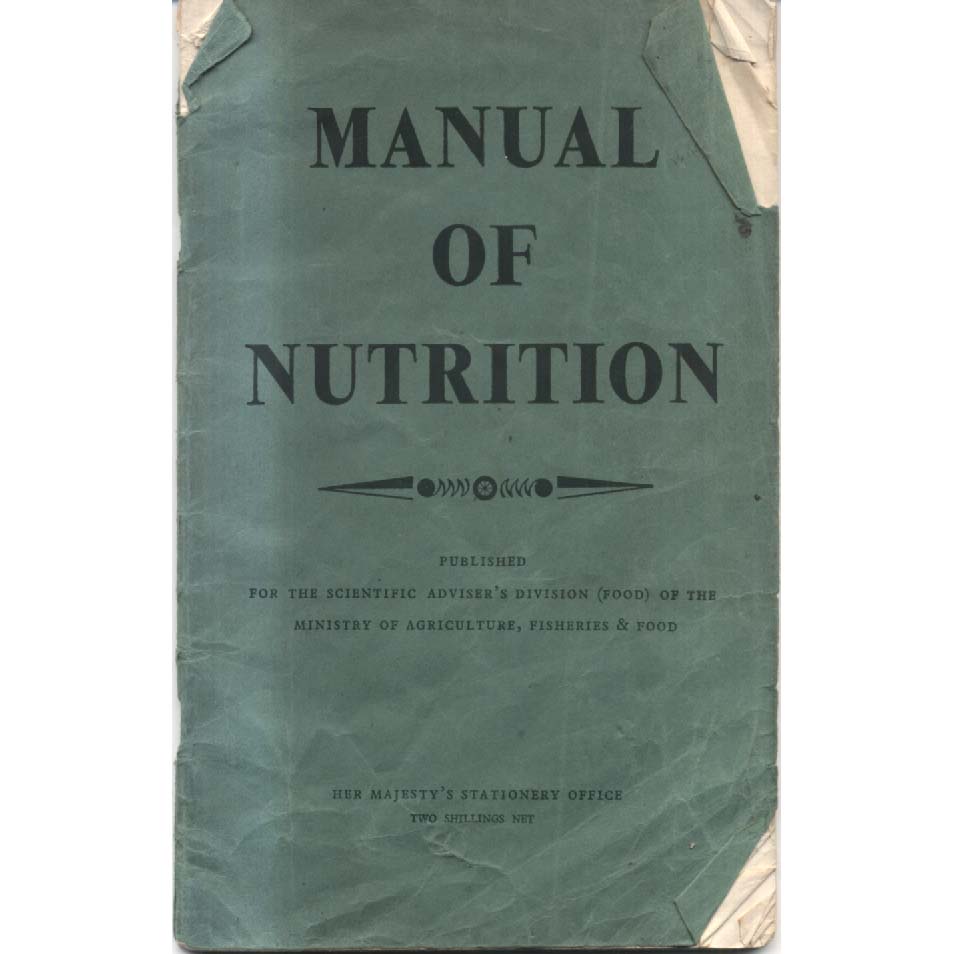
The Manual of Nutrition, published in 1955 by the Ministry of Agriculture Fisheries and Food, stands as a curious artifact from a time when nutrition was beginning to emerge as a significant public concern. The cover is a quintessential representation of mid-20th century governmental publications, with its utilitarian design lacking any visual flair. The muted colours and straightforward typography suggest a serious, no-nonsense approach to the subject matter, indicative of the era's preference for functionality over aesthetics in educational texts. This reflects a time when the British public was grappling with the aftermath of World War II, where food scarcity and nutrition were critical issues that necessitated government intervention and guidance.
As a cultural object, this manual encapsulates the transition in public consciousness regarding nutrition. The 1950s marked a period of burgeoning interest in health and dietary practices, influenced by both scientific advances and a growing awareness of the link between food and health. The manual's focus on nutritional guidelines would have been a valuable resource for households striving to adapt to new dietary recommendations and practices in a rapidly changing post-war society. The text is steeped in the bureaucratic tone typical of governmental publications, which can make it feel dry and uninviting to the modern reader. However, this very tone also reinforces its authority, as it was produced by a governmental body tasked with the welfare of the nation’s diet.
The author, the Ministry of Agriculture Fisheries and Food, is an entity rather than an individual, which contributes to the manual's authoritative voice. This ministry has played an essential role in shaping agricultural policy and food standards in the UK, serving as a primary source of information and guidance on nutrition for decades. While the ministry itself is well-documented, the absence of individual authorship in this text makes it difficult to attribute personal perspectives or stylistic nuances typically found in works by individual authors. Thus, the manual reads more like a collective voice of policy rather than a personal narrative, reflecting the institution's objectives rather than individual insight.
Published in 1955, the Manual of Nutrition arrived at a pivotal moment in British history. The post-war years were characterised by a collective effort to rebuild the nation, and food security was paramount. The manual is a reflection of the era's increasing reliance on scientific research to inform public health, as well as the gradual shift towards a more regulated food industry. This period also saw the rise of the welfare state, with the government taking a more active role in the lives of its citizens, particularly concerning health and nutrition. The publication's intent was likely to educate the public on nutritional science, enabling individuals to make informed choices in a landscape still recovering from the tribulations of war and rationing.
In examining the contents of the manual, one can appreciate the straightforward presentation of nutritional information. It is filled with tables, charts, and guidelines that are reminiscent of mid-century educational materials, intended to be as informative as possible without the embellishments that modern readers might expect. The language is formal and technical, which may alienate some contemporary readers but would have been quite standard for a governmental publication of that time. The manual's emphasis on practical dietary advice reflects a proactive approach to public health, aiming to empower citizens with knowledge to improve their own well-being.
What stands out in the Manual of Nutrition is its historical significance rather than its literary merit. It serves as a window into the dietary concerns of the 1950s and the governmental approach to addressing these issues. While it may lack the engaging narratives or personal anecdotes often found in contemporary nutrition literature, it provides a snapshot of a critical moment in the evolution of public health policy. The manual is a reminder of how far nutrition science has come and how public discourse around food has evolved since its publication.
In conclusion, the Manual of Nutrition is a fascinating cultural object that reflects the complexities of its era. It embodies the serious, bureaucratic tone of the mid-20th century while addressing vital issues of nutrition and health in a post-war Britain. The work serves as a historical document that illustrates the government's role in shaping public dietary practices, even if it may not engage readers in the way modern health literature tends to. For those interested in the history of nutrition and public health, or for aficionados of governmental texts, this manual is a valuable piece of history that provides insight into the past. As with many items reviewed on Crappy Old Books, it is an intriguing reminder of how our understanding of nutrition has evolved over time.