AI-assisted note, based on the text and a physical inspection of this copy.
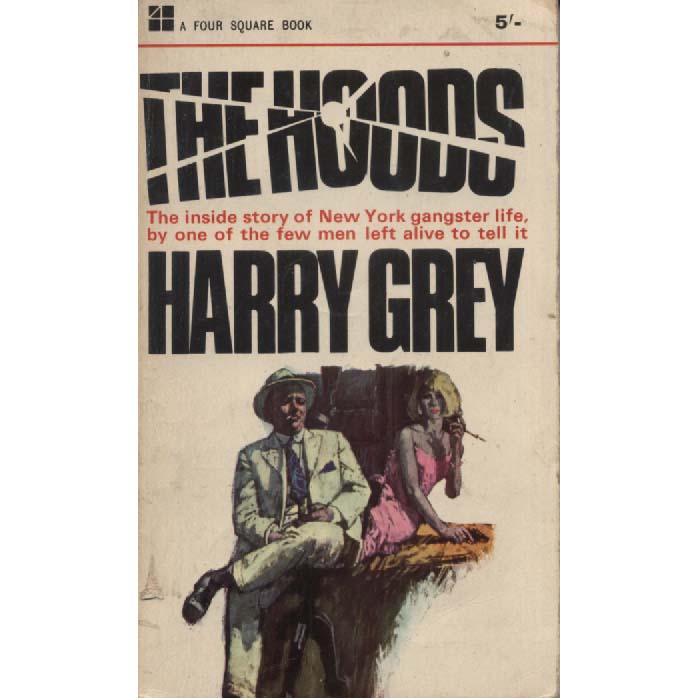
Harry Grey's novel The Hoods, first published in 1965 by Four Square, embodies the gritty underbelly of urban life during its era. The cover design, a rather vivid and simplistic representation of a shadowy figure, hints at the themes of crime and mystery that permeate the narrative. As a paperback, it has the classic feel of mid-20th century mass-market publications, with a texture that suggests a certain wear, evoking a sense of nostalgia for those who appreciate the tactile experience of reading physical books. The book's dimensions and layout reflect the standard formatting of its time, making it an easily accessible read for the average person, further underscoring its place in popular culture.
Harry Grey, the pen name of the author, remains an enigmatic figure in literary circles. There is limited biographical information available regarding his life and career, which casts a shadow of obscurity over his contributions to the literary landscape. Speculation about his background suggests that he may have had experiences that informed the crime-ridden narratives he crafted, yet concrete details about his life or other works are elusive. This obscurity adds an intriguing layer to The Hoods, as readers are left to ponder the motivations and experiences that led Grey to write such a raw portrayal of life on the streets.
The publication year of 1965 places The Hoods within a unique cultural context, marked by significant social upheaval and change. The post-war era had ushered in a wave of disillusionment, particularly among the younger generation, who were increasingly questioning authority and societal norms. This atmosphere of rebellion and exploration of the darker sides of human nature is reflected in the narrative, which tackles themes of loyalty, betrayal, and the struggle for survival. The rise of crime fiction during this time also aligns with the growing public fascination with anti-heroes and the complexities of morality, making Grey's work a product of its time, both in style and substance.
In terms of its narrative structure and style, The Hoods delivers a straightforward yet impactful story that seeks to immerse the reader in its gritty realism. While the prose may not exhibit the literary finesse of some of its contemporaries, it remains engaging, utilising a raw and unpolished style that complements the subject matter. The dialogue, often punctuated with street vernacular, lends authenticity to the characters and their environment. This unrefined narrative technique contributes to the novel's overall atmosphere, effectively drawing the reader into the tumultuous world Grey depicts.
The themes within The Hoods resonate with those found in many crime novels of the time, yet Grey's approach feels distinct in its unabashed exploration of the human condition. The characters are not merely archetypes but rather individuals shaped by their circumstances, reflecting the complexity of urban life. This portrayal invites readers to engage with the moral ambiguities present in the story, prompting reflection on the choices that define us.
The reception of The Hoods at the time of its release likely mirrored the broader cultural fascination with crime and the anti-hero narrative. Readers in the 1960s were drawn to stories that challenged the status quo, and Grey's work fits neatly into this trend. The novel’s exploration of loyalty among criminals, the harsh realities of street life, and the ever-present threat of violence would have resonated with an audience eager for tales that reflected their own experiences and societal discontent.
In the context of Crappy Old Books, The Hoods serves as a fascinating artifact of its time, encapsulating the essence of mid-20th century crime fiction. While it may not be heralded as a classic in the traditional sense, it provides valuable insights into the cultural landscape of the 1960s and the evolution of popular literature. The novel's rough edges and unrefined style can be appreciated for their authenticity, offering a glimpse into the gritty realities that many sought to escape or understand through literature.
Ultimately, The Hoods stands as a testament to the era's literary culture, reflecting societal concerns and the complexities of human nature. Whether one views it as a relic of its time or a meaningful exploration of crime and morality, it undoubtedly holds a place within the pantheon of Crappy Old Books that continue to shape our understanding of literary history.