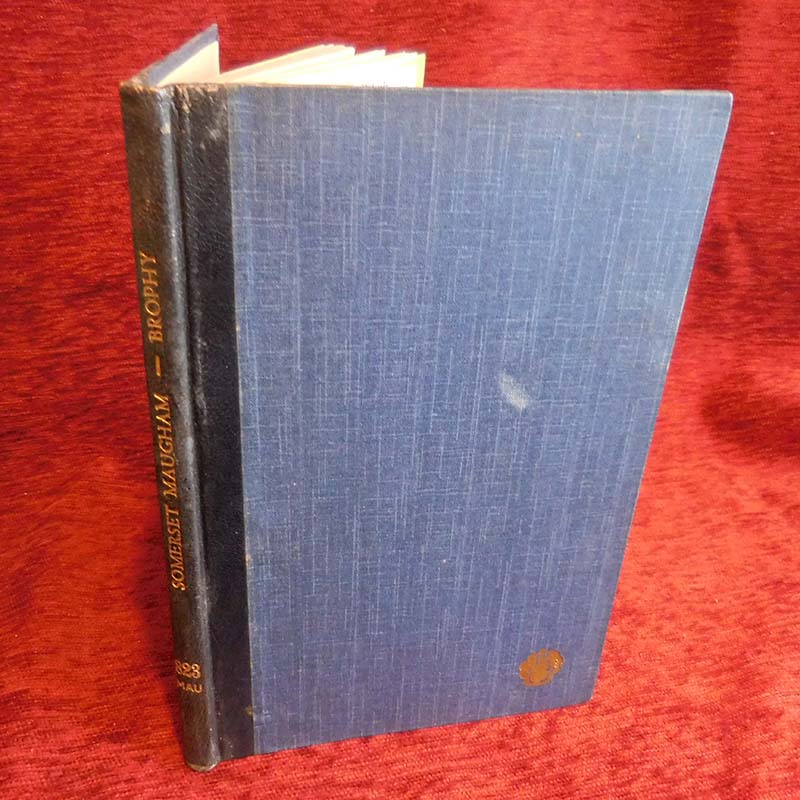
AI-assisted note, based on the text and a physical inspection of this copy.
John Brophy's "Somerset Maugham," published in 1952 by the National Book League, stands as a curious cultural artifact, reflecting not only the literary preoccupations of its time but also the stylistic and editorial choices that define mid-20th century biographical writing. The cover design is emblematic of the era, presenting a rather austere yet dignified aesthetic that one might expect from a book intended for a literary audience. The muted colour palette, possibly meant to evoke the gravitas of Maugham's literary contributions, aligns with what one would find on bookshelves of the period, catering to an audience eager for intellectual engagement rather than flashy marketing. This paperback vibe, with its slightly worn edges and textured paper, invites readers to delve into a world where the prose is expected to be as rich as the author’s own legacy.
As a cultural object, "Somerset Maugham" encapsulates the post-war British literary scene, a time when the literary canon was being both upheld and interrogated. The choice of Maugham as a subject reflects a period in which his works were still resonating with readers and critics alike, yet also hints at a certain nostalgia for a literary style that was becoming overshadowed by modernist and postmodernist movements. Brophy's treatment of Maugham's life and works can be seen as part of a broader trend during the 1950s, where biographical explorations were key to understanding the complexities of literary figures who had shaped the earlier part of the century. The book likely served as a means for readers to connect with Maugham's enduring relevance, even as new voices began to emerge.
John Brophy himself appears to be an obscure figure in the landscape of literary criticism and biography. Limited information is readily available about his background or later works, suggesting he may not have achieved significant recognition outside of this specific undertaking. This lack of documentation raises questions about his motivations and the depth of his engagement with Maugham’s oeuvre. Was he a passionate admirer or merely an academic tasked with a fleeting project? This mystery adds an intriguing layer to the reading experience, as one grapples with the idea that the author of this biography may not have left a considerable mark on literary culture beyond this work.
The year 1952 was significant in many ways, especially within the context of British literature. It was a time characterized by a mixture of traditionalism and the burgeoning influence of modern perspectives. The aftermath of World War II had left a profound impact on society, leading to a questioning of established norms and values. In this light, Brophy's examination of Maugham could be seen as both a celebration of pre-war literary conventions and an attempt to reconcile them with a changing cultural landscape. Maugham himself was a complex figure, often straddling the lines between popular appeal and literary seriousness, and Brophy's biography must navigate these contradictions while attempting to present a coherent narrative of Maugham’s life.
Additionally, the publication by the National Book League is noteworthy as it reflects the organisation's commitment to promoting literary engagement and appreciation. The League was known for its role in championing literature, particularly in the post-war period when there was a renewed interest in reading and intellectual discourse. This context enhances the value of Brophy's work; he was not merely writing a biography for commercial gain but participating in a broader movement to elevate literary discussion and foster a community of readers. The 1950s were rife with book clubs and literary societies, and Brophy's book likely found its way into many of these gatherings, prompting discussions about Maugham's contributions and the state of British literature.
The text itself, while not widely regarded as a definitive biography, offers insights into Maugham's life and works that may appeal to dedicated fans and scholars. Brophy’s style is reflective of the period's biographical writing, which often favoured a more narrative-driven approach rather than the critical analysis that would come to dominate later works. This gives "Somerset Maugham" a certain charm, yet also reveals its limitations; it may lack the depth of analysis that contemporary readers often expect, relying instead on anecdotal evidence and surface-level observations. The book serves as a gentle introduction to Maugham’s world, perhaps best suited for those new to his work rather than seasoned scholars.
In conclusion, "Somerset Maugham" by John Brophy stands as a valuable cultural object within the literary landscape of the 1950s. It embodies the tension between tradition and modernity, reflecting an era poised between the reverence for established literary figures and the emergence of new voices. While the author remains largely an enigma, the book itself offers a glimpse into the ongoing dialogue about Maugham's significance in British literature. For those curious about the intersection of biography and literary culture, Brophy's work is a worthwhile exploration, albeit one that reminds us of the limitations of its time. As with many works featured in Crappy Old Books, it serves as a reminder of the myriad ways in which literature continues to be understood and appreciated, even when the context and authorship may be less than clear.