AI-assisted note, based on the text and a physical inspection of this copy.
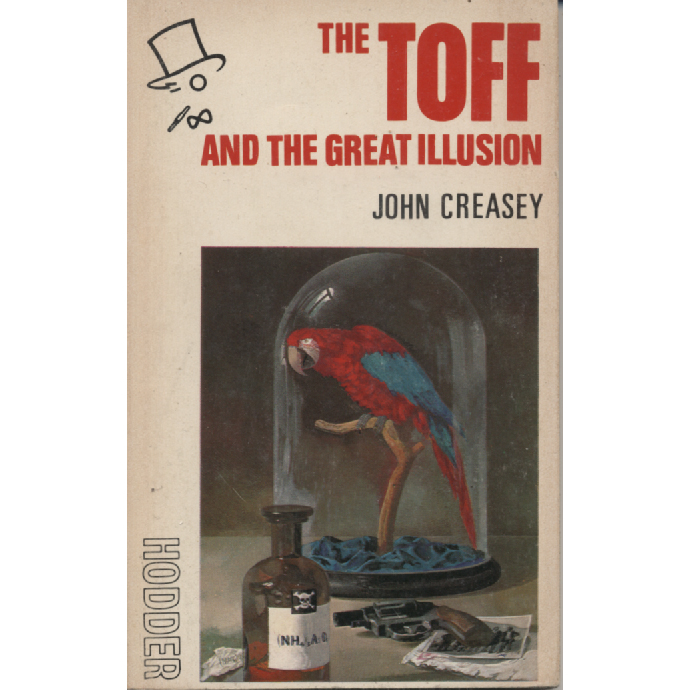
In the realm of mid-20th-century crime fiction, John Creasey’s The Toff And The Great Illusion, published in 1966 by Hodder, stands as a peculiar artifact. The cover design, with its strikingly bold typography and a somewhat garish palette, reflects the visual aesthetics of its time, capturing a sense of urgency and intrigue that appeals to the casual observer. The paperback format, lightweight and digestible, invites readers to delve into its pages during a commute or a leisurely afternoon, typical of the era's publishing trends that favoured accessibility and mass-market appeal. However, beneath this superficial allure lies a narrative that feels both dated and somewhat formulaic, emblematic of the genre's conventions during this period.
Creasey, a prolific British author, is somewhat of a shadowy figure in the literary landscape. While he is widely recognised for his contributions to crime and detective fiction, the specifics of his life remain shrouded in obscurity. Born in 1904, Creasey published over 600 works under various pseudonyms, including the popular character of the Toff himself—a gentleman sleuth with a penchant for solving crimes in high society. Despite his extensive output and a loyal following, he does not enjoy the same level of recognition as some of his contemporaries, suggesting that his impact, while significant in its own right, has been somewhat eclipsed in the annals of literary history. There is a certain irony in that, given he created beloved characters and narratives that entertained many, yet his biography is not as well-documented or celebrated as those of his peers.
The year 1966 was a notable moment in cultural history, marked by significant shifts in societal norms and a burgeoning counterculture. The post-war era had ushered in a wave of optimism and change, and literature was increasingly reflecting this tumultuous landscape. The crime genre, particularly, was evolving; readers were drawn to complex characters and gritty realism. However, Creasey’s work, while engaging in its own right, feels more aligned with the traditions of earlier detective fiction, often relying on tropes and archetypes that were becoming less favourable. This adherence to formulaic narratives can seem quaint to modern readers, yet it also serves as a reminder of the genre's roots, akin to a time capsule revealing the tastes and expectations of its audience.
The narrative of The Toff And The Great Illusion revolves around a seemingly simple premise that gradually unfolds into a more intricate mystery. The titular character, the Toff, embodies a quintessentially British archetype: the clever, resourceful gentleman who navigates the upper echelons of society while exposing the underbelly of crime lurking beneath. Creasey’s writing style is straightforward, lacking the lyrical finesse of some of his contemporaries, but it is nonetheless effective in driving the story forward. The plot twists, while perhaps predictable to seasoned readers of the genre, still manage to create a sense of engagement, drawing one into the world of high stakes and intrigue.
As an object of cultural significance, the book encapsulates a particular moment in the publishing landscape where mass-market paperbacks began to dominate. The tactile experience of holding the book, with its slightly yellowed pages and the faint scent of aged paper, transports readers back to an era when stories were often consumed in the quiet corners of public transport or during idle evenings. There is a charm in the physicality of such books, each creased spine and dog-eared page telling tales of previous readers and their journeys through the narrative. Yet, one cannot help but notice how the text itself reflects the changing tides of literary taste, grappling with the balance between maintaining traditional storytelling and responding to the new demands of a shifting audience.
Creasey's writing is emblematic of a time when the genre was still finding its footing in a rapidly evolving cultural landscape. His work, while entertaining, often lacks the depth and psychological complexity that would soon characterise the genre in subsequent decades. The Toff serves as a reminder of the escapist pleasures of crime fiction, where the allure of the mystery often overshadowed the need for character development or sophisticated prose, making it a fascinating study for those interested in the evolution of the genre.
In conclusion, The Toff And The Great Illusion stands as a notable example of 1960s crime fiction, offering readers a glimpse into the conventions and expectations of its era. While John Creasey's literary legacy may not shine as brightly as some of his peers, his contributions to the genre are undeniable. The book is not merely a story but a cultural object that reflects its time, complete with the imperfections and charms of its publication. For those interested in exploring the evolution of crime fiction, this title from Crappy Old Books offers a delightful if not entirely groundbreaking, experience.