AI-assisted note, based on the text and a physical inspection of this copy.
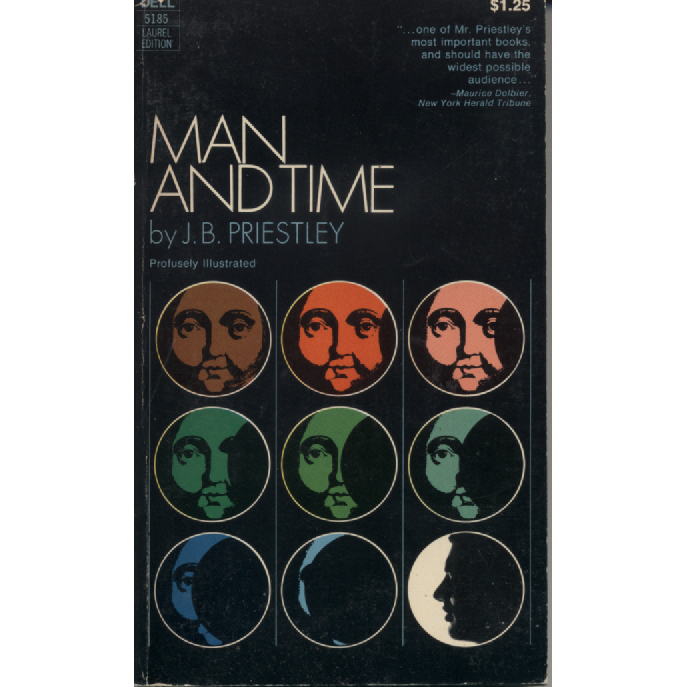
Man And Time by J.B. Priestley, published in 1968 by Dell Publishing, presents itself as an intriguing exploration of the relationship between humanity and the concept of time. The cover design, typical of the era, features bold typography that encapsulates the essence of the late 1960s with a somewhat psychedelic flair. The colour palette is a mix of earthy tones interspersed with vibrant shades, reminiscent of the cultural upheaval and artistic experimentation of the time. This paperback edition, with its slightly worn edges and the faint scent of aged paper, transports readers back to a period where philosophical musings were often layered with existential inquiry, a defining feature of Priestley's oeuvre.
J.B. Priestley is a name that carries weight in British literature. Born in 1894, he was not only a novelist but also a playwright and essayist, known for his deft commentary on social issues and human behaviour. His works often reflect a keen awareness of the changing tides of British society, and though he is perhaps best known for his play An Inspector Calls, he produced a wide array of literary works. His involvement with the literary culture of the early to mid-20th century firmly establishes him as a significant figure in British literary history, even if he occasionally slips into obscurity in contemporary discussions. Priestley's ability to weave intricate narratives with philosophical underpinnings has left an indelible mark on readers and writers alike.
Published in a transformative year, 1968 marks a pivotal moment in both literary and cultural history. This was a time when societal norms were being challenged, and traditional narratives were frequently scrutinised and redefined. The counterculture movement was in full swing, and literature was no exception to this zeitgeist. Works emerging from this period often reflect a desire for change and a deeper understanding of the self in relation to society. In this context, Man And Time fits neatly into the literary landscape, serving as a philosophical treatise that invites readers to ponder their existence against the relentless march of time.
The narrative style of Priestley in Man And Time is both engaging and thought-provoking. He employs a conversational tone that balances accessibility with intellectual rigor. The text is peppered with reflections on the nature of time, oscillating between personal anecdotes and broader philosophical musings. This approach encourages readers to not only engage with the content but to reflect on their own experiences and perceptions of time. However, some may find the book's meandering nature a bit disjointed, as Priestley traverses various themes and ideas without a clear linear progression. This can lead to moments of confusion, especially for those not well-versed in philosophical discourse.
From a print culture perspective, Man And Time embodies the characteristics of 1960s publishing trends. The paperback format was gaining popularity, making literature more accessible to the masses. Dell Publishing, a prominent publisher known for its mass-market paperbacks, played a crucial role in disseminating a range of literary works during this time. The tactile experience of holding the book, with its soft cover and slightly yellowed pages, adds an element of nostalgia, connecting readers to a past era of literature that, while sometimes overlooked, has shaped contemporary reading habits.
In terms of thematic exploration, Priestley grapples with the fluidity of time and its impact on human experience. He delves into how time shapes our identities, relationships, and perceptions of reality. His reflections resonate with the reader, offering a blend of personal insight and broader societal commentary. However, some critiques might argue that the philosophical depth can be overwhelming, leading to a sense of disconnection from the narrative itself. This tension between narrative flow and philosophical inquiry is a hallmark of Priestley's work, marking him as a complex, if sometimes polarising, figure in literature.
Despite its challenges, Man And Time stands as a significant contribution to the philosophical literature of the 20th century. It invites readers to ponder profound questions about existence, memory, and the passage of time. For those willing to engage with its complexities, the book offers a rewarding experience that encourages introspection and dialogue about the human condition.
In conclusion, J.B. Priestley's Man And Time is a fascinating cultural object that encapsulates the spirit of its time. Its exploration of humanity's relationship with time remains relevant, offering a lens through which readers can examine their own lives and experiences. While the book may not be without its flaws, it is undoubtedly a worthwhile read for those interested in the intersections of literature, philosophy, and culture. The paperback vibe, combined with the author's reflective prose, resonates with the ethos of Crappy Old Books, showcasing literature's enduring power to provoke thought and inspire discussion.