AI-assisted note, based on the text and a physical inspection of this copy.
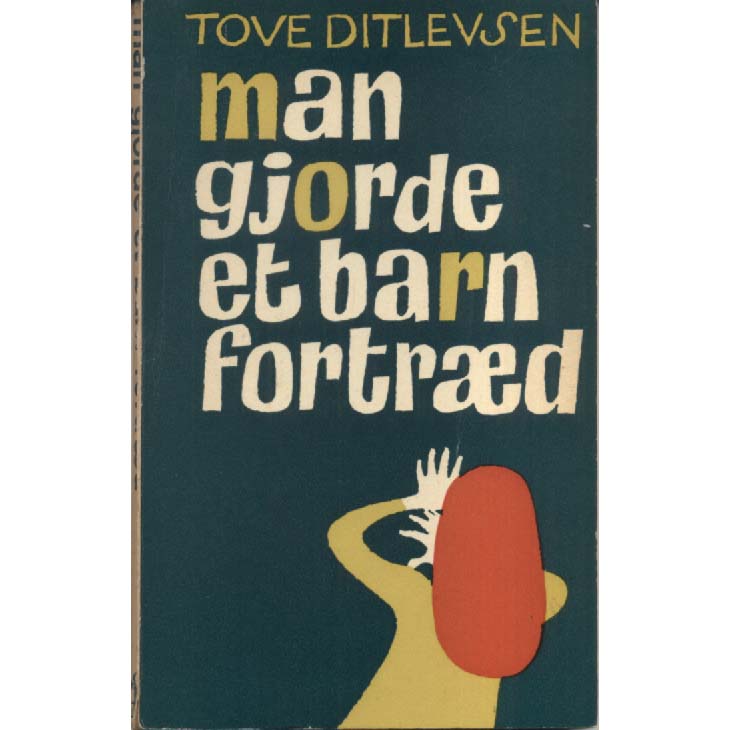
"Man Gjorade et Barn Fortraed," published in 1962 by Steen Hasselbalchs Forlag, is a fascinating specimen of mid-20th-century literature that embodies the complexities of familial relationships and societal expectations. The cover design, though simple, reflects the aesthetic norms of the time, with muted colours and a minimalist approach that invites the reader to ponder the text within. The paperback format, common in the era, suggests accessibility yet carries a certain fragility, reminiscent of the delicate themes that Ditlevsen explores throughout her works. The feel of the paper and the slightly worn edges of this particular copy speak to its age, hinting at the countless hands that have turned its pages over the decades, each one leaving a trace of their interpretation and engagement with the text.
Tove Ditlevsen is a name that resonates within the Danish literary scene, though she may not be as widely known internationally. Born in 1917, she was a prolific figure, contributing significantly to poetry, novels, and autobiographical works. Ditlevsen's writing often delves into the intricacies of women's lives and the struggles they face within the confines of societal norms, making her a critical voice in the conversation surrounding gender and identity during her time. While her works have garnered attention in Denmark, her global recognition has been somewhat limited, making her a compelling study in the broader context of literary culture—an author whose contributions are perhaps overshadowed by more prominent contemporaries.
The year 1962 was a pivotal time in many parts of the world, marked by social upheaval and cultural shifts. In literature, this period was characterised by a move towards more introspective and psychologically nuanced narratives, reflecting the growing interest in the complexities of human emotions and relationships. Ditlevsen's work fits neatly within this framework, as she explores the themes of motherhood, identity, and societal expectations with a sensitivity that was perhaps ahead of its time. The cultural landscape of the early 1960s, rife with discussions around feminism and personal freedom, provides an intriguing backdrop for her exploration of the female experience, making her work not just a reflection of her immediate context but a prescient commentary on the evolving role of women in society.
The narrative within "Man Gjorade et Barn Fortraed" unfolds in a manner that is both engaging and thought-provoking, drawing the reader into the inner world of its protagonist. Ditlevsen’s prose is marked by a keen psychological insight that allows for a deep dive into the emotional landscapes of her characters. However, the book is not without its pitfalls; at times, the pacing can drag, and the introspection may feel excessive, potentially alienating some readers. Nevertheless, these very elements serve to reinforce the themes of isolation and the struggle for identity that Ditlevsen so expertly weaves throughout her narrative.
The print culture of the early 1960s was also significant, as it marked a shift in how literature was consumed and perceived. The rise of mass-market paperbacks made literature more accessible to the general public, breaking down barriers that once restricted readership to an elite few. This democratization of literature coincided with the themes Ditlevsen explores—how the roles of women were becoming more visible and how their voices were beginning to demand recognition in a world that often silenced them. The very existence of "Man Gjorade et Barn Fortraed" as a paperback speaks to this shift, as it became part of a larger discourse on gender and identity that was gaining momentum during this era.
In terms of literary style, Ditlevsen’s approach in this work is both poetic and stark, employing a language that is rich yet accessible. Her ability to capture the subtleties of human emotion and the complexities of relationships makes her writing resonate on multiple levels. The text encourages readers to reflect not just on the characters’ experiences but also on their own perceptions of motherhood and the societal constructs that shape these experiences. This reflective quality invites a deeper engagement with the text, prompting discussions that transcend the confines of the narrative itself.
While "Man Gjorade et Barn Fortraed" may not have achieved the same level of recognition as other literary works from the same period, it stands as a testament to Tove Ditlevsen's unique voice and perspective. The book is a cultural object that invites readers to explore the nuances of identity, motherhood, and societal expectations, making it a valuable addition to the canon of mid-20th-century literature. For those interested in the evolution of women's literature, Ditlevsen's work offers a glimpse into the struggles and triumphs of her characters, reflecting larger themes that continue to resonate today.
In conclusion, "Man Gjorade et Barn Fortraed" is more than just a narrative; it is a cultural artifact that encapsulates the spirit of its time while also addressing timeless themes. As readers engage with this book, they not only discover the intricacies of Ditlevsen's writing but also participate in a broader dialogue about the roles and representations of women in literature and society. For more insights into such works, Crappy Old Books provides an engaging exploration into the past, revealing the hidden gems and cultural narratives that shape our literary landscape.