AI-assisted note, based on the text and a physical inspection of this copy.
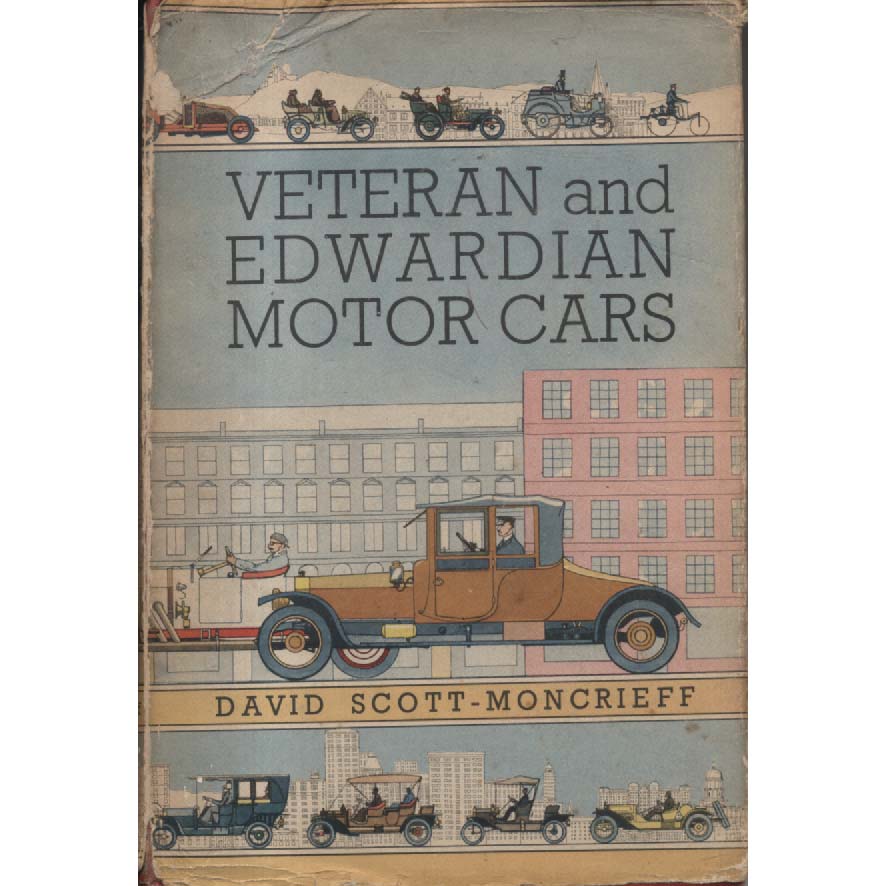
In the realm of vintage automotive literature, Veteran and Edwardian Motor Cars by David Scott-Moncrieff stands as a peculiar artifact, encapsulating a love for the motor vehicles that defined an era. The book, published in 1955 by BT Batsford Ltd, presents a curious blend of nostalgia and historical documentation. With a cover that exudes the faded charm of mid-20th century design, it features a monochrome illustration of an early motor car, hinting at the bygone elegance of the vehicles it seeks to celebrate. The overall presentation is typical of the era’s paperback aesthetics, boasting a somewhat utilitarian layout that prioritises function over flair. There is an undeniable vintage vibe that permeates the book, from the typeface to the paper quality, which contributes to its charm as a cultural object rather than merely a reference work.
The author, David Scott-Moncrieff, seems to occupy a somewhat obscure position within the pantheon of automotive writers. There is limited information available regarding his life or career, which raises questions about his prominence in the literary landscape. It appears that he is not widely known outside niche circles dedicated to automotive history. This obscurity does cast a shadow on the reader's understanding of his authority on the subject. Nonetheless, Scott-Moncrieff’s dedication to chronicling the era of veteran and Edwardian motor cars suggests a passion for the topic, hinting that he may have been a devoted enthusiast rather than a mainstream author.
Published in 1955, Veteran and Edwardian Motor Cars emerges in a post-war Britain that was beginning to rekindle its fascination with classic cars and the nostalgia associated with them. The 1950s saw a cultural shift where the British public began to look back fondly on the early days of motoring, coinciding with a revival of interest in heritage and craftsmanship. This was a time when the automobile was not just a means of transport but a symbol of freedom and modernity. In this context, Scott-Moncrieff’s work serves as a bridge between the past and the present, appealing to both car aficionados and those nostalgic for a simpler, more elegant time.
The content of the book itself is a rich tapestry of descriptions and illustrations that delve into the intricacies of early motor vehicles. Scott-Moncrieff attempts to catalogue various models, offering insights into their design and engineering. However, one might find that the prose occasionally suffers from an uneven tone, oscillating between technical jargon and romanticised language that can be jarring. The illustrations, while charming, are often black-and-white photographs that may feel insufficient to convey the vibrant history of these automobiles. This somewhat stark visual presentation aligns with the book’s overall mood—reflective, yet lacking the dynamism one might expect from a topic as exhilarating as early motoring.
As one flips through the pages, it becomes evident that the book reflects a specific time and place in automotive culture. The author’s enthusiasm for the subject is palpable, yet it sometimes feels overshadowed by an academic approach that may alienate casual readers. Scott-Moncrieff’s focus on details, while informative, can occasionally hinder the flow of the narrative, leaving the reader yearning for a more cohesive storytelling approach. The book ultimately serves as both a celebration of and a lament for the golden age of motoring, encapsulating the duality of nostalgia—cherishing the past while acknowledging its distance from the present.
In terms of print culture, Veteran and Edwardian Motor Cars stands as a testament to the mid-20th century’s fascination with heritage and craftsmanship. The binding and paper quality reflect the era’s utilitarian approach to book-making, aiming for durability over lavish aesthetics. This practicality resonates well within the context of the book’s subject matter, as it chronicles an industry that prized functionality alongside style. One cannot help but appreciate the effort that went into producing a work that, while flawed, contributes to the larger narrative of automotive history.
In conclusion, Veteran and Edwardian Motor Cars by David Scott-Moncrieff is an intriguing piece of cultural history that provides a glimpse into a bygone era of motoring. Despite its shortcomings in narrative cohesion and visual representation, it is a valuable addition to the collection of anyone interested in the evolution of the automobile. Its status as a publication from a time when Britain was rediscovering its automotive past makes it a noteworthy read, albeit one that might appeal more to enthusiasts than casual readers. Crappy Old Books proudly showcases such treasures, inviting readers to engage with the quirks and charms of vintage literature.