


Man Gjorade Et Barn Fortraed
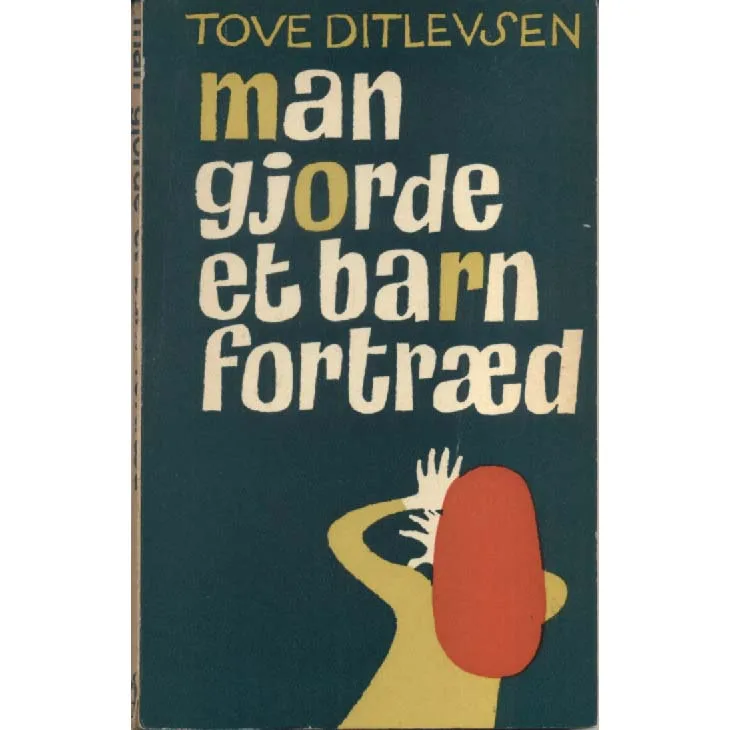
Publisher: Steen Hasselbalchs Forlag
Format: Paperback
ISBN: none
There are some authors who write as though human beings are fundamentally cheerful creatures occasionally interrupted by inconvenience. Tove Ditlevsen was not one of them. Her gift was far more valuable: the ability to describe ordinary emotional life with such painful accuracy that readers begin to feel quietly exposed merely by turning the pages.
Mån Gjorde et Barn Fortræd — roughly translating to something close to “Someone Harmed a Child” — already announces itself with the sort of title that suggests Scandinavian literature is once again preparing to examine human vulnerability with unnerving honesty and absolutely no interest in comforting platitudes.
And thank goodness for that.
Ditlevsen specialised in the emotional undercurrents of everyday existence: childhood wounds, loneliness, fragile identity, dependency, family tension and the quiet damage people carry through life while pretending to function normally in public. Her prose often feels deceptively simple until one suddenly realises she has calmly dismantled the entire emotional architecture of modern existence in half a page.
Naturally, this being mid-century Danish literature, the atmosphere is immaculate. One imagines grey Copenhagen streets, small apartments, emotional restraint and people enduring profound psychological distress while remaining outwardly polite enough to continue serving coffee correctly. Scandinavian fiction has always understood that the most devastating tragedies often occur indoors and in silence.
The title itself carries extraordinary weight. Modern thrillers would probably turn such a premise into serial killers, conspiracies and cinematic revelations. Ditlevsen instead approaches emotional injury with the terrifying precision of somebody who understands that the smallest wounds often echo the longest. There is little melodrama here — merely human reality observed too carefully for comfort.
This 1962 Steen Hasselbalchs Forlag edition also radiates that wonderful old European literary seriousness. No endorsements screaming “A page-turner!” No neon typography. Just a quietly elegant volume assuming readers possess the patience and emotional stamina required for actual literature. Imagine that.
There is also something deeply ironic about Ditlevsen becoming newly fashionable in the 21st century. For decades these Scandinavian literary paperbacks sat quietly on shelves while the world chased louder entertainment. Then modern readers suddenly rediscovered her and collectively realised she had understood anxiety, insecurity, identity and emotional exhaustion decades before social media transformed them into daily lifestyle conditions.
And perhaps that is why her books feel so modern. Beneath the post-war Danish setting lies a universal truth: human beings remain extraordinarily fragile creatures endlessly attempting to disguise their vulnerability through routine, relationships and the performance of adulthood.
The physical edition itself only adds to the charm. Mid-century Scandinavian publishing possessed a calm confidence modern publishing rarely manages anymore. Books looked like cultural objects rather than marketing campaigns. This is exactly the sort of volume one imagines finding in a quiet apartment beside black coffee, heavy curtains and a lingering sense of unresolved emotional history.
Condition-wise, this copy is listed as Good, meaning it has survived admirably despite decades of likely ownership by students, literary readers and people perhaps confronting their own difficult memories through Ditlevsen’s painfully perceptive prose. Somewhere along the line it may have travelled through university satchels, rainy train journeys and conversations beginning with, “It’s beautifully written, but emotionally devastating.”
Today, books like this survive not merely as literature, but as evidence that fiction once trusted readers to sit quietly with discomfort and complexity rather than demanding constant distraction. Ditlevsen remains one of the great chroniclers of emotional truth, and even her lesser-known works carry that extraordinary ability to make private feelings feel universally understood.
An excellent acquisition for lovers of Scandinavian literature, psychologically sharp fiction, mid-century European writing or anyone who believes books should occasionally leave them staring thoughtfully into the middle distance for several minutes afterwards.
Keep browsing: See more Danish books Other books by Tove Ditlevsen
