AI-assisted note, based on the text and a physical inspection of this copy.
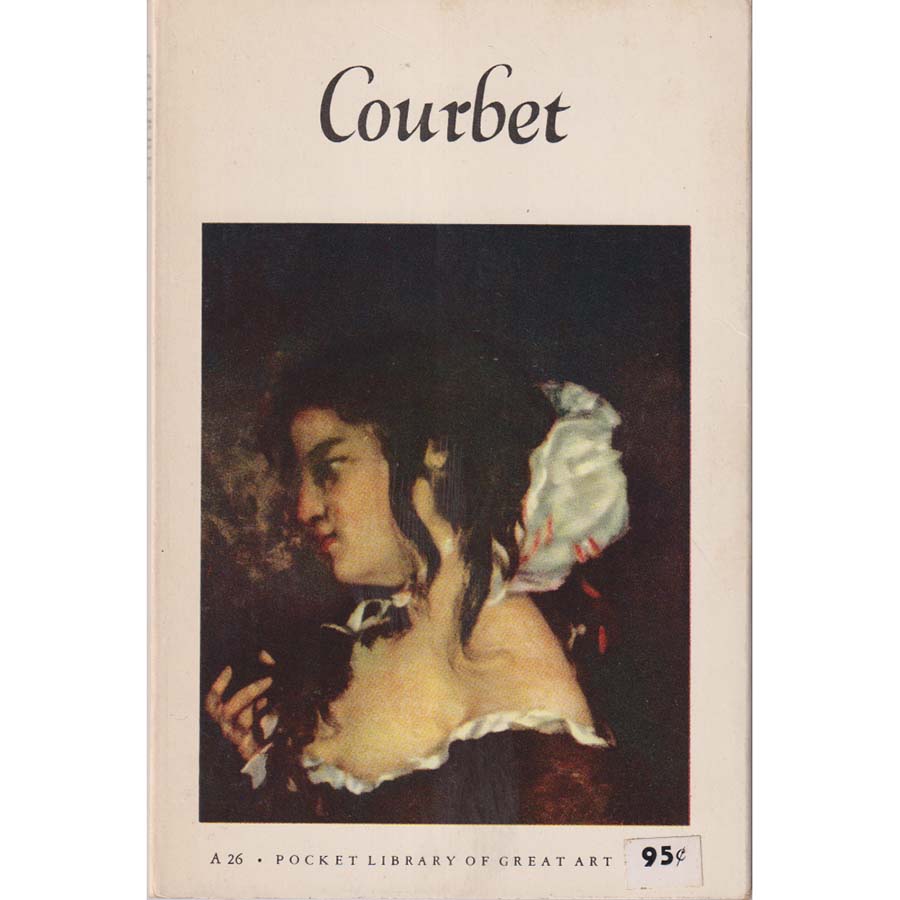
“Courbet” by Andre Chamson, published in 1956 by the Pocket Library of Great Art, is a striking yet somewhat understated artefact of mid-20th century art literature. The book presents a compact exploration of the work and influence of Gustave Courbet, a pivotal figure in the Realist movement. The cover design, typical of the period, features a muted palette with a reproduction of one of Courbet's famous works, embodying the no-frills aesthetic of art books from this era. The size of the publication makes it easily portable, fitting nicely into the hands of art enthusiasts who might have sought to engage with Courbet's oeuvre during a time when art appreciation was undergoing significant shifts due to the rise of modernism and abstract art.
Andre Chamson, the author, is an intriguing figure in the literary landscape of art criticism. While not as widely known as some of his contemporaries, his contributions to the field of art literature are nonetheless notable. Chamson appears to be a somewhat obscure figure, with limited documentation regarding his life and career, making it difficult to place him firmly within the broader context of art history. This obscurity, however, does not detract from the quality of his writing or his insights into Courbet's work. The absence of extensive biographical details might suggest that Chamson was more of a niche scholar, perhaps catering to a specific audience interested in the intersections of literature and visual arts.
The year 1956 is particularly significant for the cultural milieu surrounding the publication of “Courbet.” Post-World War II Europe was a period marked by re-evaluation of traditional values, and the burgeoning interest in realism in art served as a counter-narrative to the abstract expressionism that was gaining traction in the United States. In this context, Chamson’s book can be viewed as an homage to the past, attempting to revive interest in a painter whose work challenged the conventions of his time. The Pocket Library of Great Art aimed to make art accessible to a broader audience, which resonates with the democratic spirit of the time, where the public sought to redefine their relationship with cultural artefacts. As art institutions began to emerge from the shadows of war, Chamson’s analysis of Courbet highlights the importance of realism as a lens through which to view the social and political upheavals of the day.
The text itself, though not expansive, is rich in detail and reflects Chamson’s keen understanding of Courbet's philosophy and techniques. He delves into the thematic concerns of Courbet's work, such as his focus on the everyday lives of people and the natural world, setting the stage for future generations of artists who would continue to explore similar themes. Chamson’s prose is accessible, allowing readers from various backgrounds to engage with Courbet’s complex ideas without feeling overwhelmed by art jargon. This quality is especially important for a publication intended for a more general audience during a time when art criticism was often dense and academic.
“Courbet” also serves as a cultural artifact itself, embodying the mid-century fascination with art as a means of social commentary. The pocket-sized format is indicative of the era's publishing trends, where the aim was to democratise art appreciation, making it a part of everyday life rather than a pursuit reserved for the elite. The physicality of the book—its glossy pages, compact size, and modest yet elegant design—suggests a careful curation of content intended to invite repeated readings and prolonged engagement. Despite its simplicity, the book is a reminder of the era's efforts to bridge the gap between art and the public, a trend that resonates with contemporary movements aimed at making art more accessible.
In summary, “Courbet” by Andre Chamson is a fascinating exploration of a significant artist within a culturally rich context. While Chamson may not be a household name in the annals of art history, his work provides valuable insights into Courbet’s legacy and the societal shifts of the 1950s. The book stands as a testament to a pivotal moment in publishing history, where art literature sought to be both informative and inclusive. Crappy Old Books serves as a fitting platform to celebrate such works, allowing readers to reconnect with the past and appreciate the simple yet profound impact of art literature in shaping cultural discourse.