AI-assisted note, based on the text and a physical inspection of this copy.
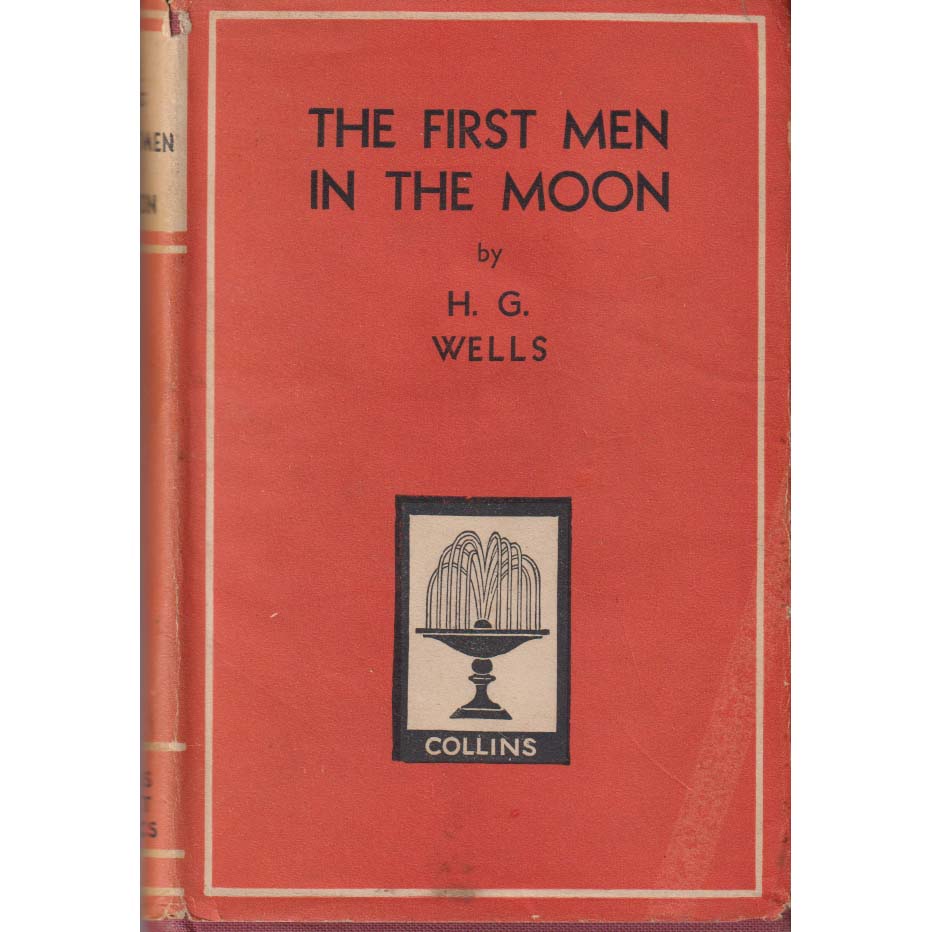
HG Wells' The First Men in the Moon, published around 1930 by Collins Pocket Classics, stands as a testament to the imagination and foresight of early science fiction literature. This edition, with its charmingly compact paperback design, encapsulates the essence of the era's fascination with space exploration and the possibilities of scientific advancement. The cover design, featuring a stylised lunar landscape, captures the intrigue and adventure of the story while exuding a certain nostalgic charm characteristic of its time. The paper quality and print culture of the 1930s are evident, with the pages poised between the fragility of age and the durability of a classic, making it a curious artifact for modern readers.
Wells is a towering figure in the realm of speculative fiction, often heralded as one of the forefathers of the genre. Born in 1866, he gained prominence in the late 19th and early 20th centuries, contributing significantly to the popularisation of science fiction with works like The Time Machine and The War of the Worlds. His ability to weave scientific principles with imaginative narratives laid the groundwork for future writers and established a framework within which many contemporary sci-fi authors operate. While Wells is a well-documented figure in literary history, The First Men in the Moon reflects his unique exploration of human ambition and the potential consequences of technological progress, themes that resonate throughout his oeuvre.
Published in a climate of increasing optimism about scientific advancement, the late 1920s and early 1930s were marked by a growing public interest in space travel, spurred on by developments in rocketry and the aviation industry. The period was ripe with a sense of wonder about the universe, as humanity began to ponder the possibility of life beyond Earth. Wells’ narrative not only engages with these ideas but also critiques the hubris of mankind in its relentless pursuit of knowledge. The story's exploration of the Moon serves as an allegory for the human condition, grappling with themes of progress, exploration, and the unforeseen consequences of our actions.
The narrative itself, rich with Wells' characteristic wit and insight, follows the journey of Mr. Bedford and his companion, the scientist Dr. Cavor, as they venture to the Moon in a fantastical spacecraft. The prose reflects the era's literary style—often verbose but laden with vivid imagery and thought-provoking concepts. Wells’ ability to blend scientific speculation with philosophical inquiry makes this work not only engaging but also intellectually stimulating. However, some modern readers might find the pacing uneven, as the story occasionally meanders into lengthy expositions that may detract from the overall adventure. Nevertheless, the imaginative world-building and the depiction of extraterrestrial life remain captivating, showcasing Wells' brilliance as a storyteller.
The Collins Pocket Classics edition is particularly noteworthy for its accessibility, allowing a broader audience to engage with this seminal work. The physicality of the book, with its small size and lightweight feel, invites readers to carry it along on journeys of their own—a fitting parallel to the adventures of its protagonists. However, the print culture of the time also reflects the transitional phase of publishing, where mass production was becoming more prevalent, yet the craftsmanship of bookmaking was still appreciated. This edition, while not a luxurious artifact, maintains a certain quaintness that appeals to collectors and casual readers alike.
In terms of cultural significance, The First Men in the Moon sits comfortably within the canon of science fiction literature. Its themes of exploration and the unknown resonate deeply in contemporary culture, particularly as humanity stands on the brink of a new era of space exploration. As we witness renewed interest in lunar missions and the ongoing quest for extraterrestrial life, Wells' work serves as a poignant reminder of the dreams and aspirations that have driven mankind for centuries. The narrative, although penned over ninety years ago, continues to inspire and provoke thought about our place in the universe.
In conclusion, HG Wells' The First Men in the Moon is not merely a story of adventure; it is a cultural object that encapsulates the zeitgeist of its time while offering timeless reflections on human ambition and the nature of exploration. The 1930 Collins Pocket Classics edition stands as a delightful artifact, inviting readers to delve into the pages of a literary classic that continues to resonate with the dreams of both the past and the future. For those interested in exploring the intersection of literature and cultural history, Crappy Old Books provides a unique lens through which to appreciate such works, highlighting their significance in the ever-evolving tapestry of storytelling.