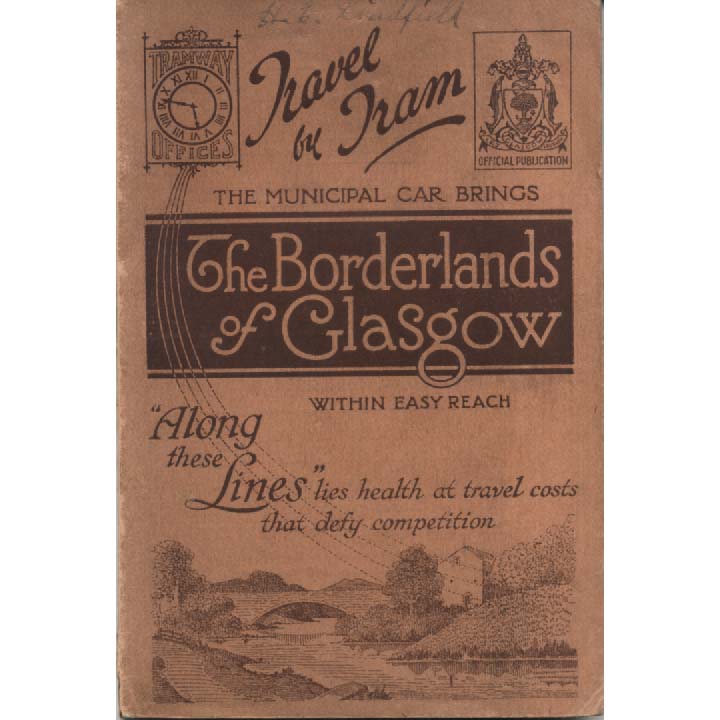
AI-assisted note, based on the text and a physical inspection of this copy.
In the realm of early 20th-century literature, "The Borderlands of Glasgow" stands as a curious artefact, bridging the gap between a city’s cultural tapestry and its geographical complexities. Published in 1927 by The Tramway Department Corporation of Glasgow, this book reflects a unique intersection of municipal governance and literary expression. The cover design, which likely features the austere colour palette typical of the 1920s, hints at a utilitarian approach, aiming more to inform than to entice. Such a design is emblematic of the era, where functional aesthetics often took precedence over flamboyant artistry in public-facing materials.
Upon flipping through the pages, one is immediately struck by the paperback vibe; it possesses that unmistakable scent of aged paper combined with a certain fragility. The typeface, likely a standard serif font of the time, gives the text a grounded feel, while the layout adheres to a no-nonsense format, indicative of the book's purpose as a guide rather than a literary indulgence. This utilitarian approach aligns with the ethos of its publisher, a municipal department, which may have aimed to provide a resource for residents and visitors alike rather than produce a work of art for the ages.
TCF Brotchie, the author, appears to be somewhat of an enigma within literary circles. There is scant biographical information available, which raises questions about his prominence or influence in the literary landscape of the time. It is possible that Brotchie was a local figure, perhaps engaged in municipal affairs or public service, reflecting the book’s origins from a governmental body. However, the absence of substantial records leaves one to speculate about his contributions beyond this particular work. The lack of documented acclaim or literary footprint suggests he may have been a writer whose significance was limited to regional contexts, thereby relegating him to the ranks of the obscure.
The year 1927 was a transitional period in Glasgow, a city grappling with the effects of industrialisation and the aftermath of the First World War. The social climate was marked by a mix of optimism and disillusionment, as communities sought to rebuild and redefine their identities. Glasgow, known for its shipbuilding and port activities, was undergoing urban changes that influenced its spatial and social dynamics. In this context, "The Borderlands of Glasgow" serves not only as a geographic exploration but also as a cultural commentary, capturing the essence of a city at a crossroads. It is a reflection of the local pride in Glasgow's identity while simultaneously addressing the broader implications of its borderlands—areas that often served as buffers between social classes, cultures, and economic realities.
Within its pages, one might expect to find a mélange of historical insights, geographic descriptions, and perhaps even sociocultural observations that encapsulate the life and vibrancy of Glasgow’s borderlands. The text may present a map of sorts—both literally and metaphorically—charting the diverse landscapes and the myriad stories embedded within them. This kind of publication could have served as a vital resource for locals and visitors alike, offering a glimpse into the lesser-known areas that contribute to the city’s overall character.
Furthermore, the book's publication by a municipal department hints at a governmental desire to foster community engagement and awareness. It positions itself as a tool for education, aiming to bridge the gap between the city’s complex history and its contemporary residents. In doing so, it reflects the early 20th-century British tendency to promote regional pride through literature and education, capturing a moment when cities began to recognise the importance of their cultural narratives.
Despite its utilitarian roots, "The Borderlands of Glasgow" offers a fascinating lens through which to view both the city of Glasgow and the literary culture of its time. The book acts as a cultural artefact that resonates with themes of identity, place, and the social fabric of urban life. It stands as a testament to the era's burgeoning interest in local history, geography, and community, even if it may not have achieved the same literary acclaim as other works from the period.
In conclusion, while TCF Brotchie may not be a household name, "The Borderlands of Glasgow" holds a unique position within the canon of early 20th-century literature. Its publication by The Tramway Department Corporation of Glasgow underscores a time when local governments sought to engage with their communities through the written word. This book serves as a reminder that even the most utilitarian of texts can offer valuable insights into the cultural landscapes of the past. It is a worthy addition to the collection of any enthusiast of Crappy Old Books, revealing the intricate interplay between literature, geography, and community identity in a city rich with history.