AI-assisted note, based on the text and a physical inspection of this copy.
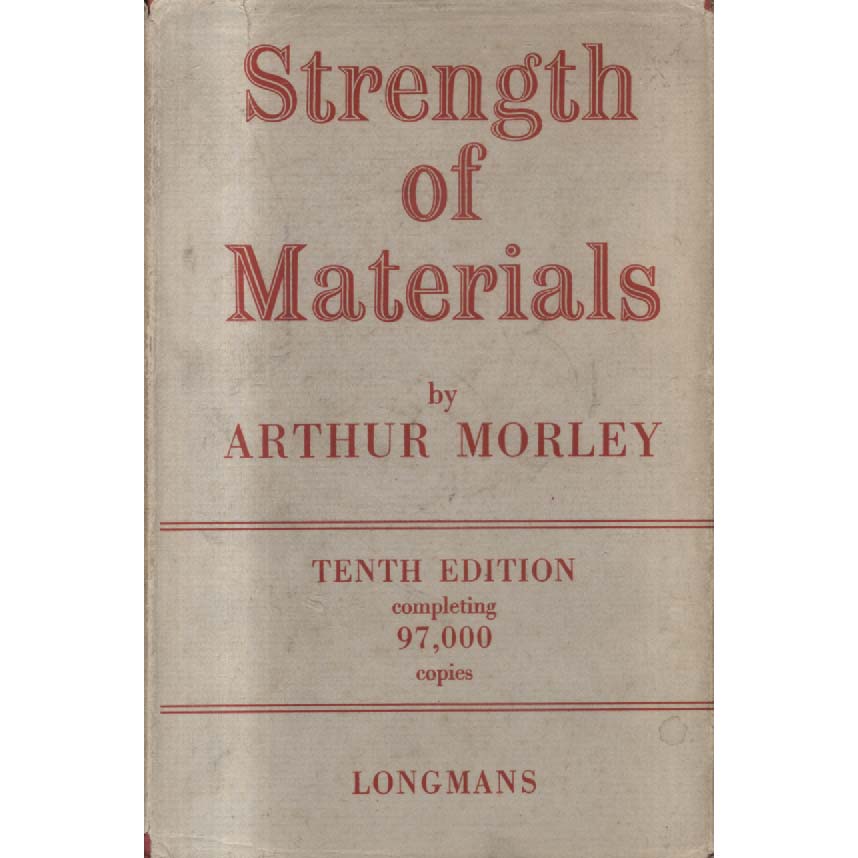
Strength of Materials by Arthur Morley, published in 1952 by Longmans, is a textbook that offers a fascinating glimpse into the mid-20th century academic landscape, particularly in the realm of engineering and materials science. The cover design is a product of its time, featuring a somewhat utilitarian aesthetic with bold, blocky lettering that suggests a straightforward, no-nonsense approach to the subject matter. The overall vibe is characteristic of the era when educational texts often favoured functionality over flair, reflecting a period when the emphasis was on imparting knowledge in a clear and direct manner.
The paperback format of this book is both a charm and a challenge. While it is portable and accessible, it lacks the durability of hardback editions, which may lead to wear and tear over time, particularly for a book that promises to be a reference point in the field of materials strength. The paper quality is typical of the time, slightly yellowed and prone to dog-earing, which adds to its vintage appeal but may frustrate modern readers expecting a more robust production. The illustrations within the text, while informative, are basic and serve more as functional aids than artistic enhancements, reflecting the no-frills approach of educational publishing in the early 1950s.
Arthur Morley himself seems to inhabit a shadowy corner of literary and academic history, with limited available documentation about his life and career. He does not appear to be a household name within the literary canon, and while he is credited with contributing to the field of engineering through his writings, specific details about his biography—such as his educational background, other works, or influence on subsequent generations—remain elusive. This obscurity may suggest that he was more of a practitioner and educator rather than a prominent figure in publishing or literary culture, potentially limiting his reach to those directly engaged in engineering disciplines.
The year 1952 was a significant period in post-war Britain, marked by a push towards rebuilding and modernising infrastructure. The economy was gradually recovering from the ravages of World War II, and there was a growing emphasis on science and technology as keys to national progress. In this context, books like Strength of Materials served not just as educational texts but as instruments of a broader societal ambition to innovate and improve. This era saw universities expanding their engineering programs, and Morley's work can be viewed as part of this larger movement, aiming to equip a new generation of engineers with the knowledge necessary to tackle the physical challenges of the time.
As a textbook, Strength of Materials is undoubtedly focused on imparting technical knowledge. It covers fundamental concepts relevant to the study of materials under various forces and stresses, making it a staple for engineering students during its time. However, the presentation may feel dry and uninviting to contemporary readers accustomed to more visually engaging and interactive educational materials. The lack of modern pedagogical techniques, such as problem-solving exercises or real-world applications, may limit its usefulness outside of a strict academic setting.
While Morley's text might not resonate with a wider audience beyond engineering students or professionals, it serves as an important cultural object reflecting the values and educational practices of its time. The book's structure, with clear, methodical explanations and straightforward terminology, indicates a desire to demystify complex subjects for learners who were navigating the intricacies of materials engineering amidst a backdrop of industrial growth and technological advancement.
In conclusion, Strength of Materials stands as a testament to its time—a practical guide that embodies the earnestness of mid-20th century academic publishing. While it may not have the literary flair or the widespread recognition of more celebrated works, it occupies a niche that is valuable for those interested in the evolution of educational literature within the fields of engineering and materials science. Its existence in Crappy Old Books serves to remind us of the foundational texts that shaped technical education and the importance of understanding the past to appreciate the present.