AI-assisted note, based on the text and a physical inspection of this copy.
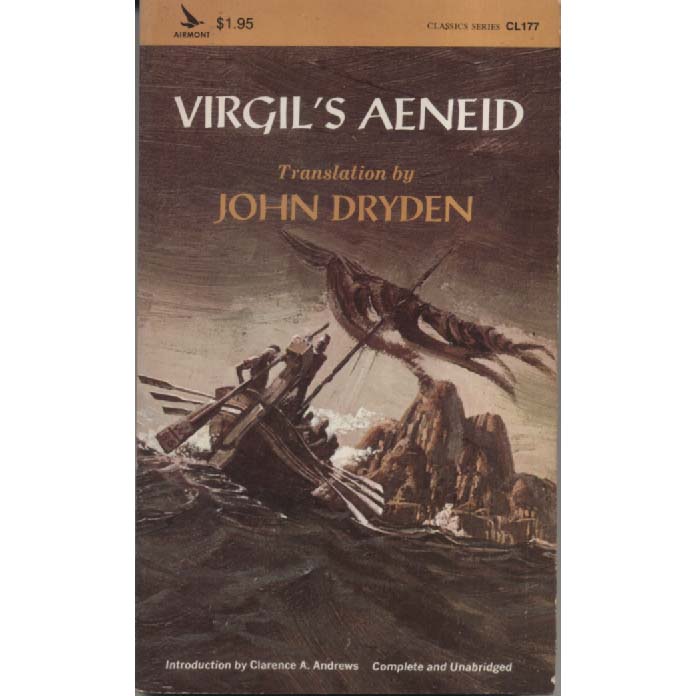
“Virgil’s Aeneid,” translated by John Dryden and published by Airmont Books in 1968, is a curious artefact of literary culture that invites a closer examination. This particular edition offers a glimpse into both the enduring significance of classical texts and the mid-20th century approach to publishing and design. The cover design, typical of Airmont’s paperback offerings, features a rather utilitarian aesthetic, which reflects the publisher's aim to make classic literature accessible to a wider audience. The bold, simple typography, coupled with a somewhat drab colour palette, presents a stark contrast to the vibrancy one might associate with the epic’s themes of adventure and destiny. This edition lacks the ornate illustrations or artistic embellishments often found in other classical editions, suggesting a focus on functionality over form. While this choice might resonate with the utilitarian ethos of the time, it also diminishes the visual allure that could draw readers into the world of Virgil’s narrative.
John Dryden, a significant figure in English literature, is best known for his work in poetry, drama, and translation during the Restoration period. However, his translation of "The Aeneid" was published much earlier, in 1697, and has since been eclipsed by later translations that are often more celebrated. Dryden's work is notable for its attempt to capture the grandeur of Virgil’s original Latin while also rendering it accessible to an English-speaking audience. He is often regarded as a bridge between the classical and modern literary worlds. This translation, while historically significant, is often critiqued for its adherence to the poetic conventions of its own time rather than a strict fidelity to the original text. Dryden’s broader literary contributions include a vast array of works that have influenced poetic forms and theatrical practices, making him a central figure in the study of English literature. However, his translation of Virgil remains somewhat overshadowed by the likes of more contemporary translators, raising questions about how his interpretations have been received and studied over time.
The year 1968 was a tumultuous time marked by significant cultural upheaval. As the world grappled with issues such as civil rights, anti-war protests, and a burgeoning counterculture movement, the publication of “Virgil’s Aeneid” can be seen as part of an effort to reconnect readers with classical literature amid modern chaos. The 1960s were characterised by a growing interest in revisiting classic texts, often viewed through the lens of contemporary values and ideologies. This period also saw a rise in the paperback format, which allowed for broader dissemination of literary works. Airmont Books, in particular, aimed to democratise literature, providing access to works that might otherwise be relegated to the confines of academia or elitist literary circles. Yet, while the paperback movement heralded a new era of accessibility, it also often resulted in a dilution of the text's original nuances, as seen in Dryden's adaptation.
Upon reading this edition of “Virgil’s Aeneid,” one cannot help but notice the contradictions inherent in its existence. On one hand, it serves as a conduit through which readers can engage with a foundational work of Western literature. On the other hand, the translation itself, with its 17th-century sensibilities, may feel somewhat dated or distant to modern readers. Dryden’s poetic style often prioritises rhyme and meter over the original’s intricate subtleties, leading to a text that, while rhythmically compelling, may lack the depth and complexity found in Virgil’s Latin. The language can appear archaic, and readers accustomed to contemporary translations may find themselves grappling with a lack of immediacy in the narrative. This raises an important question about the role of translation: should it prioritise fidelity to the original text or strive for a voice that resonates with present-day audiences?
The cultural implications of Dryden’s translation are also noteworthy. In the 1960s, the revival of interest in classical literature coincided with a broader questioning of established norms and narratives. “Virgil’s Aeneid,” with its themes of heroism, duty, and the struggle against fate, offered a rich tapestry for readers to explore in light of contemporary societal challenges. However, this particular edition, while part of a movement to democratise literature, risks alienating readers who may struggle with its antiquated language and stylistic choices. Thus, it occupies a unique niche—one that highlights both the importance of engaging with classical texts and the challenges presented by their interpretation across time.
In conclusion, “Virgil’s Aeneid” as translated by John Dryden in this 1968 Airmont Books edition presents a fascinating case study in the intersection of literature, culture, and publishing history. While it provides access to a monumental work of literature, its translation is steeped in the conventions of an earlier era, which may not meet the expectations of today’s readers. The book serves as a reminder of the complexities surrounding translation and the ways in which cultural contexts shape our engagement with literature. For those interested in the legacy of classical texts and their place within modern literary culture, this edition, despite its limitations, remains a significant object worthy of consideration. As always, Crappy Old Books invites readers to reflect on the interplay between text, translation, and the cultural currents that shape our reading experiences.