AI-assisted note, based on the text and a physical inspection of this copy.
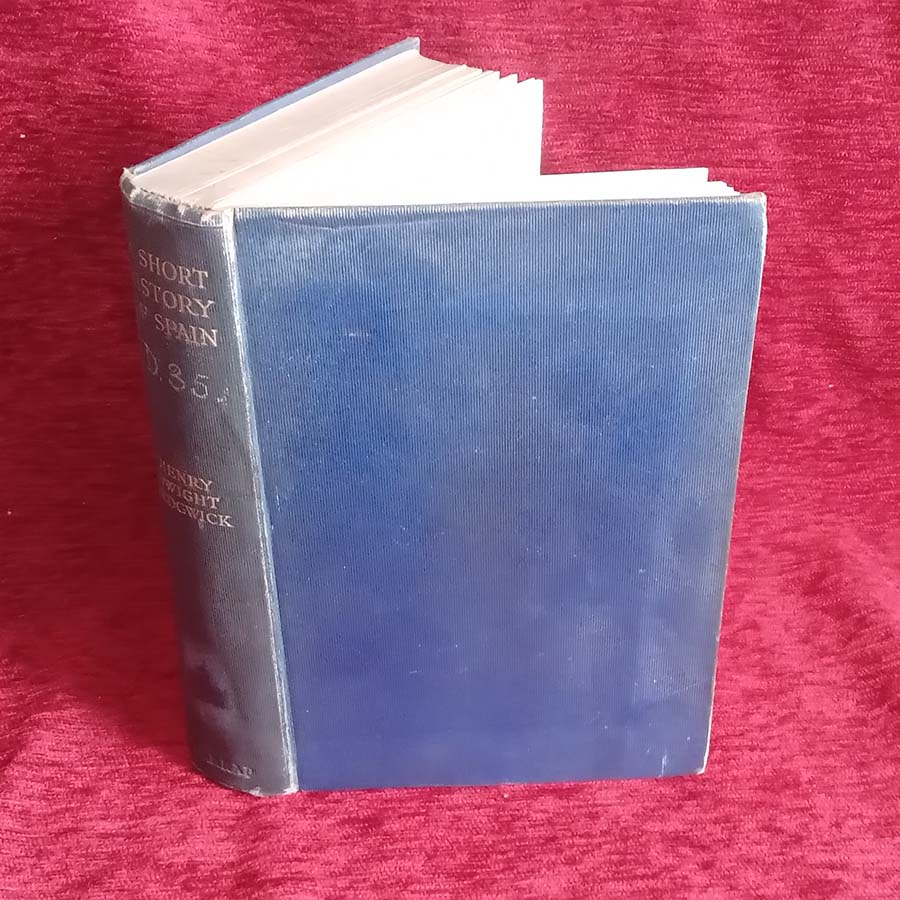
Henry Dwight Sedgwick's "A Short History of Spain," published in 1926 by George G Harrap, serves as both a historical overview and a cultural artifact reflective of its time. The book is a modest paperback, with a cover design that captures the aesthetic characteristics of the interwar period. The muted palette, combined with simple yet bold typography, evokes a sense of seriousness and scholarly intent, which may have appealed to an audience eager for accessible historical discourse during a time when Europe was grappling with the aftermath of World War I. The physicality of the book itself, with its slightly worn edges and the unmistakable smell of aged paper, contributes to its charm as a relic of print culture in the early 20th century.
In examining the author, Henry Dwight Sedgwick, one discovers a figure whose prominence in literary culture is somewhat obscured. Born into a well-connected family in 1872, Sedgwick was an American writer, historian, and biographer. While he produced several works during his lifetime, including biographies and historical analyses, he never achieved the widespread acclaim of his contemporaries. The absence of significant accolades or major literary movements associated with him leaves his legacy somewhat nebulous. He appears to occupy a niche within the historical narrative, respected perhaps among scholars but largely forgotten by the broader reading public. This obscurity is not unusual for writers of his era, many of whom contributed to the literary landscape without leaving a lasting mark.
The year 1926, when "A Short History of Spain" was published, was a notable period in European history, marked by both recovery and upheaval. The aftermath of the First World War had left its scars, and Europe was navigating a complex political landscape, with fascism and communism gaining traction. In the United Kingdom, the 1920s were characterised by a cultural renaissance, with literature, art, and music flourishing in the post-war years. Sedgwick's work comes at a time when there was a burgeoning interest in understanding national histories in a broader context, as people sought to make sense of their identities and the tumultuous events that had shaped them. This historical backdrop provides a layer of significance to Sedgwick's exploration of Spain, a country with its own rich tapestry of history that includes periods of grandeur and decline.
"A Short History of Spain" is structured to provide readers with an informative yet concise overview of the nation's past, from the early Iberian settlements through to the 20th century. Sedgwick's writing style is straightforward, aiming to demystify historical events for a general audience. This approach aligns with the educational ethos of the time, where there was a push towards making history more accessible to the public. However, the book's brevity can sometimes lead to oversimplifications, glossing over the complexities of Spanish history in favour of narrative clarity. This is a common pitfall for works of this nature, where the desire to cover a vast timeline can result in a loss of nuance.
The cultural significance of this book extends beyond its content. As a product of its time, it reflects the broader trends in historical writing during the 1920s, where there was a shift towards popularising history for the masses. The accessibility of history books became a means of fostering national pride and understanding, particularly in the wake of the war. In this context, Sedgwick's work fits neatly into a larger movement aimed at educating the public and encouraging a sense of historical awareness. The book’s physical presentation—modestly bound yet inviting—also mirrors the period's publishing trends, where readers were increasingly drawn to affordable literature.
Moreover, Sedgwick's choice to focus on Spain during this pivotal era offers valuable insights into a nation often overshadowed by its European neighbours. Spain's own struggles and triumphs, from the Moors' influence to the Spanish Civil War, are touched upon, though the depth of analysis may leave some readers yearning for more comprehensive exploration. Nonetheless, the book serves as a useful introductory text for those unfamiliar with Spanish history, albeit one that may not satisfy more seasoned historians.
As a cultural object, "A Short History of Spain" encapsulates the spirit of its time, providing a glimpse into the ways in which history was consumed and understood in the early 20th century. The book may not be a definitive account of Spanish history, but it stands as a testament to the desire for knowledge and understanding that characterised the interwar period. Crappy Old Books provides a fitting home for this work, allowing contemporary readers to engage with a piece of history that, while perhaps lacking in depth, is rich in cultural significance.