AI-assisted note, based on the text and a physical inspection of this copy.
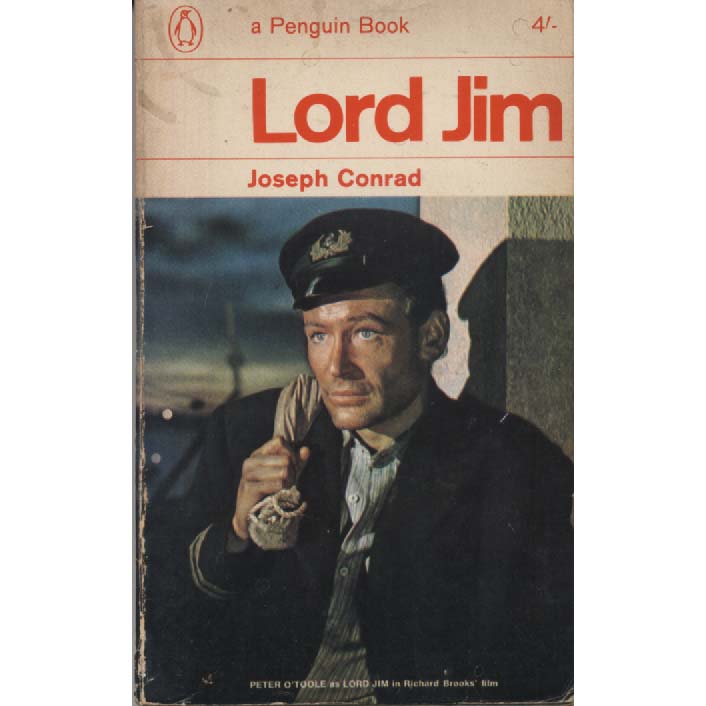
Joseph Conrad’s "Lord Jim," published by Penguin Books in 1965, is a novel steeped in themes of honour, guilt, and redemption, focusing on the life of a young sailor who grapples with his own moral failings. The book's cover design, typical of Penguin's mid-60s aesthetic, features a striking but somewhat simplistic illustration that captures an essence of adventure while evoking the darker undertones of Jim’s psychological struggles. The paperback format, with its slightly yellowed pages and flexible spine, transports readers back to an era when literature was more accessible, yet the quality of print often left much to be desired. This particular edition, with its unassuming yet elegant presentation, is a testament to the mid-20th-century approach to publishing—where the allure of a well-crafted narrative was often accompanied by modest design choices.
Joseph Conrad, a Polish-born author who became a naturalised British citizen, is a towering figure in literary history, particularly known for his exploration of complex moral dilemmas and the human condition. His works often reflect his experiences at sea, which imbued them with a sense of authenticity and a unique perspective on colonialism and imperialism. "Lord Jim," first published in 1900, is one of his most celebrated novels, yet it is often overshadowed by "Heart of Darkness," which has garnered more critical attention. The obscurity surrounding some aspects of Conrad's life, including the nuances of his influences and personal beliefs, adds a layer of intrigue to his works, inviting readers to delve deeper into the psychological landscapes he creates.
The year 1965 was a pivotal time in literature and culture. The 1960s were marked by significant social upheaval, with movements advocating for civil rights, feminism, and anti-war sentiments gaining momentum. Penguin Books, as a publisher, played a crucial role in this transformative era, making literary works more widely available and often championing voices that challenged the status quo. The release of "Lord Jim" during this time can be seen as part of a broader trend in which classic literature was revisited and repackaged for a new generation. Readers were increasingly drawn to themes of individual struggle and ethical dilemmas, echoing their own societal challenges. The 1965 edition of "Lord Jim" thus serves not just as a literary artefact but also as a cultural touchstone, reflecting the zeitgeist of its time.
The novel itself is a rich tapestry of narrative techniques, employing a frame story that unfolds Jim's character through the eyes of various narrators. This multi-perspective approach allows readers to grapple with differing interpretations of Jim’s actions and the moral implications of his choices. Conrad’s prose is often dense and introspective, requiring a contemplative reading style that may not appeal to all modern readers accustomed to faster-paced narratives. The exploration of Jim's internal conflict and the weight of societal expectations resonates with timeless human experiences, making "Lord Jim" a significant study in the complexities of honour and disgrace.
Conrad’s treatment of colonialism also merits attention, as the novel delves into the implications of British imperialism through Jim’s experiences in the East. While readers may find this perspective dated, it can also be seen as a reflection of the lingering attitudes of the time, prompting critical discussions about the nature of empire and the moral responsibilities of individuals within it. The 1965 edition, while lacking in contemporary commentary, provides a window into these historical contexts, allowing readers to engage with the text from a modern standpoint.
However, it is important to acknowledge that the 1965 Penguin edition may not fully encapsulate the richness of Conrad's narrative. The limitations of the printing technology and the quality of the paper can detract from the reading experience, rendering some passages less impactful than they might be in a more robust edition. The book's physical presence, coupled with the cultural significance of its themes, highlights the challenges faced by readers today in accessing the literary treasures of the past.
In summary, "Lord Jim," as presented in this 1965 Penguin edition, serves as a vital link between historical literary culture and contemporary readers. Its exploration of complex themes, coupled with an engaging narrative structure, allows for a rich reading experience that, while potentially overshadowed by modern literary trends, remains pertinent. Joseph Conrad's standing in literature, particularly through works like this, continues to merit discussion, even if some details of his life and influence remain elusive. For those interested in revisiting classic literature, "Lord Jim" is a worthwhile endeavour, even if the journey through its pages requires patience and introspection. Crappy Old Books invites readers to explore such literary gems, recognising their cultural significance amidst the evolving landscape of literature.