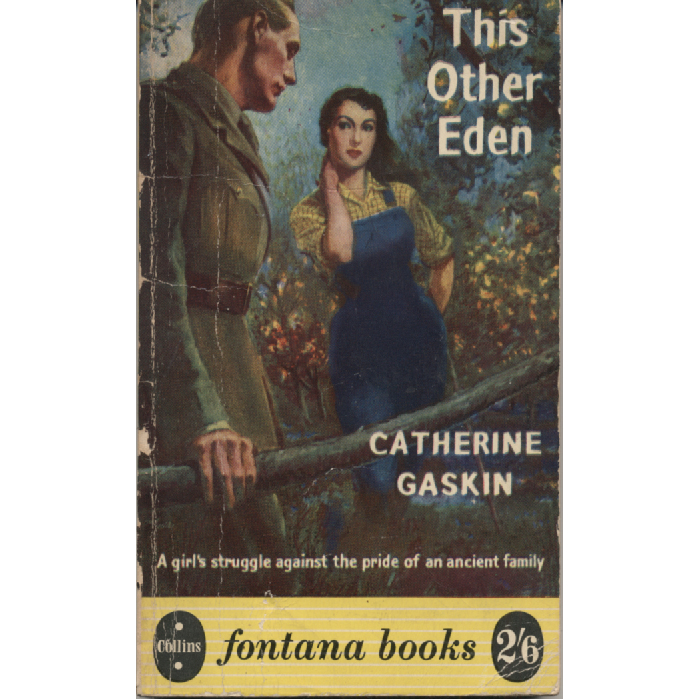
AI-assisted note, based on the text and a physical inspection of this copy.
Published in 1957 by Fontana Books, This Other Eden by Catherine Gaskin is an intriguing piece of mid-20th century literature that offers a glimpse into the shifting cultural landscape of the time. The paperback edition, with its slightly faded cover art, reflects the aesthetics of the era, featuring a rather dramatic illustration that hints at themes of escapism and personal discovery. The design is emblematic of the period's fascination with romantic and adventurous narratives, a trend that permeated many popular novels of the time. The feel of the book in hand—the slightly crinkled pages, the smell of aged paper—evokes a sense of nostalgia that is hard to ignore, making it an interesting cultural artifact for anyone interested in the evolution of publishing and print culture.
Catherine Gaskin, the author of this work, appears to be a somewhat obscure figure within literary circles. While she has penned a number of novels throughout her career, detailed biographical information is limited. What is known is that she was born in 1913 in Ireland and moved to Australia, where she spent much of her literary life. Her works often explore themes of love, identity, and the complexities of human relationships, which are evident in This Other Eden. Despite her lack of widespread fame, Gaskin contributed to the popular fiction landscape of her time, establishing herself as a reputable author whose works resonated with many readers. Her position as a female novelist during a time when the literary scene was predominantly male gives her a significant, if underappreciated, role in the history of publishing.
The year 1957 marked a pivotal moment in cultural history, as society was navigating the post-war landscape with a mix of optimism and uncertainty. The publication of This Other Eden coincided with a time when literature began to reflect changing social norms, particularly in relation to gender roles and personal freedom. The rise of the middle class and the burgeoning consumer culture were influential, as many readers sought stories that not only entertained but also provided an escape from the realities of everyday life. It was a period when novels about personal journeys and emotional explorations gained traction, and Gaskin's work fits neatly within this context. The themes of love, adventure, and self-discovery resonate with the desires of a generation eager to explore new horizons, both literally and metaphorically.
The narrative structure of This Other Eden utilises a classic storytelling approach, replete with twists and turns that keep the reader engaged. However, it is also a product of its time, with pacing and character development that may feel dated to contemporary readers. Gaskin's prose is accessible but lacks the lyrical quality that some readers might prefer. The dialogue often comes off as stilted, reflecting the conventions of the 1950s rather than the more naturalistic styles that emerged in later decades. This may alienate some readers but can also serve as a fascinating window into the literary conventions of the time.
Furthermore, the themes of identity and belonging that run throughout the book reflect a post-war society grappling with its own sense of self. Gaskin’s characters often find themselves in liminal spaces, caught between their pasts and the uncertain futures ahead of them. This resonates with a generation that had witnessed significant upheaval and change, including the aftermath of World War II and the onset of the Cold War. The exploration of these themes within a romantic framework adds a layer of complexity that invites readers to reflect on their own experiences and societal transformations.
In terms of its place within the canon of mid-century literature, This Other Eden may not stand out as a groundbreaking work, but it does provide valuable insight into the popular fiction landscape of its time. Its publication by Fontana Books, a publisher known for its mass-market paperbacks, underscores the accessibility of literature during this era. The book's existence as a paperback speaks to the democratization of reading material, allowing a broader audience to engage with literary works that were once considered the domain of the elite. This shift in publishing practices contributed to the rise of the 'beach read' phenomenon, where novels could be consumed in casual settings, thereby redefining the relationship between readers and literature.
As a cultural object, This Other Eden serves as a reminder of a specific moment in literary history, encapsulating the values, struggles, and aspirations of a post-war society. While it may not capture the same acclaim as contemporaneous works by more prominent authors, it provides a rich tapestry of insights into the era's literary culture. For those interested in the nuances of 1950s literature, Gaskin's novel is a noteworthy addition to the canon of Crappy Old Books, offering both entertainment and a glimpse into the complexities of human experience during a transformative period of history.