AI-assisted note, based on the text and a physical inspection of this copy.
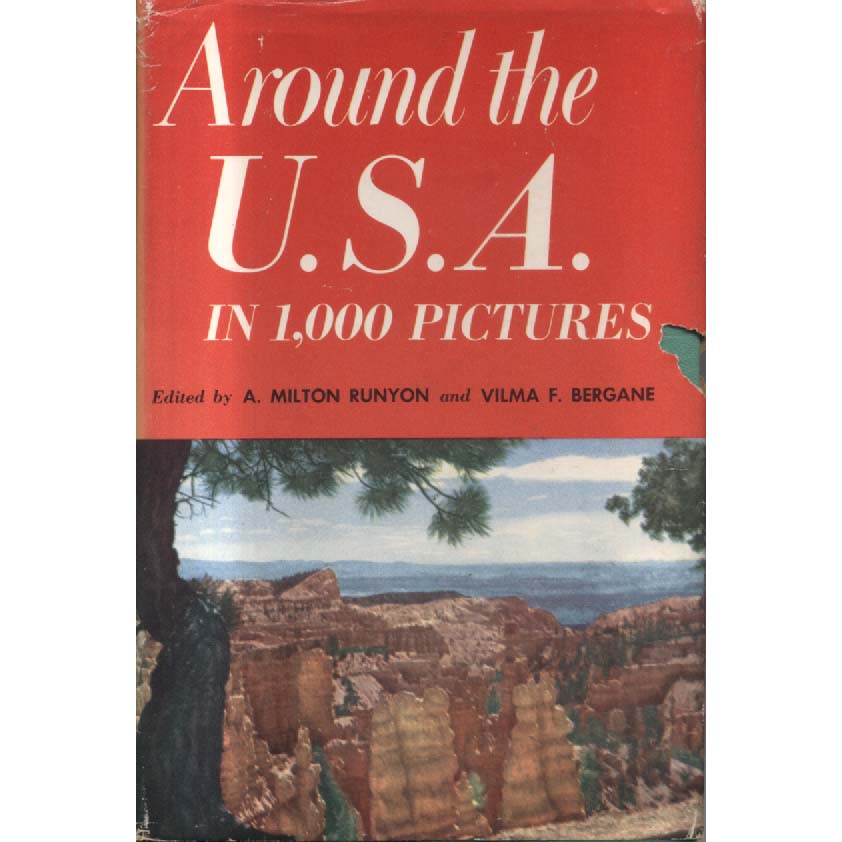
Around the USA in 1000 Pictures is a curious relic of mid-20th century America, presenting a visual journey through the United States that captures the spirit and essence of a nation undergoing significant cultural transformation. Published in 1955 by Doubleday, this book is a curious amalgamation of travelogue and pictorial celebration, designed to entice readers with a kaleidoscope of images that showcase various landmarks, landscapes, and iconic symbols of American life. The cover design is a striking combination of vivid colours and bold lettering, evoking a sense of adventure and exploration that was particularly resonant during the post-war era, when the American public was keen on travel and discovering the great outdoors. The paperback format feels substantial, yet retains the lightweight quality typical of the time, making it an easy companion for the curious traveller or the armchair explorer.
The authors, A Milton Runyon and Vilma F Bergane, are somewhat obscure figures in the literary and publishing landscape. While Runyon appears to have a minimal presence in widely available biographical records, Bergane also remains largely untraced, suggesting that they may have been more prominent in local or niche publishing circles rather than achieving widespread acclaim. This lack of detailed information about their careers leaves a gap, inviting speculation about their motivations and the extent of their contributions to American literature and visual culture. Their collaborative effort in this book, however, signifies an intriguing partnership that reflects the diversity of perspectives in American literature during the 1950s.
The year 1955 was pivotal in the cultural landscape of the United States, marked by a burgeoning post-war identity that celebrated prosperity and the American Dream. This period saw a rise in consumerism, suburban expansion, and a fascination with the natural beauty and diversity of the country. Around the USA in 1000 Pictures fits neatly into this zeitgeist, serving as a snapshot of a nation eager to showcase its achievements and allure. The book’s content is reflective of this era, featuring a range of images from stunning national parks to bustling urban centres, each capturing a moment in time that resonates with a sense of national pride. The visual narrative created by the authors invites readers not only to appreciate the beauty of the landscape but also to engage with the evolving American identity.
The allure of this book lies in its presentation; the pictures are meticulously curated, offering a window into various aspects of American life during the mid-20th century. Each image is accompanied by brief, often whimsical captions that provide context and commentary, further enhancing the reader's experience. The photographs themselves are a mix of professional and amateur work, contributing to a sense of authenticity and personal connection, which is often lost in contemporary publishing. The quality of the prints, while not as refined as modern digital photography, carries a nostalgic charm that evokes a sense of warmth and familiarity, making it an enjoyable experience to flip through its pages.
As a cultural object, Around the USA in 1000 Pictures serves multiple purposes: it is a travel guide, a historical document, and a celebration of the American landscape. Its format encourages casual browsing, making it accessible to a wide audience, and its vivid imagery can spark curiosity and inspire wanderlust in readers both young and old. The book also functions as a time capsule, preserving a moment when America was on the brink of a new era, grappling with its identity in a rapidly changing world. In this sense, it stands as both a product of its time and a reflection of enduring themes in American culture.
Overall, Around the USA in 1000 Pictures is a charming, albeit slightly dated, visual journey through the United States. It encapsulates the essence of 1950s America, offering a nostalgic look back at a time when the nation was finding its footing in the world. The collaboration between Runyon and Bergane may not have left a significant mark on literary history, but their work in this volume deserves recognition for its ability to capture the imaginations of readers and inspire a love for travel and exploration. For those interested in the cultural artifacts of the past, this book is a delightful find, perfectly aligned with the ethos of Crappy Old Books.