AI-assisted note, based on the text and a physical inspection of this copy.
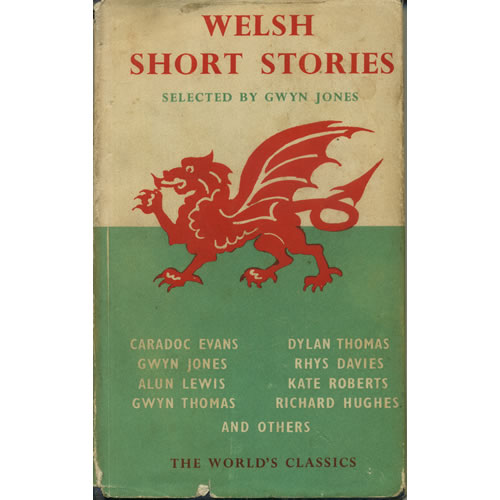
“Welsh Short Stories,” edited by Gwyn Jones and published in 1956 by Oxford University Press, emerges as an intriguing cultural artifact from the mid-20th century. This anthology showcases a selection of narratives that capture the essence of Welsh life, culture, and the complexities of identity. The book’s cover design reflects a rather utilitarian aesthetic typical of the period, with muted colours and a straightforward typography that may not leap off the shelf but conveys a sense of seriousness and scholarly intent. The paperback format, while practical, gives it a somewhat ephemeral quality, hinting at the transient nature of the stories contained within. The physicality of the book, with its slightly yellowed pages and the faint smell of aged paper, evokes a nostalgic connection to the era of its publication, a time when literature often served as a bridge between the past and the present.
Gwyn Jones, the editor of this anthology, is a figure whose prominence in Welsh literature is notable but perhaps not widely recognised outside specific literary circles. Born in 1895, Jones was a prolific writer and critic, primarily known for his contributions to Welsh literature and his advocacy for the Welsh language. His role as an editor in this collection indicates his commitment to showcasing the voices of Welsh authors, though detailed biographical information on his later life seems scant. His involvement in the literary scene during the mid-20th century places him at a pivotal moment in Welsh cultural history when there was a renewed interest in regional literature and identity.
The year 1956 marked a significant period in post-war Britain, a time characterised by cultural shifts and a search for identity following the challenges of the Second World War. This was an era that saw the rise of new voices in literature, as well as a revival of interest in local cultures and languages, particularly in Wales. The publication of “Welsh Short Stories” fits neatly within this context, as it not only serves to document the narratives of Welsh life but also reflects a growing appreciation for regional stories in a broader British literary landscape. The book captures the tensions and nuances of Welsh identity at a time when such discussions were becoming increasingly relevant, echoing the social changes surrounding it.
In terms of content, “Welsh Short Stories” serves as a mosaic of voices and styles, presenting a variety of experiences that range from the rural to the urban, the historical to the contemporary. These stories engage with themes of belonging, displacement, and the beauty of the Welsh landscape, offering readers a rich tapestry of Welsh life. However, the anthology's overall coherence may leave something to be desired, as the disparate styles and narratives can sometimes clash, leading to a disjointed reading experience. This is perhaps a reflection of the editor’s intent to showcase a wide array of voices rather than curate a unified thematic exploration.
The stories themselves reveal a blend of tradition and modernity, with some drawing on folk tales and myth, while others address contemporary issues. This duality mirrors the broader cultural dynamics of Wales during the mid-20th century, as the country grappled with the remnants of its past while forging a path towards modernity. The anthology can be appreciated not only for its literary merit but also as a document of cultural history, capturing the essence of a nation in transition.
Despite its historical significance, “Welsh Short Stories” may struggle to engage contemporary readers who are accustomed to more cohesive narratives or modern storytelling techniques. The anthology’s appeal may be more pronounced among those with a specific interest in Welsh literature or cultural studies, rather than the general reader seeking immediate gratification in a narrative. This raises questions about the book's place within the broader canon of literature; while it offers valuable insights into Welsh culture, its accessibility may be limited.
In considering the legacy of “Welsh Short Stories,” one cannot overlook the role of anthologies in the literary landscape. They serve as vital platforms for emerging voices and lesser-known authors, preserving their contributions for future generations. This collection, though perhaps overshadowed by more prominent works of the time, provides a necessary glimpse into a specific cultural milieu that may otherwise be forgotten. As such, it holds a certain charm for scholars and enthusiasts who wish to explore the nuances of Welsh storytelling.
In conclusion, “Welsh Short Stories” stands as a testament to the richness of Welsh literature and the cultural complexities of its time. While it may not resonate with every reader, its historical and cultural significance cannot be understated. For those intrigued by the intersection of storytelling and cultural identity, this anthology offers a valuable, if imperfect, entry point. Crappy Old Books presents this review as a nod to the often-overlooked gems of literary history that deserve attention, even if their execution may not always meet contemporary tastes.