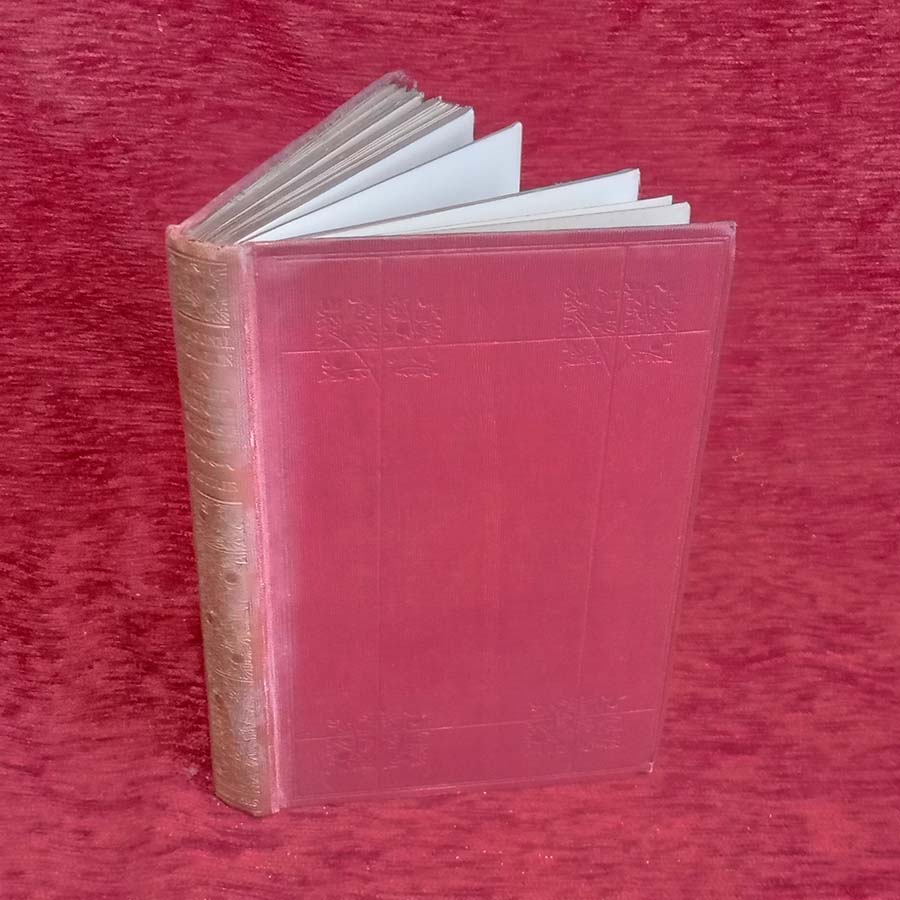
AI-assisted note, based on the text and a physical inspection of this copy.
“Personal Religion in Egypt before Christianity,” penned by W.M. Flinders Petrie, emerges as a scholarly artifact from the early 20th century, encapsulating the fascinating intersection of archaeology and theology in the study of ancient Egypt. The book is a reflection of its time, where the quest for understanding ancient belief systems was both a scholarly pursuit and a cultural curiosity. The cover design, characteristic of early 1900s publishing, features a somber but intriguing palette, likely aiming to evoke the mystique of the ancient Egyptian world. This paperback, with its slightly worn edges and yellowing pages, has the quintessential feel of a book that has been lovingly thumbed through by generations of curious readers and scholars alike.
Petrie, a prominent figure in the realm of archaeology, is often hailed as the father of Egyptian archaeology. His extensive fieldwork and pioneering methods have left a significant imprint on the discipline. He was renowned for his meticulous excavation techniques and his emphasis on scientific approaches to archaeology, which were revolutionary at the time. However, while he is celebrated in academic circles, the broader public may not be as familiar with his contributions. His focus on the minutiae of ancient cultures, as seen in this work, highlights his dedication to understanding the personal dimensions of religion in a society often viewed through the lens of grand monuments and pharaohs. Despite his stature, there remains a veil of obscurity around some specifics of his life and the full breadth of his influence in the literary landscape.
The year 1909, when this book was published, was a period marked by a burgeoning interest in Egyptology, fuelled by the ongoing discoveries of tombs and artefacts from the Valley of the Kings. It was also a time when Western societies were grappling with their own spiritual identities, leading to a fascination with the ancient and the esoteric. The early 20th century saw a significant rise in publications focusing on the spiritual practices of past civilisations, as scholars and the general public sought to understand the roots of modern belief systems. In this cultural milieu, Petrie's work stands out as a serious academic attempt to dissect the personal aspects of religion in ancient Egypt, moving beyond the monumental and institutional to explore the individual’s relationship with the divine.
In “Personal Religion in Egypt before Christianity,” Petrie delves into the nuances of individual worship, local deities, and the rituals that defined the personal spiritual experiences of the ancient Egyptians. The text is rich with observations derived from his archaeological findings, offering insights into how religion permeated daily life. His analysis encourages readers to consider the ancient Egyptians not just as subjects of grand narratives but as individuals with their own spiritual concerns and practices. The book's scholarly tone, while dense at times, is punctuated by moments of clarity that illuminate the complexities of ancient beliefs.
One notable aspect of the book is its engagement with the available artefacts, inscriptions, and historical records from ancient Egypt, positioning Petrie as a methodical archaeologist who sought to weave together these disparate threads into a coherent tapestry of belief. His approach reflects the academic rigor of the time, yet it also retains a certain romanticism that is often found in early 20th-century writings on ancient cultures. This romanticism can make the text feel simultaneously dated and timeless, as it strives to bridge the gap between the ancient past and contemporary understanding.
The cultural significance of “Personal Religion in Egypt before Christianity” extends beyond its scholarly contributions; it serves as a window into the early 20th-century mindset towards ancient civilisations. The book was published during a time of imperialism and colonial exploration, when Western powers were unearthing the treasures of Egypt, often with little regard for the implications of their actions. Yet, within this context, Petrie’s work attempts to offer a more respectful and nuanced consideration of the people behind the artefacts. This duality of admiration and appropriation underscores the complexities of studying ancient cultures through a modern lens.
In terms of publication, Harper and Brothers, the publisher, was well-known for distributing a variety of scholarly and literary works during this era. Their choice to publish Petrie’s book reflects an acknowledgment of the growing interest in Egyptology among educated readers. The presentation of the book, with its sturdy binding and classic typography, is indicative of the time’s standards in academic publishing, aimed at ensuring durability and readability for a scholarly audience.
While “Personal Religion in Egypt before Christianity” may not have reached the same level of popular acclaim as some of Petrie’s other works, it stands as a testament to his scholarly contributions and his vision of understanding the personal dimensions of ancient belief systems. The book invites readers to engage with the ancient world in a manner that is both intellectual and deeply personal, an endeavour that resonates even in today’s quest for understanding spirituality across cultures.
In conclusion, W.M. Flinders Petrie’s “Personal Religion in Egypt before Christianity” is not just a scholarly text but a cultural artefact that reflects the complexities of its time. The book encapsulates the spirit of early 20th-century scholarship while offering insights that remain relevant in contemporary discussions of spirituality and religion. For those interested in the marriage of archaeology and theology, this work is a must-read, albeit one that may challenge modern readers with its archaic language and dense academic style. It serves as a reminder of the rich tapestry of human belief and the enduring quest for understanding our place in the universe, a theme that is well celebrated in the realm of Crappy Old Books.