AI-assisted note, based on the text and a physical inspection of this copy.
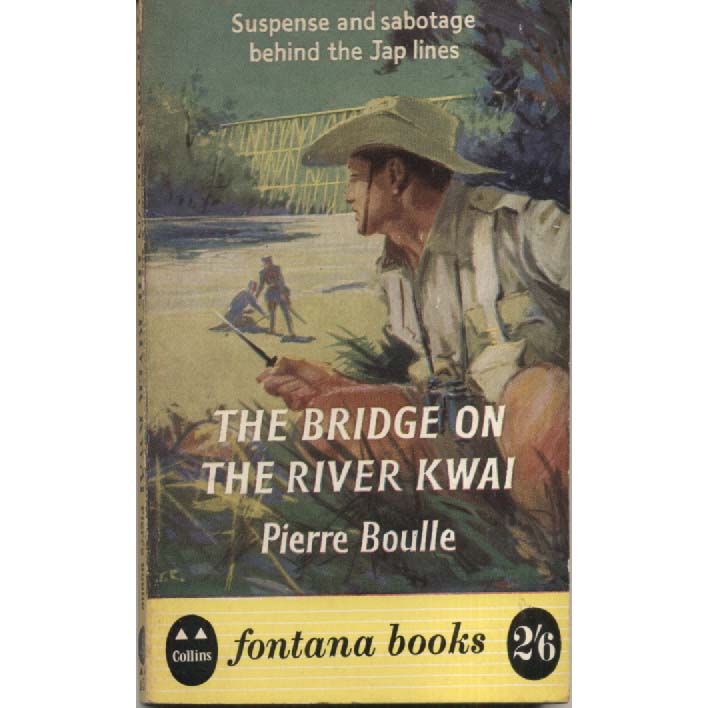
"The Bridge on the River Kwai," authored by Pierre Boulle and published in 1959 by Fontana, stands as a remarkable cultural artifact that reflects both its era and the complexities of its narrative. The book, which revolves around the construction of a bridge during World War II, offers a mix of adventure, moral ambiguity, and the psychological struggles of its characters. The cover design of this paperback edition, with its stark imagery and bold typography, captures the essence of post-war literature, drawing readers into the tumultuous landscape of conflict and human endurance. The overall aesthetic of the book, typical of the late 1950s, features a slightly worn paperback vibe, suggesting it has been part of many readers' journeys, perhaps even passed along in a second-hand bookstore or a beach holiday.
Pierre Boulle is a name that resonates within the canon of 20th-century literature, yet he remains somewhat of an enigma. Widely recognised for his other works, including "Planet of the Apes," Boulle's literary career is marked by a fascination with themes of war and philosophy, often reflecting on the human condition. He was born in France in 1912 and served in the French Resistance during World War II, experiences that undoubtedly influenced his writing. While Boulle’s novels have enjoyed adaptations into iconic films, such as the famous 1957 movie directed by David Lean, his own biography is less frequently the subject of public scrutiny, leaving some aspects of his life and influences obscure or lightly documented.
The year 1959 was significant in many ways, as it marked a time of cultural transformation and reflection in the aftermath of World War II. The world was grappling with the consequences of the conflict, and literature was often a medium through which these struggles were explored. The Cold War was in full swing, and themes of loyalty, betrayal, and the absurdity of war found their way into the works of many authors from this period. Boulle’s "The Bridge on the River Kwai" taps into these sentiments, capturing the psychological complexities of the wartime experience while also commenting on the futility and irony of human endeavour in the face of conflict. The book reflects the zeitgeist of its time, resonating with readers who were seeking meaning in the chaos of a rapidly changing world.
As a cultural object, this book is more than just a narrative; it embodies the anxieties and triumphs of a generation. The print culture of the late 1950s favoured accessible publications that appealed to a broad audience, and "The Bridge on the River Kwai" fits neatly within this context. Its paperback format is emblematic of the post-war boom in publishing, making literature more widely available and affordable. This particular edition by Fontana is representative of the era's design tendencies, featuring a cover that speaks to both the dramatic themes of the book and the aesthetic preferences of the time.
The narrative itself, while gripping, also raises questions about loyalty and the moral dilemmas faced by individuals during wartime. Boulle's exploration of the characters’ motivations and the ultimate futility of their efforts in constructing the bridge serves as a poignant reminder of the absurdity often found in war. This theme resonates with readers who are familiar with the historical context, making it a reflective piece for those who understand the sacrifices made during such tumultuous times.
Moreover, the dialogue and character development in "The Bridge on the River Kwai" provide an interesting lens through which to examine the human psyche under duress. The psychological depth afforded to the characters illustrates Boulle's understanding of the human condition, even amid the chaos of war. This aspect has contributed to the book's longevity, as it continues to be read and discussed in various educational settings, further entrenching its status as a classic.
In conclusion, "The Bridge on the River Kwai" is not merely a story of war; it is a reflection of the complexities of human nature and the absurdities of conflict. Pierre Boulle’s work captures the zeitgeist of the late 1950s while providing readers with a compelling exploration of loyalty, morality, and the human spirit. As a cultural object, it holds significance not only for its narrative but also for its place in the history of literature and its impact on the print culture of the time. Crappy Old Books offers this gem not just as a read, but as a piece of history, inviting readers to consider the enduring questions it raises about humanity and conflict.