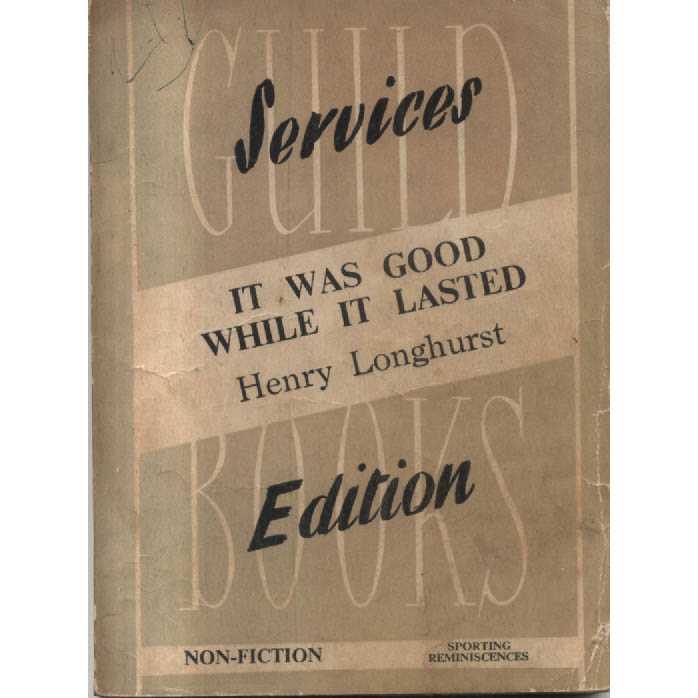
AI-assisted note, based on the text and a physical inspection of this copy.
"It Was Good While It Lasted," authored by Henry Longhurst and published in 1943 by Amalgamated Press, presents itself as a curious relic from a specific era in British literature. The cover design, emblematic of the period, features muted colours and an illustration that seems to echo the aesthetic of wartime publications, a blend of resilience and nostalgia. It captures a certain essence of the 1940s—a time when print culture was both a source of solace and an escape from the harsh realities of life during World War II. The paperback vibe of this book adds to its charm, with a slightly worn texture that suggests it has been passed around, perhaps as a comforting read during difficult times. It’s a book that feels as if it has stories of its own, having travelled through various hands and lives, each imprint adding to its character.
Henry Longhurst appears as a somewhat obscure figure within the literary landscape. He is primarily known for his work as a sports journalist, which places him in a unique niche in publishing history. While not a household name like some of his contemporaries, his contributions to sports literature and journalism during the mid-20th century are noteworthy. Longhurst’s writings often reflected a deep appreciation for the games he covered, and though little is documented about him outside of this realm, his work seems to resonate with a certain authenticity that can be admired in the context of his era. His position in literary culture is perhaps that of an unsung hero, a writer whose passion for his subject matter shines through, even if he has not achieved the widespread recognition that others have.
The year 1943 was a pivotal time in British history, deeply entrenched in the struggles of World War II. The cultural landscape was heavily influenced by the war effort, with literature often serving as both a means of distraction and a reflection of the national spirit. Books published during this time tended to capture the zeitgeist of resilience, courage, and nostalgia for a pre-war world. Readers sought comfort in stories that echoed their experiences or provided a window into lives that were perhaps more ordinary or idyllic. "It Was Good While It Lasted" fits neatly into this milieu, serving as a reminder of the fleeting nature of happiness against the backdrop of hardship. The themes of the book likely resonate with a public yearning for normalcy during chaotic times, making it more than just a simple narrative but rather a cultural artefact of its time.
The content of the book often oscillates between light-hearted anecdotes and deeper reflections on the transitory nature of life. Longhurst's prose captures a conversational tone that invites readers to engage with the text, almost as if they are partaking in a dialogue with the author. His style is accessible, making the book suitable for a wide audience, which is likely one of its enduring qualities. The narrative might not be groundbreaking or revolutionary in terms of literary technique; however, it serves its purpose well, providing readers with a momentary escape from the realities of their lives. The charm of this book lies in its ability to evoke feelings of warmth and familiarity, akin to sitting down with an old friend.
The world of print culture during the early 1940s was characterised by resourcefulness and innovation, as publishers sought to keep the public engaged amidst scarcity. The Amalgamated Press, known for its diverse range of publications, tapped into the cultural consciousness of the time, producing works that resonated with the experiences of everyday people. The decision to publish a book like "It Was Good While It Lasted" suggests an understanding of the audience’s needs—offering them a reprieve, if only for a few hours, from the chaos surrounding them. Readers would have likely found solace in Longhurst's reflections, which could serve to uplift spirits or provoke thought about the nature of happiness and its fleeting moments.
In reviewing "It Was Good While It Lasted," it becomes clear that the book’s significance transcends its narrative. It serves as a cultural artefact representative of a period marked by uncertainty and longing for joy. The tactile experience of holding the book, paired with its historical context, invokes a sense of nostalgia that is palpable. Longhurst’s ability to weave together moments of levity with poignant observations creates a reading experience that feels both personal and universal.
As we reflect on this work, it's essential to recognise its place within the broader spectrum of Crappy Old Books. These texts, often overlooked or dismissed, house within their pages the echoes of their time, revealing much about the societal attitudes and cultural conditions of the era. "It Was Good While It Lasted" is one such book that, despite its seemingly simple premise, opens a window into the heart of a generation grappling with the complexities of joy amidst adversity. In an age where literature often serves to challenge and provoke, this book reminds us of the power of storytelling to reflect our shared human experience.