AI-assisted note, based on the text and a physical inspection of this copy.
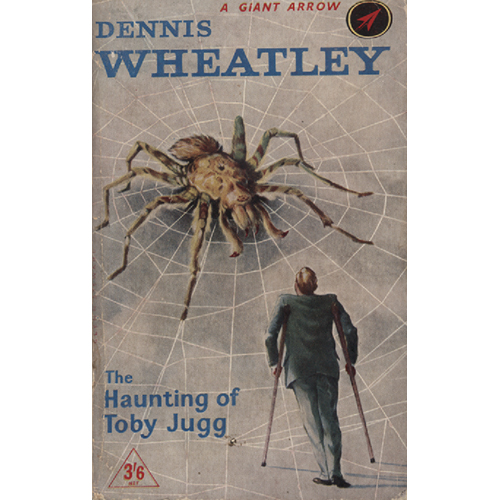
In the realm of mid-20th century British literature, few authors loom as large as Dennis Wheatley, a name that resonates with aficionados of the supernatural and the occult. "The Haunting of Toby Jugg," published in 1961 by A Giant Arrow, encapsulates Wheatley's penchant for blending thrilling narratives with elements of mysticism. The book, a paperback edition that feels both weighty and fragile in hand, is adorned with a lurid cover featuring a spectral figure that hints at the ghostly shenanigans within. The aesthetic is distinctly of its time, evoking an era steeped in post-war anxieties and a fascination with the unknown. The cover design, while perhaps overzealous, effectively captures the reader's imagination, drawing them into its world of suspense and eerie occurrences.
The story follows the titular character, Toby Jugg, who finds himself ensnared in a web of supernatural phenomena that challenge his sanity and perceptions of reality. Wheatley’s narrative style, a blend of detailed descriptions and engaging dialogue, immerses the reader in Toby's plight, although it may sometimes meander into overly elaborate territory. The pacing varies, with moments of high tension interspersed with lengthy expositions, which might test the patience of some modern readers. However, for those who revel in the atmospheric build-up typical of Wheatley's work, this novel offers a compelling experience.
Dennis Wheatley, born in 1897, is often celebrated as one of the foremost writers of thrillers and horror fiction in the 20th century. His career flourished during a time when the genre was gaining traction, aligning with a growing public interest in the occult and supernatural themes. Wheatley's bibliography is extensive, featuring works that explore not only horror but also adventure and espionage. He was known for his deep engagement with esoteric subjects, and his personal experiences and interests often seeped into his writing. While he may not be as universally recognised as some of his contemporaries, his contributions to the genre are significant, warranting a place in discussions of popular literature from that era.
The 1960s in Britain were marked by a cultural shift that embraced both modernism and a fascination with the supernatural, influenced by the backdrop of the Cold War and a growing sense of disillusionment. Wheatley's "The Haunting of Toby Jugg" taps into these societal undercurrents, reflecting a collective obsession with the macabre and the uncanny. The period saw a rise in interest towards spiritualism and the occult, making Wheatley’s work not only relevant but also a product of its time. Readers in 1961 may have found themselves captivated by the book’s exploration of fear and the unknown, resonating with their own societal anxieties.
The paperback vibe of "The Haunting of Toby Jugg" is reminiscent of a time when readers would pick up such tomes in dimly lit shops or at railway stations, the scent of aged paper mingling with the thrill of discovery. The texture of the pages, slightly yellowed with age, adds a layer of authenticity to the reading experience, inviting one to ponder the countless hands that may have turned these pages before. Despite its flaws, including occasional overindulgence in detail and a somewhat predictable plot arc, the book stands as a testament to Wheatley’s ability to weave a tale that both entertains and unnerves.
Overall, "The Haunting of Toby Jugg" represents a curious intersection of horror and adventure, a reflection of its time, and an embodiment of Wheatley’s unique style. Readers familiar with his oeuvre will find much to appreciate, while newcomers may be drawn into the labyrinth of his narrative, even if they find it somewhat dated by contemporary standards. The novel serves as a cultural artefact, revealing not only the author's literary ambitions but also the zeitgeist of the 1960s, a decade rife with uncertainties and a longing for escapism. For those who enjoy delving into Crappy Old Books, this title certainly merits a place on the shelf, if only as a conversation starter about the evolution of horror literature in the British canon.