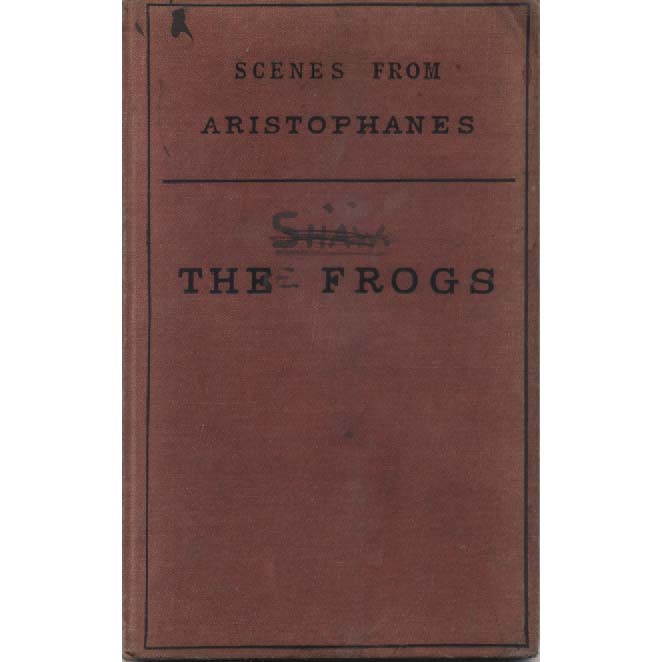
AI-assisted note, based on the text and a physical inspection of this copy.
Published in 1905 by Longmans, "The Frogs" is a translation of the classic Greek play by Aristophanes, a staple of ancient comedic theatre. This particular edition embodies the aesthetic qualities of early 20th-century book design, featuring a modest cover that betrays its age yet also hints at the scholarly pursuits of the time. The binding is sturdy, characteristic of a period when book production was transitioning from ornate styles to more utilitarian approaches, catering to a growing readership eager for both education and entertainment. The paper quality is decent, although it shows signs of yellowing and brittleness that one might expect from a volume over a century old.
As a cultural artifact, this edition captures the essence of its era. The early 1900s was a time when classical literature was being rediscovered and repackaged for modern audiences. The influence of the Victorian era's reverence for the classics was still palpable, as was the burgeoning interest in theatre and literature as a means of social and political critique. "The Frogs," with its incisive commentary on the state of Athenian theatre and society, thus serves not only as entertainment but also as a reflection of the cultural anxieties and aspirations of its time. The translation itself attempts to balance fidelity to the original text with accessibility for contemporary readers, which was a significant challenge for translators of that period.
Aristophanes himself is a towering figure in the realm of ancient literature, often celebrated as the father of comedy. His works have survived through the ages, offering insights into Athenian life, politics, and the theatre of his time. Aristophanes was known for his sharp wit and satirical style, using humour to critique the societal norms and political figures of his day. While the author is well-documented in classical studies, specific details about the translations or adaptations of his works, such as this one from 1905, can often be obscured by the passage of time. Thus, the translator of this edition remains somewhat of a mystery, possibly overshadowed by the illustrious name of Aristophanes himself.
The year 1905 was marked by significant global upheaval and change, including political movements, technological advancements, and evolving cultural norms. In literature, this was the era when modernism was beginning to take root, challenging traditional forms and conventions. The publication of "The Frogs" during this transformative period suggests a continued fascination with the past, even as the world was poised for dramatic shifts in artistic expression. The play’s themes of artistic integrity and the role of the artist resonate with the modernist ethos, reflecting the tensions between tradition and innovation that characterised the era.
Moreover, "The Frogs" is a remarkable example of how ancient texts can be reinterpreted and repurposed for new audiences. The play itself, a comedic journey to the underworld in search of a great playwright to revive Athenian theatre, serves as both a critique of contemporary art and a celebration of the power of creativity. The humour, while rooted in the specifics of Athenian culture, transcends time and space, inviting readers to reflect on their own artistic landscapes. This translation’s capacity to bridge the ancient and modern worlds underscores the enduring relevance of Aristophanes' work.
In conclusion, this 1905 edition of "The Frogs" stands as a testament to the enduring legacy of Aristophanes and the cultural milieu of its publication. Its design reflects the transitional period of early 20th-century book production while also serving as a reminder of the timeless nature of comedy and critique. For those interested in the intersections of literature, history, and culture, this volume holds a unique place. Crappy Old Books appreciates such works, as they both illuminate the past and invite contemporary readers to engage with themes that remain relevant today.