AI-assisted note, based on the text and a physical inspection of this copy.
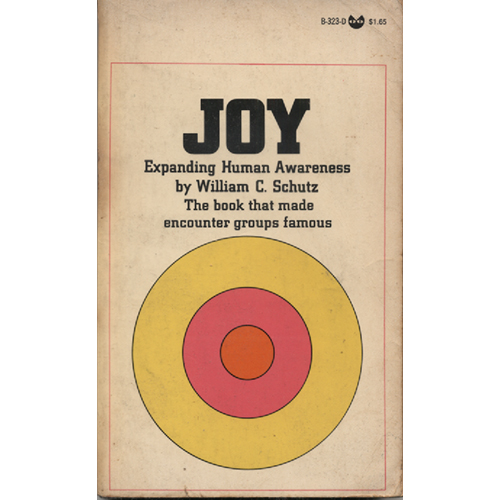
William C. Schutz's Joy, published in 1967 by Grove Press, presents itself as a curious artefact from a time of cultural upheaval and self-exploration. The book's cover, adorned with bright, bold colours and abstract designs, reflects the vibrant aesthetic trends of the late 1960s, an era marked by a burgeoning interest in personal liberation and collective consciousness. This visual appeal serves as an invitation to readers, suggesting that the content within may offer insights into the pursuit of happiness and emotional well-being, themes that were increasingly resonant during this transformative decade.
As a cultural object, Joy embodies the spirit of its time, a period when self-help and psychological exploration began to gain traction in mainstream literature. The paperback format, common in the '60s, adds to its accessibility, allowing a wider audience to engage with Schutz's ideas. The tactile experience of flipping through its pages, with a slightly grainy texture characteristic of the period's print culture, evokes a sense of nostalgia for a time when personal development was becoming a hot topic, often discussed in coffee houses and communal settings. The book's typeface, a bold sans-serif, further enhances the straightforwardness of its message, appealing to readers who sought clarity amid the chaos of modern life.
William C. Schutz is not a household name in literature, and details about his life appear to be somewhat obscure. He seems to occupy a niche space within the broader context of self-help and psychological literature, yet he lacks the widespread recognition of contemporaries such as Dale Carnegie or Norman Vincent Peale. Speculatively, Schutz may have been influenced by the humanistic psychology movement, which sought to explore the depths of human experience and cultivate personal growth. However, the absence of substantial documentation regarding his biography or influence suggests that he remains a lesser-known figure in the literary landscape of self-help literature.
The year 1967 was pivotal not only for Schutz but also for the cultural zeitgeist. This was the same year that saw the release of the Beatles' Sergeant Pepper's Lonely Hearts Club Band, an album that encapsulated the spirit of experimentation and liberation that permeated the decade. The Vietnam War was escalating, civil rights movements were gaining momentum, and there was a palpable yearning for change. In this context, Joy can be perceived as a response to the societal desire for inner peace and fulfillment amidst external turmoil. The book's exploration of joy may serve as a counter-narrative to the strife of the times, suggesting that happiness could be pursued as a tangible goal, even in the face of adversity.
In terms of content, Schutz's writing can be described as earnest, aiming to resonate with the reader on a personal level. He employs a conversational style that encourages engagement and reflection, which is characteristic of self-help literature of the era. The themes presented in Joy may revolve around self-acceptance, the importance of interpersonal relationships, and the power of positive thinking. While the book may not break new ground within its genre, it reflects the growing interest in psychological well-being that began to flourish in the mid-20th century.
In examining the cultural impact of Joy, one must consider how it fits into the broader narrative of self-exploration that emerged during the 1960s. The decade was marked by a quest for authenticity and a rejection of traditional norms, which led many to seek out new forms of personal expression and understanding. Schutz's work can be seen as part of this larger movement, contributing to the discourse surrounding mental health and emotional fulfilment. However, unlike more prominent figures in the self-help and psychological literature, Schutz's influence seems to have waned over the years, leaving his work as a curious relic rather than a lasting cornerstone.
Ultimately, Joy serves as an intriguing snapshot of its time, embodying the optimism and aspirations of the 1960s while simultaneously reflecting the growing desire for personal happiness and fulfilment. Its design and content resonate with the cultural currents of the era, even if its author remains somewhat elusive within the annals of literary history. For those interested in the evolution of self-help literature or the cultural dynamics of the 1960s, Schutz's work provides a fascinating glimpse into the past. Crappy Old Books invites readers to explore such forgotten gems, reminding us that even the most obscure titles have a place in the tapestry of literary culture.