AI-assisted note, based on the text and a physical inspection of this copy.
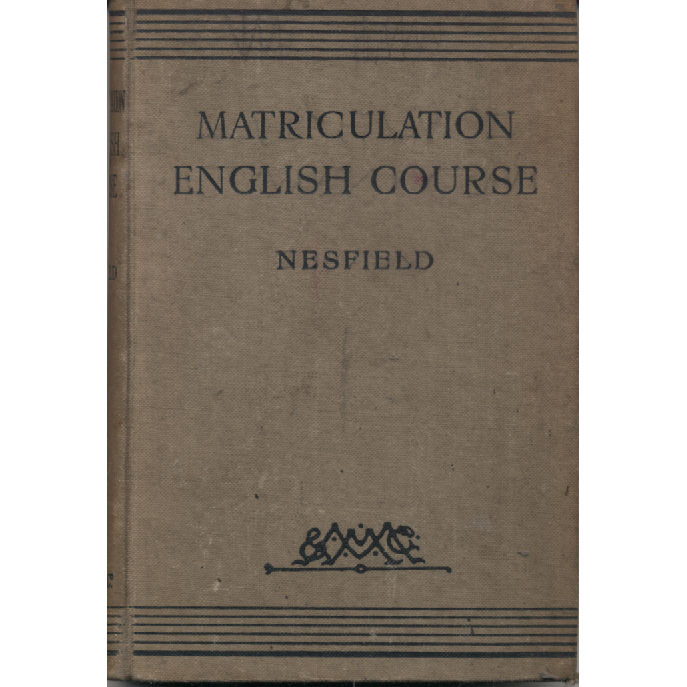
The Matriculation English Course by JC Nesfield, published in 1928 by MacMillan and Co., Limited, stands as a curious artefact of educational literature from the early 20th century. This book is not merely a collection of exercises and readings; it is a testament to a particular pedagogical approach prevalent during its time. The cover design, featuring muted colours and an austere font, reflects the no-nonsense attitude of educational resources from this era. The paperback format, slightly worn at the edges, conveys a sense of history and usage, suggesting that it was once a staple in classrooms or study sessions. The overall presentation is functional, lacking the flair of modern textbooks, which often aim to engage visually as much as intellectually. Instead, it embodies a straightforward, utilitarian vibe that might appeal to those who appreciate the unembellished style of early educational texts.
JC Nesfield’s name may not resonate widely in contemporary literary discussions, but he occupies an interesting place within the realm of educational publishing. While specific details about his life are scarce, he is noted as an influential figure in English language education during the early 20th century. His works, primarily focused on grammar and composition, were widely used in schools and contributed to the standardisation of English language instruction at the time. This book, therefore, can be seen as a product of its author’s ambition to provide a structured method for teaching English to students preparing for matriculation exams. The obscurity surrounding Nesfield's biography suggests that while his contributions were significant in educational circles, they did not translate into broader literary fame.
Published in 1928, this text emerges from a period marked by significant changes in British society and education. The aftermath of the First World War and the subsequent economic challenges led to a re-evaluation of educational practices. The 1920s were characterised by a push towards more formalised education, particularly as the demand for skilled workers increased. The Matriculation English Course aligns with this cultural context, as it seeks to equip students with the necessary language skills to succeed in both their academic pursuits and future careers. The book resonates with the educational philosophies of the time, which often emphasised rote learning and strict adherence to grammatical rules, reflecting a rigid approach that has since evolved into more dynamic and interactive teaching methods.
The content of the book is structured around key components of English language learning, including grammar, composition, and comprehension exercises. Each section is designed with a clear objective, aiming to build foundational skills that students would need for their examinations. The exercises are straightforward, often utilising a prescriptive approach that may seem outdated to modern educators. However, this rigidity can also be viewed as a strength, providing clarity and focus for students who thrive under explicit guidelines. The book serves as a window into the educational practices of its time, illustrating how language was taught in a period that prioritised academic achievement and standardised testing.
In terms of print culture, the physical characteristics of the Matriculation English Course reflect a transitional period in publishing. The use of durable paper and ink, typical of MacMillan publications, indicates a commitment to producing educational materials that would withstand the rigours of classroom use. The book lacks the glossy finishes and vibrant illustrations found in many contemporary educational texts, which can be both a limitation and a charm. The absence of visual stimuli may discourage some readers, but it also reinforces the focus on content over presentation, a hallmark of the educational texts of the era.
As for the broader implications of Nesfield’s work, the Matriculation English Course highlights the shift in educational paradigms that began in the 1920s, moving toward a more structured and formalised approach to language learning. This was a time when the importance of English as a foundational subject was increasingly recognised, paving the way for future pedagogical reforms. The book exemplifies the cultural values of its time, prioritising clarity, correctness, and a systematic approach to language that would influence generations of students.
In conclusion, the Matriculation English Course by JC Nesfield is a fascinating relic of educational history, offering insights into the pedagogical methods of the 1920s. While it may not capture the imagination like contemporary educational texts, it serves as an important reminder of the evolution of teaching practices and the enduring significance of English language education. For those interested in the history of educational literature, this book is a noteworthy contribution, reflecting both the strengths and limitations of its era. Crappy Old Books continues to celebrate such cultural objects, reminding us of the myriad ways in which literature shapes our understanding of the past.