AI-assisted note, based on the text and a physical inspection of this copy.
The *Younger Verse Speakers Anthology Book I*, edited by E Guy Pertwee and Marjorie Lyon, is a curious artifact of mid-20th-century British literature, capturing the essence of a specific cultural moment through the lens of poetry aimed at youthful orators. Published in 1954 by Samuel French, a publisher known primarily for its theatrical works, this anthology represents an interesting intersection of education, performance, and the arts. The book is a collection of texts designed for recitation, inviting young speakers to engage with the poetic form and bring it to life, perhaps in the hopes of fostering a love for literature among a generation that was navigating the post-war landscape of Britain.
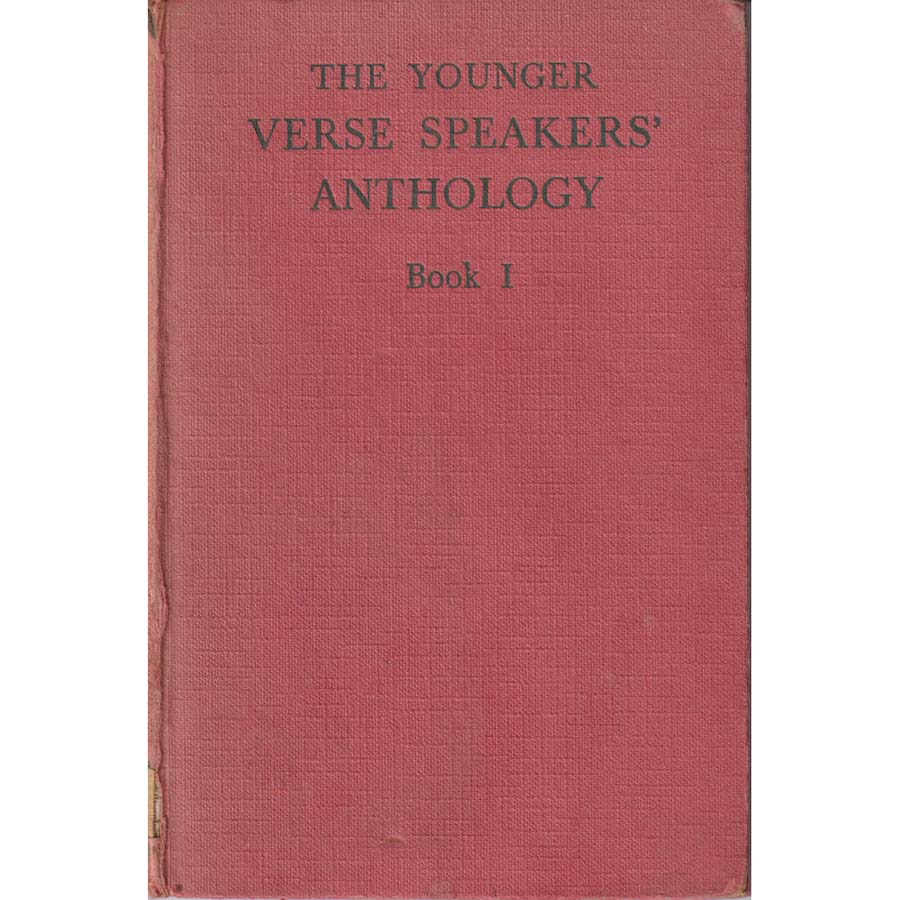
The cover design of this anthology is a telling reflection of its era, featuring a somewhat austere yet classic aesthetic typical of the 1950s. The muted colour palette, combined with the straightforward typography, suggests a seriousness and reverence for the spoken word. This aesthetic choice aligns with the educational focus of the anthology, which aims to instil a sense of decorum and respect for poetry in its young readers. The paperback vibe is palpable, making it accessible to schools and individuals alike, and it embodies the mid-century trend towards creating educational materials that were both practical and aesthetically pleasing. The physicality of the book, with its thin pages and lightweight binding, reinforces its role as a tool for learning rather than a mere literary indulgence.
E Guy Pertwee and Marjorie Lyon, the editors of this anthology, appear to be figures somewhat obscured by the passage of time. Pertwee is known for his contributions to theatre and literature, while Lyon, though less documented, is noted for her role in fostering young talent in the arts. Their collaborative effort in producing this anthology indicates a shared commitment to encouraging the next generation's engagement with poetry. However, detailed biographical information on either editor is sparse, and it seems that while they may have made their mark in certain circles, they have not achieved widespread recognition in the broader literary canon. This obscurity adds a layer of intrigue to the anthology, inviting readers to consider the voices behind the selections and the cultural context in which they were operating.
The year 1954 was a significant one in British history, marked by a slow recovery from the devastation of World War II and a burgeoning sense of identity in a changing world. The cultural landscape was shifting, with a growing emphasis on education and the arts as tools for social cohesion and personal expression. This anthology, with its focus on poetry as a medium for young speakers, reflects the era's prioritisation of nurturing talent and fostering creativity in youth. The post-war educational reforms, which aimed to make literature more accessible to students, coincided with an increasing awareness of the importance of the arts in shaping cultural identity. Thus, *Younger Verse Speakers Anthology Book I* can be seen as part of a broader movement towards integrating literary arts into everyday life, particularly in educational settings.
As a cultural object, the anthology not only serves as a collection of poems but also as a reflection of the values and aspirations of a particular time. The selections within are presumably chosen to resonate with young speakers, encouraging them to explore their vocal potential and appreciate the rhythm and cadence of language. The act of recitation itself is an important aspect of the anthology, suggesting that poetry is not merely to be read but performed, embodying a living tradition that connects the speaker with audiences past and present. This interactive element of engaging with poetry enhances the reader's experience and might inspire a lifelong love for literature in those who partake in its recitation.
In conclusion, the *Younger Verse Speakers Anthology Book I* stands as a testament to the cultural and educational priorities of Britain in the mid-1950s. It embodies an era that sought to elevate the arts within the educational sphere, encouraging the youth of the time to find their voices through poetry. Despite the obscurity of its editors, the anthology remains an important piece of literary history, contributing to the ongoing dialogue about the role of poetry in education and performance. As we revisit such works, we can appreciate the nuances of their cultural significance, and Crappy Old Books invites us to reflect on these forgotten gems of literary heritage.