AI-assisted note, based on the text and a physical inspection of this copy.
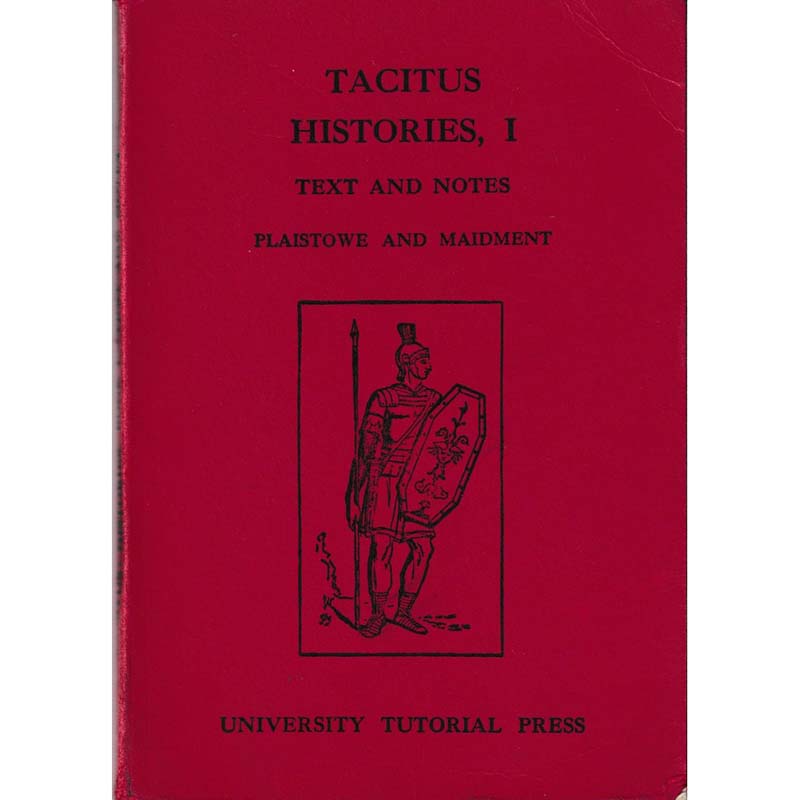
The 1969 edition of Tacitus’s *Histories I*, translated by Plaistowe and Maidment and published by University Tutorial Press, is a curious artifact of its time. The cover design, a blend of muted colours with a stark white background, is emblematic of the academic publishing aesthetic of the late 1960s. While it lacks the flamboyance of modern covers, it conveys a certain seriousness, as if to say, “Here lies the weight of history.” The paperback format, typical of the era, gives it a somewhat utilitarian feel, intended for students and scholars alike rather than casual readers. The choice of font, while legible, leans towards the utilitarian, and the overall layout presents a work that aspires to scholarly integrity without the embellishments that might attract a wider audience. It’s a book that is very much at home in a library or on a student’s desk, but it lacks the allure to entice the average reader browsing a bookstore. This is a volume for study, not for leisure, a reflection of a time when the rigours of academia were often dressed in plain packaging.
As for the authors, Plaistowe and Maidment, they appear to be relatively obscure within the literary landscape. There is scant biographical information readily available, which raises questions about their broader contributions to scholarship or translation. It seems they may have been more focused on academic pursuits than on establishing a lasting literary legacy, which is not uncommon among translators of classical texts. Their work on Tacitus, however, suggests a dedication to making ancient histories accessible to contemporary readers, albeit in a format that is decidedly niche. This obscurity does not diminish the merit of their translation; rather, it points to the often-overlooked contributions of translators and editors in the realms of classical literature.
Published in 1969, this edition of *Histories I* falls within a cultural milieu marked by a growing interest in classical studies, which was particularly pronounced in educational institutions during the post-war period. The late 1960s were a time of intellectual exploration and upheaval, with the rise of counterculture movements and a questioning of established norms. Yet, there remained a strong undercurrent of respect for the classical canon, as scholars sought to connect contemporary issues with historical precedents. This translation by Plaistowe and Maidment serves not only as an academic resource but also as a reminder of the timelessness of Tacitus’s narratives, which speak to themes of power, corruption, and the fragility of civil order—issues that resonate deeply even in the context of 1960s sociopolitical turbulence. In an era when students were increasingly engaging with challenging texts, this version of *Histories I* aimed to provide a bridge between Tacitus’s ancient world and the complexities of modern life.
The text itself, while undoubtedly a vital historical document, can be a challenging read, reflective of Tacitus’s intricate style and the translator's attempt to remain faithful to the original Latin. The prose is dense, and the political machinations described are as convoluted as any contemporary drama. The translation process, as executed by Plaistowe and Maidment, strives for accuracy, which can sometimes result in a lack of fluidity in the text. This can alienate readers unfamiliar with the historical context or the intricacies of Roman politics. Still, for those willing to invest the time, it offers a rich tapestry of history that is both enlightening and, at times, perplexing. The challenges presented in reading this edition echo the broader experience of grappling with historical texts, where the rewards often come after considerable effort.
Moreover, the physicality of the book—the yellowing pages, the slightly brittle paper typical of its age—adds a layer of authenticity to the reading experience. It is a tangible link to the past, a reminder that these are not just words on a page but the echoes of a world long gone. The 1969 edition stands as a testament to the era’s dedication to preserving and disseminating classical knowledge, even if it does so in a manner that may seem less accessible to today’s readers, accustomed to more dynamic forms of engagement with literature.
In the end, *Histories I* by Tacitus, as rendered by Plaistowe and Maidment, encapsulates a moment in time where classical literature was both revered and made available to a new generation of thinkers. The book’s design, its somewhat austere academic intent, and the cultural backdrop of the late 1960s all contribute to its identity as a cultural object. While it may not attract the casual reader, it remains a valuable resource for students and scholars who wish to delve into the complexities of Roman history through Tacitus’s eyes. Crappy Old Books invites readers to appreciate such works not merely for their content but for the cultural narratives they embody.