AI-assisted note, based on the text and a physical inspection of this copy.
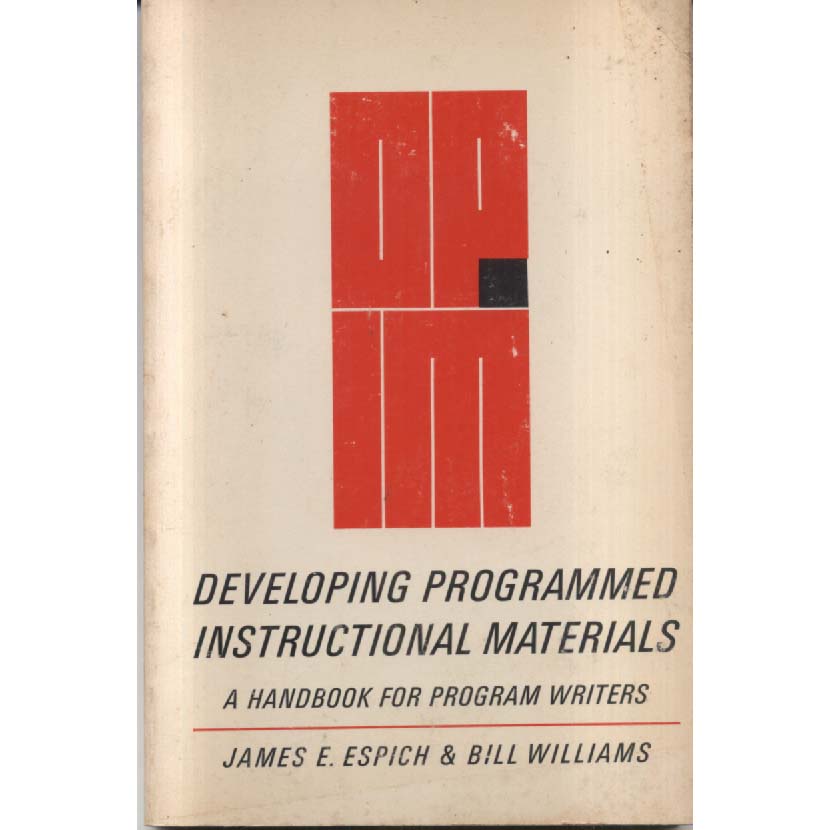
“Developing Programmed Instructional Materials” by James E. Espich and Bill Williams is a product of its time, embodying both the optimism and the utilitarian ethos of educational reform in the late 1960s. This paperback, with its somewhat austere cover design featuring muted colours and simple typography, reflects a transitional period in publishing where educational texts began to embrace more structured and systematic approaches to teaching. The overall vibe is one of earnestness, designed to cater to a burgeoning interest in programmed instruction—a method thought to revolutionise education by offering a self-paced learning experience. The book's physicality, with its slightly yellowed pages and soft cover, suggests it has been well-thumbed by educators and students alike, a testament to its practical use over the decades.
The authors, James E. Espich and Bill Williams, appear to occupy a somewhat niche space within educational literature. While there is limited biographical information readily available about them, it is evident that they were practitioners in the field of instructional design during a significant shift in pedagogical methods. Their collaboration on this title indicates a fusion of expertise in educational theory and practice, though their broader literary contributions seem scant. This obscurity may suggest that they were more focused on the practical application of educational methodologies rather than achieving literary fame, a common pattern among instructional authors of the era.
Published in 1967, this book emerges from a cultural backdrop marked by significant changes in American society, particularly in education. The post-war era had given way to an increasing emphasis on science and technology, and educational institutions were exploring innovative methods to accommodate a growing population of students. Programmed instruction was seen as a pathway to efficiency, promising to enhance learning outcomes through rationalised, step-by-step teaching processes. This era's educational reforms were heavily influenced by the ideas of behaviourism, which suggested that learning could be broken down into manageable components, a theme prevalent throughout the text. The book serves not only as a manual for creating instructional materials but also as a reflection of the ideological currents that sought to optimise learning through systematic approaches.
The contents of “Developing Programmed Instructional Materials” delve into the practicalities of creating educational materials that facilitate self-directed learning. The book is structured in a manner that guides the reader through various stages of instructional design, focusing on principles such as clarity, engagement, and assessment. It strongly emphasises the need for materials to be learner-centred, a notion that was gaining traction during the 1960s. The text is replete with examples and exercises aimed at helping educators develop their own programmed materials, suggesting a hands-on approach that aligns with the DIY ethos prevalent in many educational reform movements of the time.
Moreover, the book's language is straightforward and accessible, indicative of the authors' intent to reach a wide audience of educators, from novice teachers to seasoned administrators. The tone is practical and devoid of excessive jargon, making it a useful resource for those looking to implement programmed instruction in various educational settings. However, it must be noted that while the text provides foundational knowledge, it may fall short in addressing the complexities of individual learning differences and the broader social context in which education occurs.
In terms of cultural impact, “Developing Programmed Instructional Materials” can be seen as part of a larger movement within educational publishing during the 1960s that sought to democratise access to knowledge. The book aligns itself with a growing body of literature that aimed to empower educators with the tools necessary to adapt to new teaching paradigms. Yet, it also reflects limitations inherent in the programmed instruction model, which has faced criticism for its mechanistic approach and failure to address the emotional and social dimensions of learning. As the years have progressed, the discussion surrounding programmed instruction has evolved, often overshadowed by newer pedagogical theories that advocate for more holistic educational practices.
In conclusion, “Developing Programmed Instructional Materials” stands as a cultural object that encapsulates a pivotal moment in educational history. It is a practical guide that contributes to the conversation about instructional design, yet its dated methodologies may evoke a sense of nostalgia for some while appearing rigid and prescriptive to others. Its authors, Espich and Williams, may not be well-known figures in the broader literary landscape, but their work remains a significant piece in the puzzle of educational innovation during the 1960s. As part of the Crappy Old Books collection, this title serves as a reminder of the evolving nature of educational philosophies and the enduring quest to improve teaching and learning in an ever-changing world.