AI-assisted note, based on the text and a physical inspection of this copy.
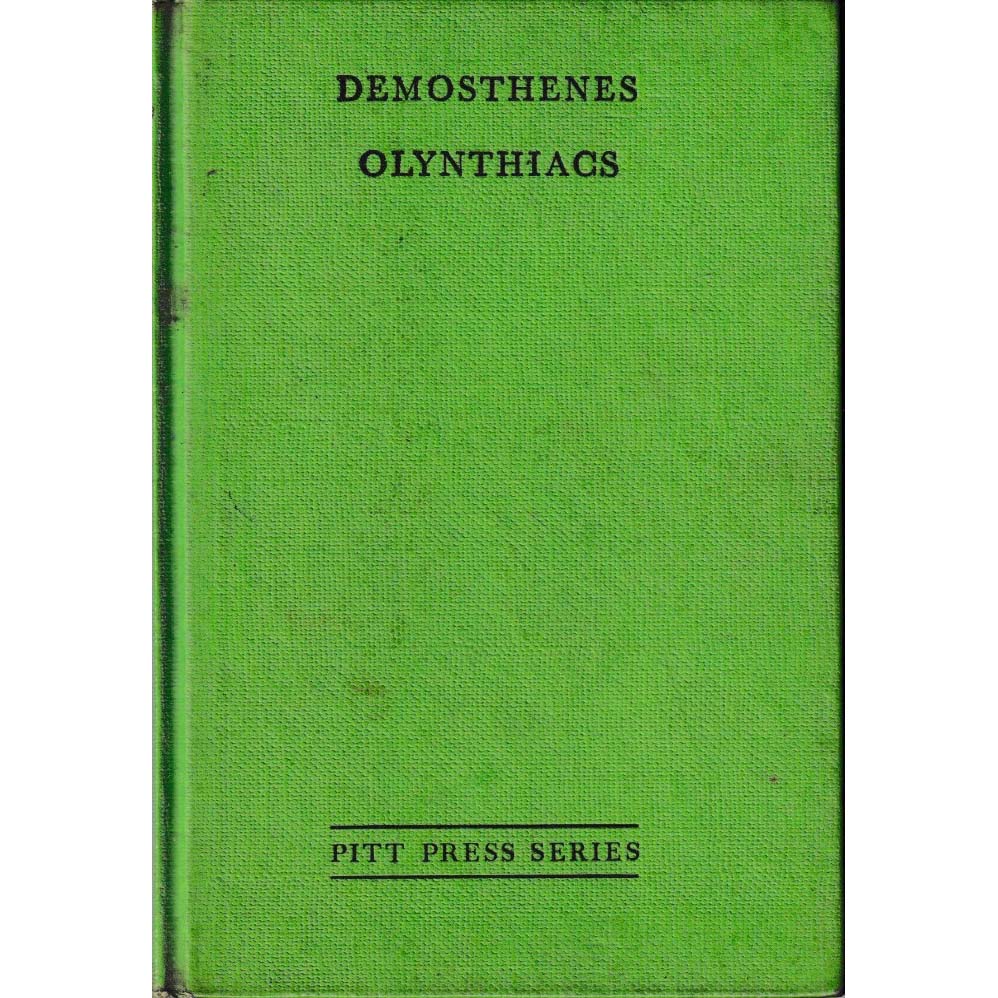
In the realm of ancient rhetoric and political discourse, J.M. Macgregor's 1956 publication, the Olynthiacs of Demosthenes, stands as a curious relic of mid-20th century academia. Published by Cambridge at the University Press, this edition serves not only as a translation but also as a scholarly examination of Demosthenes' orations aimed at the Athenian citizenry regarding the threat posed by Philip II of Macedon. The book's cover design, a stark blue adorned with a somewhat austere image of the classical philosopher, reflects the serious tone of its content, appealing to a scholarly audience rather than casual readers. The paperback vibe is unmistakable, lending it a certain utilitarian quality that suggests it was intended for use within educational contexts rather than as a leisurely read.
Macgregor, though not a household name, occupies a niche in the annals of classical studies. His contributions to the understanding of ancient rhetoric and his focus on translating works that might otherwise be inaccessible to modern readers place him within a lineage of scholars committed to preserving the voices of antiquity. However, details about his life and career remain scant, suggesting he may be an obscure figure in the broader landscape of literary culture. The absence of extensive biographical information raises questions about his influence and standing among contemporaries in the field, leaving readers to speculate on the wider impact of his scholarly work.
Published in 1956, this edition of the Olynthiacs arrives at a time when classical studies were gaining renewed attention, particularly in the context of post-war education in the UK. The mid-20th century was characterised by a growing emphasis on the humanities, as scholars sought to navigate the complexities of modernity through the lens of historical thought. The proliferation of academic presses, coupled with a burgeoning interest in classical texts, meant that works like Macgregor's could find their place in university syllabi, even as they occupied a somewhat marginal space in mainstream literary culture. The Olynthiacs, with its urgent themes of civic duty and political engagement, resonated with contemporary anxieties about governance and democracy, albeit filtered through a historical lens.
The text itself is structured around a series of speeches that highlight the urgency of the Athenian response to external threats. Macgregor's translation aims to capture both the rhetorical flourish and the underlying political tension present in Demosthenes’ original speeches. Readers may find themselves grappling with the archaic language and rhetorical strategies that, while illuminating in their historical context, may seem cumbersome in the modern vernacular. This tension between fidelity to the original text and accessibility for contemporary readers is a recurring theme in classical translations, and Macgregor's approach exemplifies the scholarly pursuit of balance.
The cultural significance of the Olynthiacs cannot be overstated, as it serves as a window into the political machinations of ancient Athens. In a world where the threats of tyranny and autocracy loom large, Demosthenes' impassioned pleas for action resonate with the timeless struggles for civic responsibility and democratic engagement. In this light, Macgregor’s work not only attempts to bridge the temporal chasm between ancient and modern readers but also challenges them to reflect on their own political landscapes. The book serves as a reminder that the core issues of governance, citizenship, and moral obligation remain remarkably relevant.
In conclusion, J.M. Macgregor’s Olynthiacs, while perhaps not a groundbreaking addition to classical literature, embodies the spirit of a scholarly endeavour aimed at preserving and interpreting the thoughts of one of history's most influential orators. Its publication by Cambridge at the University Press underscores the importance of academic scrutiny in the realm of ancient texts. For those interested in the intersection of rhetoric and political philosophy, this work offers valuable insights, albeit with the caveat that it is largely targeted toward a specialized audience. As with many entries in the catalogue of Crappy Old Books, it serves as both a historical document and a reflection of the cultural milieu in which it was produced.