AI-assisted note, based on the text and a physical inspection of this copy.
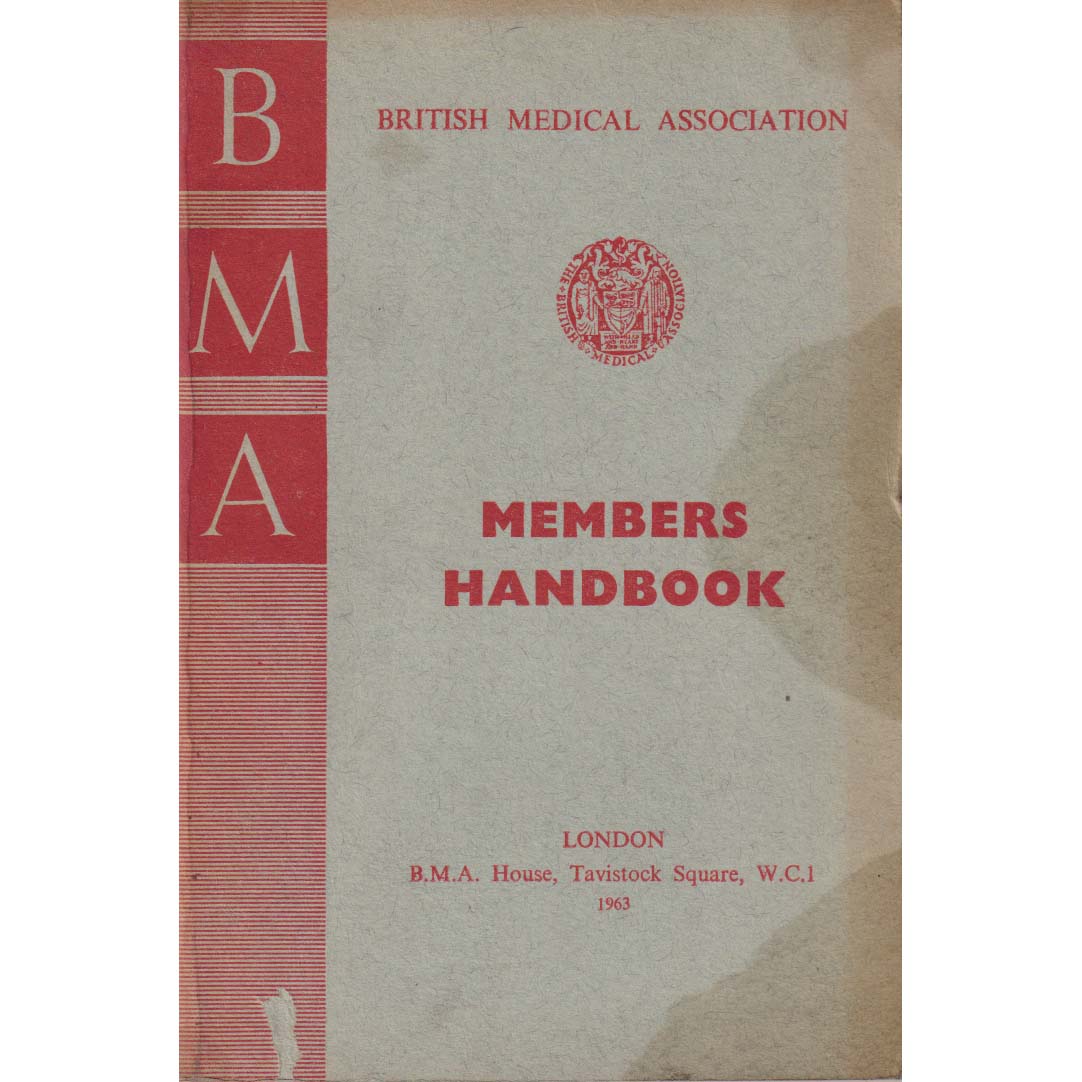
The "British Medical Association Members Handbook 1963" is a fascinating relic from an era when medical practice was undergoing significant changes. This handbook serves as a cultural artifact that encapsulates the spirit of its time, providing insights into the medical landscape of the 1960s in Britain. The cover design is utilitarian, featuring a straightforward layout that emphasises functionality over flair. The muted colours and simple typography reflect a period when practicality was paramount in professional publications. The paperback format, common for handbooks of this nature, lends it a certain charm, suggesting it was designed for easy reference in a doctor's bag or office. Its physicality evokes an appreciation for printed material in an age that now often favours digital resources, making it a tangible connection to the past.
The British Medical Association (BMA) itself is a well-known entity, established in the 19th century to represent doctors and advocate for medical standards. This handbook, published by the BMA, can be seen as part of their ongoing effort to provide resources and guidance for medical professionals. The BMA has played a pivotal role in shaping medical practice in the UK, and their publications often reflect the prevailing attitudes and practices of the time. This handbook is no exception; it serves not just as a guide but as a mirror to the values and challenges faced by medical practitioners during the 1960s.
Published in 1963, the handbook arrives at a crucial juncture in British history. The post-war period had brought about substantial changes in healthcare, including the establishment of the National Health Service (NHS) in 1948. By the early 1960s, the NHS was becoming increasingly entrenched in British society, reshaping the way medicine was practiced and accessed. This handbook likely addresses the evolving roles and responsibilities of doctors within this new framework, providing insights into the expectations placed upon them by both the BMA and society at large. The 1960s were also marked by a growing public awareness of medical ethics, patient rights, and the burgeoning field of medical research, all of which may be reflected in the handbook's contents.
As for the author, the British Medical Association is a collective voice rather than an individual author. This anonymity lends a certain mystique to the handbook; it represents a consensus of medical knowledge and societal norms as shaped by an influential institution. Although the BMA is widely recognised within the medical community, it does not fit neatly into the typical authorial role. The handbook can be understood as a product of collaborative effort, embodying the collective wisdom of many medical professionals rather than the vision of a singular author. This aspect of the handbook highlights the often-overlooked contributions of professional organisations in the dissemination of medical knowledge.
The contents of the handbook are likely to include practical information such as guidelines for practice, ethical considerations, and updates on medical legislation from that time. While specifics are difficult to ascertain without delving into the text itself, one can imagine that it encompasses a wide range of topics relevant to medical professionals navigating the complexities of their field in the 1960s. This includes not only the technical aspects of medicine but also the broader social responsibilities that were becoming increasingly significant in the face of rapid societal change.
The cultural context of 1963 was also marked by significant social change and upheaval. The decade was a time of questioning authority and traditional norms, and this was true in the medical field as well. The rise of patient advocacy, along with an increasing focus on patient-centred care, likely finds its way into the handbook's guidance for members. It serves as a reminder that medical practice is not merely a technical exercise but is deeply intertwined with societal values and expectations.
In conclusion, the "British Medical Association Members Handbook 1963" is more than just a practical guide; it is a snapshot of a pivotal moment in medical history and an important document that reflects the evolving landscape of healthcare in Britain. The utilitarian design and the collective authorship by the BMA lend it a unique position within both medical literature and cultural history. As we continue to navigate the complexities of modern medicine, this handbook stands as a reminder of the foundational principles that have shaped medical practice over the decades. Crappy Old Books offers a chance to revisit such cultural artefacts, encouraging us to reflect on the past while informing our understanding of the present.