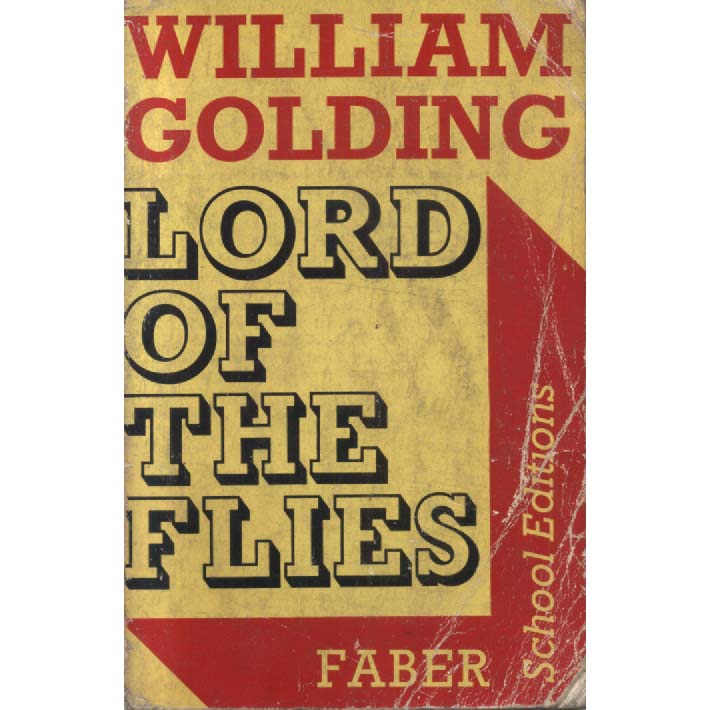
AI-assisted note, based on the text and a physical inspection of this copy.
“Lord of the Flies,” published in 1962 by Faber School Editions, remains a significant piece of literature, often encountered during formative school years. The cover design typically features stark, unsettling imagery that encapsulates the novel’s themes of savagery and the loss of innocence. The paperback vibe of this edition is emblematic of the early 1960s, presenting a sturdy, utilitarian quality that mirrors the no-frills approach of educational literature. Its pages are often yellowed, suggesting its frequent handling in classrooms, leading to a tangible connection between the reader and the text.
At its core, “Lord of the Flies” is a harrowing exploration of human nature, encapsulated in the story of boys stranded on an uninhabited island. Golding’s examination of the descent into chaos serves as a cautionary tale about the fragility of civilization. The narrative's progression from innocence to brutality is reflected in the stark simplicity of its prose, which is both accessible and profound. The characters, stripped of societal constraints, reveal the darker instincts that lie beneath the veneer of civility, making the novel a touchstone for discussions on morality, leadership, and the human condition.
William Golding, the author of this influential work, is best known for his keen insights into human psychology and society. Born in 1911, he served in the Royal Navy during World War II, experiences that heavily influenced his writing. “Lord of the Flies” was his debut novel, though he had previously published poetry. Golding’s literary career spans several decades, and he was awarded the Nobel Prize in Literature in 1983. His works often grapple with deep philosophical questions, positioning him as a significant figure in 20th-century literature. Despite his acclaim, Golding’s life and influences remain somewhat obscured, often overshadowed by the impact of his most famous work.
The year 1962 marked a period of cultural upheaval and introspection. The post-war context, coupled with shifting societal norms, provided fertile ground for literature that questioned established values. “Lord of the Flies” emerged during an era rife with anxieties about authority, morality, and the human psyche. The Cold War loomed large, and the spectre of nuclear annihilation prompted a reevaluation of humanity’s inherent nature. Golding’s work resonated with contemporary readers, serving as both a reflection of and a commentary on the turbulent social landscape, and it remains relevant in discussions of governance and human behaviour today.
In examining “Lord of the Flies,” one cannot overlook its role within educational frameworks. The book has long been a staple in school curricula, often studied for its rich thematic content and moral questions. Its incorporation into academic settings has cemented its status as a cultural object, where it is dissected and debated, often leading to divergent interpretations. This layering of analysis contributes to its longevity and significance within literary circles.
The 1962 edition from Faber School Editions is particularly notable for its accessibility to students. The sturdy binding and practical layout reflect a commitment to educational purposes, ensuring that the text withstands the rigours of classroom use. Despite its age, the book remains widely available, often reprinted in various formats, reinforcing its status as a classic. The tactile experience of flipping through its pages evokes a sense of nostalgia for those who encountered it in their youth, while simultaneously inviting new generations to engage with its complex themes.
In conclusion, “Lord of the Flies” is more than just a novel; it is a cultural artefact that invites reflection on human nature and societal structures. William Golding’s insights, shaped by his experiences and the cultural milieu of the 1960s, resonate deeply in our contemporary world. As a staple in educational discourse, this book continues to spark debate and introspection, making it a worthy subject for any collection of Crappy Old Books.