AI-assisted note, based on the text and a physical inspection of this copy.
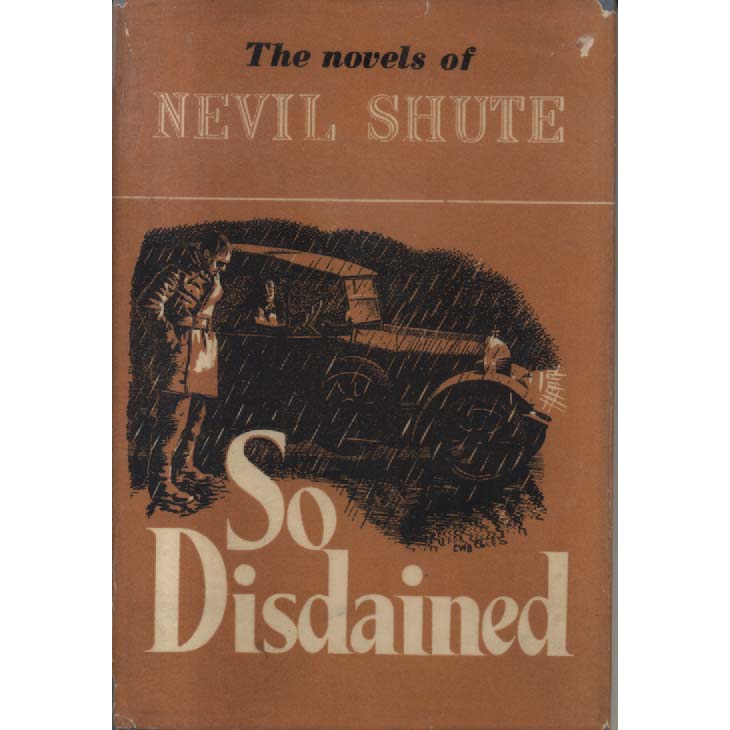
Published in 1952 by William Heinemann, So Disdained by Neville Shute presents itself as a curious artefact of mid-20th century literature. The cover design, featuring bold typography with a somewhat austere illustration, encapsulates the post-war sensibility that defined much of the era's literary output. The paperback edition, with its slightly yellowed pages and soft spine, invites a tactile experience that is both nostalgic and slightly worn, suggesting a story that once captivated readers but may now feel somewhat outdated. The book’s presentation resonates with the aesthetic of its time—practical yet earnest, a reflection of a society grappling with the aftermath of war and the complexities of human relationships.
Neville Shute, an Australian author and aeronautical engineer, is perhaps best known for his novel A Town Like Alice, which has garnered significant acclaim over the years. Shute's writing often reflects his background in engineering and aviation, embedding themes of human resilience and the intricacies of societal structures within his narratives. Despite his success, Shute remains a somewhat enigmatic figure in literary history. While he enjoyed a degree of popularity during his lifetime, the nuances of his literary contributions have not always been thoroughly explored in contemporary discourse. His works, including So Disdained, can be seen as part of a larger trend of post-war literature that sought to address the moral ambiguities and shifting social dynamics of the time.
Set against the backdrop of a world recovering from the devastation of World War II, So Disdained reflects the cultural landscape of the 1950s—a period marked by a poignant longing for normalcy and a grappling with the disillusionment that followed the war. The narrative captures the zeitgeist of the era, exploring themes of dislocation, identity, and the often fraught relationships that emerge in the wake of societal upheaval. As the world transitioned into the complexities of the Cold War, literature served as a mirror to the anxieties and aspirations of society, and Shute’s work contributes to this dialogue, albeit in a more understated manner. The book's exploration of personal versus collective identity resonates with the era's broader cultural questions, making it a relevant, if not entirely celebrated, piece of literature.
The book’s narrative structure and character development reveal Shute’s ability to craft stories that delve into the human psyche, yet the prose sometimes feels stilted by contemporary standards. Readers may find themselves navigating through a blend of earnest dialogue and introspective passages that define Shute’s style. While the story may lose some momentum, the reflective quality of the writing offers a window into the characters' inner lives, allowing for a deeper understanding of their motivations and conflicts. The pacing may seem slow to modern readers, accustomed to more dynamic storytelling, yet this deliberate tempo mirrors the contemplative nature of the post-war period.
Critically, So Disdained has received mixed reviews over the years. Some readers appreciate its earnest portrayal of complex human emotions, while others feel that the narrative lacks the vibrancy and immediacy found in works by Shute’s contemporaries. This dichotomy in reception speaks to the evolving tastes of literary audiences and the shifting values of cultural critique. The book can be seen as a product of its time, straddling the line between classic and outdated, appealing to those with a penchant for mid-century literature while potentially alienating more modern sensibilities.
The author’s experiences as an engineer and his keen observations on human behaviour shine through in the narrative, but this does not always translate into a gripping reading experience. Shute’s focus on moral dilemmas and personal integrity resonates with some readers, offering a glimpse into the ethical considerations faced by individuals during a time of uncertainty. However, the subtleties of his themes may require a level of patience that contemporary readers may not always possess.
In discussing the cultural significance of So Disdained, it is essential to acknowledge its position within the broader canon of post-war literature. It serves as a reminder of the complexities of human relationships during a tumultuous period and reflects the societal shifts that followed the war. The book’s exploration of discontent and disillusionment encapsulates a universal struggle, making it relevant even as the specifics of its context fade into the background. As readers engage with Shute’s work, they are invited to reflect on their perceptions of moral integrity and personal responsibility, themes that remain as pertinent today as they were in the 1950s.
Ultimately, So Disdained stands as a testament to Neville Shute’s literary contributions, albeit one that may not resonate with every reader. For those intrigued by the nuances of mid-20th century narratives and the complexities of human emotion, it offers a worthwhile exploration. However, it may not captivate those seeking more immediate or dynamic storytelling. Crappy Old Books presents this work as an artefact of its time, inviting readers to consider not only the text itself but also the cultural and historical milieu that shaped its creation.