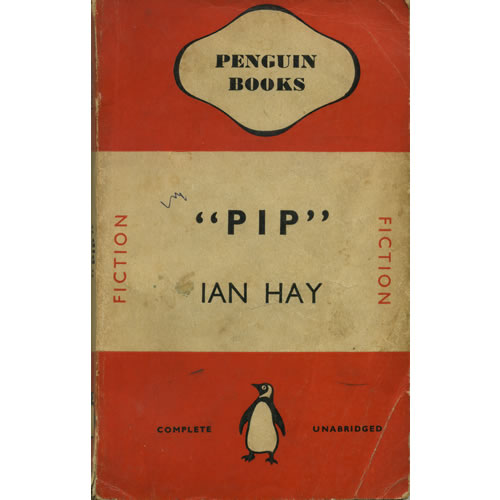
AI-assisted note, based on the text and a physical inspection of this copy.
Ian Hay's Pip, published in 1940 by Penguin Books, is a curious time capsule that reflects the cultural anxieties and literary styles of its era. The cover design, typical of Penguin's distinctive orange-and-white aesthetic, presents a minimalist yet striking image that invites readers into a world that blends light-hearted narrative with the undercurrents of a nation on the brink of war. The paperback format, a staple of the period, provides a tactile experience that feels both familiar and casual, as if the reader is being beckoned to pick it up and delve into its pages without the pretension often associated with hardback novels of the time.
The book's cover art, while not particularly elaborate, encapsulates the essence of 1940s design—functional yet stylish. It features a simple font and layout that prioritises readability, a nod to the burgeoning popularity of mass-market paperbacks which aimed to make literature accessible to a broader audience. The choice of font and layout reflects the practical sensibilities of a time when war loomed large, and escapism through literature became both a necessity and a comfort for many. Hay's work, nestled within the broader context of Penguin's publishing strategy, exemplifies the company's goal of democratizing literature during a time of crisis.
Ian Hay, born John Hay Beith in 1876, is a figure who occupies a somewhat ambiguous space in British literary history. While he enjoyed a degree of popularity during his lifetime, particularly as a novelist and playwright, he has largely faded from contemporary discussions about significant literary figures. His works, which often carried a humorous and satirical tone, were well-received in the early half of the 20th century, but little has been documented about his life and influences. It seems that Hay's contributions, while notable in their day, have not been extensively chronicled in modern literary criticism. This obscurity leaves a curious gap for those interested in exploring the full tapestry of British literature from this period.
Published in 1940, Pip arrives at a pivotal moment in history. The world was grappling with the realities of World War II, and many people turned to literature as a means of distraction and solace. The tone of the novel, while reflective of the era's anxieties, also offers a certain levity that may have been comforting to readers. At a time when the news was dominated by tales of conflict and struggle, Hay's narrative likely served as a reminder of the importance of humour and human connection. This cultural backdrop highlights the dual role of literature during wartime: as both a reflection of societal concerns and a vehicle for escapism.
The themes explored in Pip resonate with the spirit of the time, as the narrative often grapples with concepts of identity, resilience, and community. The novel’s protagonist, Pip, navigates the trials and tribulations that are emblematic of the broader human experience, encompassing both personal and collective challenges. This duality speaks to the zeitgeist of the 1940s, a decade marked by profound change and uncertainty, yet also rich with stories of hope and perseverance. Hay's ability to weave humour into the tapestry of such weighty themes showcases his understanding of the human condition and the need for levity in dark times.
The experience of reading Pip is undoubtedly enriched by its historical context. It serves as a reminder of the power of literature to provide comfort and escape during challenging periods. The simplicity of Hay's prose, combined with the accessible nature of the Penguin paperback, makes it a delightful read for those seeking both entertainment and insight into the cultural landscape of the time. The book stands as a testament to the resilience of the human spirit, and its preservation in the annals of literature speaks volumes about its significance, however obscure the author may be in contemporary discussions.
In conclusion, Ian Hay's Pip is more than just a novel; it is a cultural artefact that encapsulates a specific moment in history. The book's design, its publication during a tumultuous time, and the author's somewhat nebulous place in literary culture all contribute to its status as a noteworthy piece within the realm of Crappy Old Books. While the narrative may not have the same recognition as other works from its time, it remains an interesting exploration of the era’s themes and the complexities of human experience, inviting readers to rediscover a voice that, while faded, still holds relevance in today’s literary discourse.