AI-assisted note, based on the text and a physical inspection of this copy.
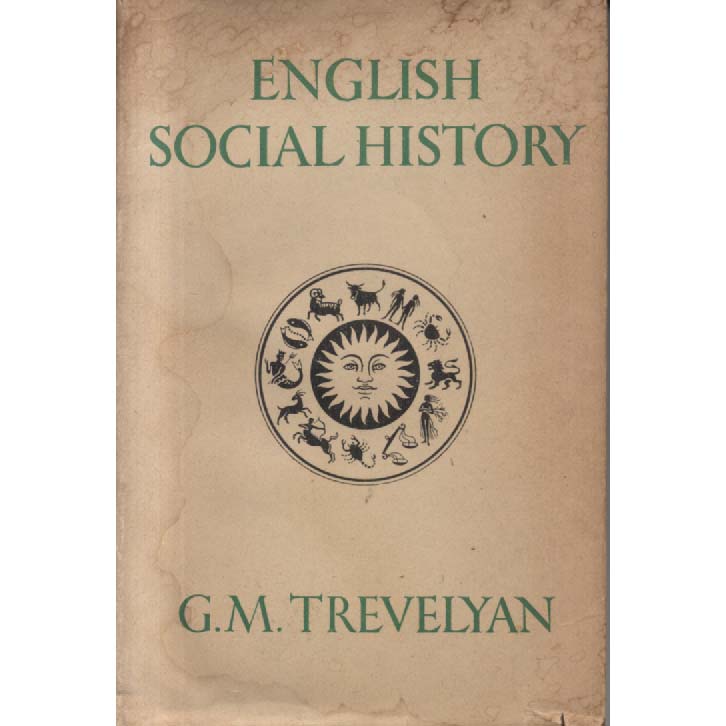
“English Social History” by G.M. Trevelyan is a peculiar artifact of mid-20th-century scholarship, encapsulating a specific historical moment in British historiography. The cover design, a rather austere yet traditional style typical of the era, features muted colours and a straightforward font that suggests reliability and seriousness. This aesthetic aligns with the book's subject matter, which delves into the intricate tapestry of English society from the Middle Ages to the 19th century. The paperback vibe—a staple of its time—offers a tangible connection to the post-war period when many readers sought to understand their national identity in the face of social upheaval and change. The physicality of the book, with its slightly yellowed pages and the faint scent of aged paper, evokes a sense of nostalgia, making it a delightful piece for collectors of historical literature.
G.M. Trevelyan is a notable figure in the realm of historical scholarship, particularly known for his works that blend narrative style with academic rigour. He was born in 1876 and became a prominent historian, often regarded as one of the leading figures of 20th-century British history. Trevelyan’s reputation rests on his ability to make history accessible to a wider audience, and “English Social History” is a testament to this aim. His works often reflect an engaging prose style that seeks to connect the past with contemporary readers, a technique that was somewhat revolutionary in the field at the time. While his contributions to the discipline are well documented, his legacy is mixed; some critics argue that his interpretations are overly romanticised. Nevertheless, his place within the canon of British historical writing remains significant, and his works continue to be referenced in discussions about social history.
Published in 1948 by The Reprint Society, this book emerged during a period of reconstruction and introspection in Britain following World War II. The late 1940s were marked by a desire to reassess not only the recent past but also the social structures that defined British life. The aftermath of the war prompted a renewed interest in social history, as citizens grappled with the implications of class, gender, and economic changes. Trevelyan's work aligns with this zeitgeist, offering insights into the evolution of English society that would resonate with a populace eager to understand their history as they moved into a new era. The Reprint Society, known for its affordable reissues of classic texts, played a crucial role in making such scholarship accessible to a broader audience, highlighting the democratic potential of historical knowledge during a time of societal transformation.
The book itself is structured to guide readers through various epochs of English social development, interspersing anecdotes with factual recounting. Trevelyan’s narrative style is accessible, making complex social structures and events understandable for the general reader. This approach reflects the broader trend of the time, where historians sought to engage with the public rather than appeal solely to an academic audience. The inclusion of various illustrations and charts in the text also adds a visual dimension that enhances comprehension, catering to a readership that may not have extensive prior knowledge of the subject matter.
However, it is important to note that Trevelyan's interpretations and conclusions are not without criticism. His tendency to emphasise certain narratives over others has led some scholars to contend that his work lacks a critical perspective on issues such as class conflict and imperialism. While he captures the essence of English social life, the lens through which he views history may occasionally be too narrow, glossing over the complexities and contradictions inherent in the subjects he discusses. This aspect of his writing can be both a strength and a limitation, as it often provides a romanticised view of the past that may not fully align with contemporary understandings of social dynamics.
The cultural implications of “English Social History” extend beyond its content; the book serves as a snapshot of its time. The post-war ethos of rebuilding and understanding one’s roots is palpable in Trevelyan’s work, reflecting a collective yearning for stability and identity. The book’s popularity also speaks to a growing appetite for social history as a legitimate field of study, paving the way for future historians to explore the intricacies of everyday life rather than solely focusing on political or military narratives. In this way, Trevelyan contributed to a shift in historical scholarship, promoting the idea that understanding society is essential to comprehending its past.
In conclusion, “English Social History” stands as a significant cultural object, embodying the intellectual currents of its time while providing a lens through which to view the evolution of English society. Trevelyan’s engaging narrative and accessible prose make the book an important read for those interested in social history, despite its limitations in critical perspective. Its publication by The Reprint Society highlights the role of accessible scholarship in shaping public understanding of history. For collectors and enthusiasts of Crappy Old Books, this title not only offers insight into the past but also serves as a reminder of the ways in which history is constructed and understood across different eras.