AI-assisted note, based on the text and a physical inspection of this copy.
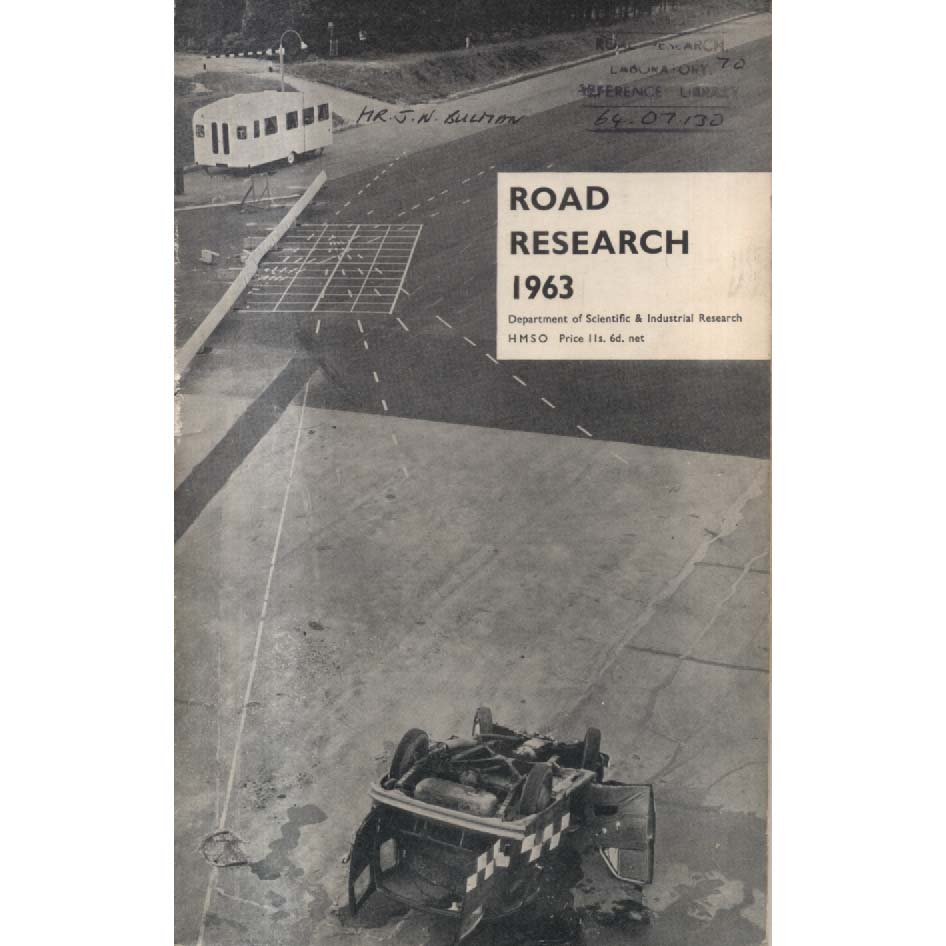
“Road Research 1963” is a fascinating glimpse into the mid-20th century British approach to transportation, encapsulating a time when the country was grappling with the rapid expansion of road networks. Published by the HMSO (Her Majesty's Stationery Office), this government report epitomises the utilitarian aesthetics of the era, featuring a modest cover design that is functional rather than flashy. Its paperback form, sturdy yet unassuming, reflects a period where informational publications took precedence over artistic expression, prioritising clarity and accessibility. The plain typography and simple graphics on the cover suggest a serious tone, befitting a document aimed at policymakers and industry professionals rather than the general public.
The author, the Ministry of Transport, is a well-established government department responsible for the development and regulation of transport infrastructure in the UK. While the ministry itself is well-documented in public records, individual reports like “Road Research 1963” often lack specific authorial attribution beyond the department’s collective output. This highlights a common trend within governmental publications of the time, where the focus is more on the institution rather than on individual contributions. As such, the reader is left with a sense of the bureaucratic nature of the work, which aims to inform rather than entertain.
Published in 1963, this report emerges from a pivotal decade in British transport history. The post-war period saw an unprecedented boom in car ownership, fundamentally altering the landscape of urban and rural life. The Ministry of Transport was tasked with addressing the challenges that came with this expansion, including road safety, traffic congestion, and infrastructure development. This publication reflects those concerns, presenting research findings that aimed to guide future policies and improve road conditions. It serves as a cultural artefact, capturing the anxieties and aspirations of a society transitioning into the age of the automobile, where roads became symbols of progress and modernity.
The content of “Road Research 1963” is likely a compilation of studies and statistical analyses concerning various aspects of road use, safety measures, and engineering innovations. The report would have been essential reading for local authorities, engineers, and urban planners, providing them with data-driven insights to inform their decisions. However, its lack of narrative flair or engaging prose may deter casual readers, as it is primarily aimed at a specialised audience. The dry, academic tone typical of governmental reports can be off-putting for those seeking more dynamic literature, making it a quintessential example of the “crappy culture” often found in bureaucratic publications.
The year 1963 was marked by significant cultural and social shifts within the UK, with the backdrop of the post-war recovery influencing various sectors, including transport. The rise of the motor vehicle was not only changing the way people travelled but also altering societal interactions and economic patterns. This report, therefore, is not merely a collection of data points; it is a reflection of a moment in time when the relationship between society and technology was rapidly evolving. The optimism surrounding road expansion during this era is palpable, even if the report itself is steeped in the technical jargon of transport policy.
As a cultural object, “Road Research 1963” can be appreciated for its historical value. It offers a unique insight into the mindset of a society at a crossroads, where the romance of the open road was tempered by the practical realities of urban planning and public safety. The very act of compiling such research showcases a commitment to progress, albeit one that often prioritised efficiency over aesthetics. In that sense, it serves as a time capsule, preserving the thoughts and concerns of a generation focused on building a more connected world.
In conclusion, “Road Research 1963” is a notable piece within the corpus of government publications, reflecting the cultural and societal dynamics of the 1960s. While it may not captivate readers looking for literary flair, its significance lies in its documentation of a critical period in Britain’s transport history. For those interested in the evolution of roadways and the policies that shaped them, this report is an essential resource. Crappy Old Books offers us the opportunity to explore such works, reminding us of the varied narratives that exist within the pages of seemingly mundane publications.