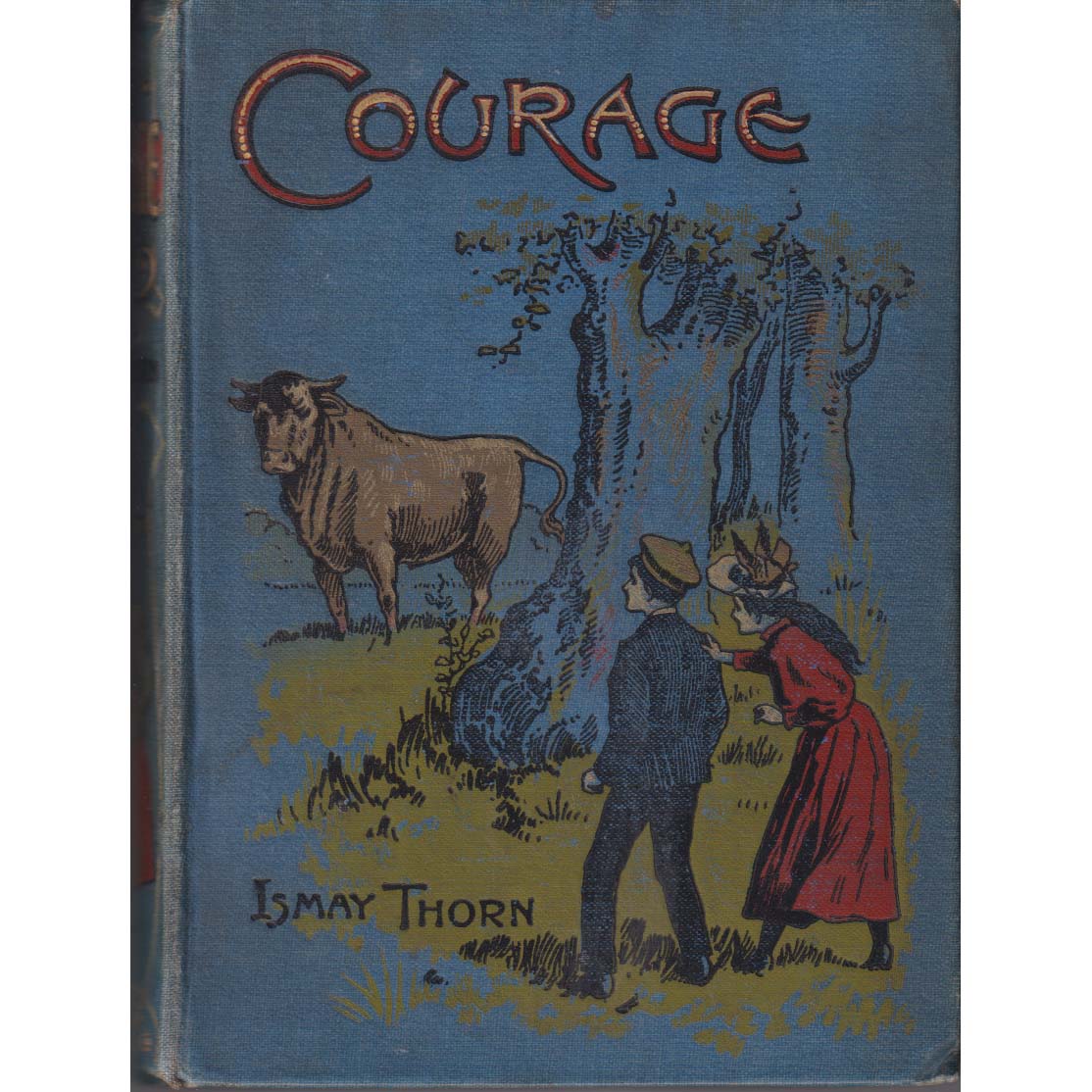
AI-assisted note, based on the text and a physical inspection of this copy.
“Courage” by Ismay Thorn, published in 1906 by Wells Gardner, is an artefact of its time that invites reflection on both its content and its cultural significance. The cover design, typical of early 20th-century publications, features an ornate, embossed pattern, drawing readers in with a sense of nostalgia and romance. Rendered in muted hues of green and gold, the cover encapsulates the era's aesthetic, appealing to a readership seeking both inspiration and escapism. The paperback itself has the feel of a period piece, with its slightly yellowed pages and the distinct smell of aged paper, which adds to the charm of its physical presence. This book is a testament to the print culture of the time, when literature was a primary source of leisure and moral contemplation for many, and it reflects the societal values of early 1900s Britain.
Ismay Thorn appears to be a somewhat obscure figure in literary circles. Little is documented about her beyond this work, and her presence in the historical canon is not well established. There are no widely known biographical details or significant accolades associated with her name, suggesting that she may have been one of many authors whose works were widely read during their time but have since faded into relative obscurity. This obscurity only adds to the mystique surrounding “Courage,” making readers more curious about the motivations and experiences that may have shaped her writing.
The year 1906 was a pivotal time in British history, marked by significant socio-political changes and cultural developments. The Edwardian era was coming to an end, with its values of civility, propriety, and optimism beginning to clash with the looming realities of the First World War. Literature during this time often grappled with themes of moral fortitude, personal struggle, and the complexities of society, which are likely mirrored in Thorn's exploration of courage. The book may serve as a reflection of the collective consciousness of a society teetering on the brink of monumental change. Readers of the time were drawn to texts that could provide them with a sense of fortitude and resilience, which “Courage” appears to aim to deliver.
Thematically, “Courage” delves into the concept of bravery—not just in the grand, heroic sense, but also in the everyday acts of courage that define individual character. This notion resonates strongly with the cultural milieu of early 20th-century Britain, where traditional values of bravery and honour were being re-examined in light of a rapidly changing world. It offers a lens through which readers can explore their own moral landscapes, encouraging them to reflect on what it truly means to be courageous in both public and private spheres. The narrative structure and prose may seem dated to modern readers, but they carry a certain earnestness that speaks to the human experience in a way that is both universal and timeless.
The book's publication by Wells Gardner, a publisher known for its commitment to producing literature that often aimed to uplift and educate, aligns with the ideals of the era. Wells Gardner was part of a tradition that sought to publish works that were not only entertaining but also morally instructive. This aligns well with the thematic concerns of “Courage,” which is likely designed to inspire its readers to confront their fears and embody the virtues associated with bravery. The notion of self-improvement through literature was a common thread in many early 20th-century publications, and Thorn’s work seems to fit neatly within this framework.
In examining “Courage,” one must also consider its place within the broader context of women’s writing during the early 1900s. Women authors were beginning to carve out their spaces in literary culture, often writing about themes that resonated with female readers, such as emotional resilience and moral integrity. While Thorn’s visibility in this movement may be limited, her contribution, however modest, is part of a larger tapestry of women’s literature that sought to challenge and redefine societal expectations. The book can be seen as both a reflection of its time and an effort to assert a woman’s voice in a literary landscape that was predominantly male.
As a cultural object, “Courage” serves as an enticing glimpse into the past, allowing modern readers to engage with the hopes, fears, and values of a bygone era. Its physical form, combined with its thematic content, creates a rich tapestry that invites exploration and reflection. The book may not have achieved widespread acclaim, but it remains a noteworthy artefact within the realm of early 20th-century literature, highlighting the struggles and aspirations of individuals navigating the complexities of life.
In conclusion, “Courage” by Ismay Thorn is an intriguing piece of literature that encapsulates the zeitgeist of its era. Its cover design, thematic concerns, and the cultural context of its publication all contribute to its status as a valuable object within the collection of Crappy Old Books. While Ismay Thorn may not be a household name, her work prompts readers to ponder the nature of bravery and the enduring qualities of human character, making it a worthwhile read for those interested in the intricacies of early 20th-century literature.