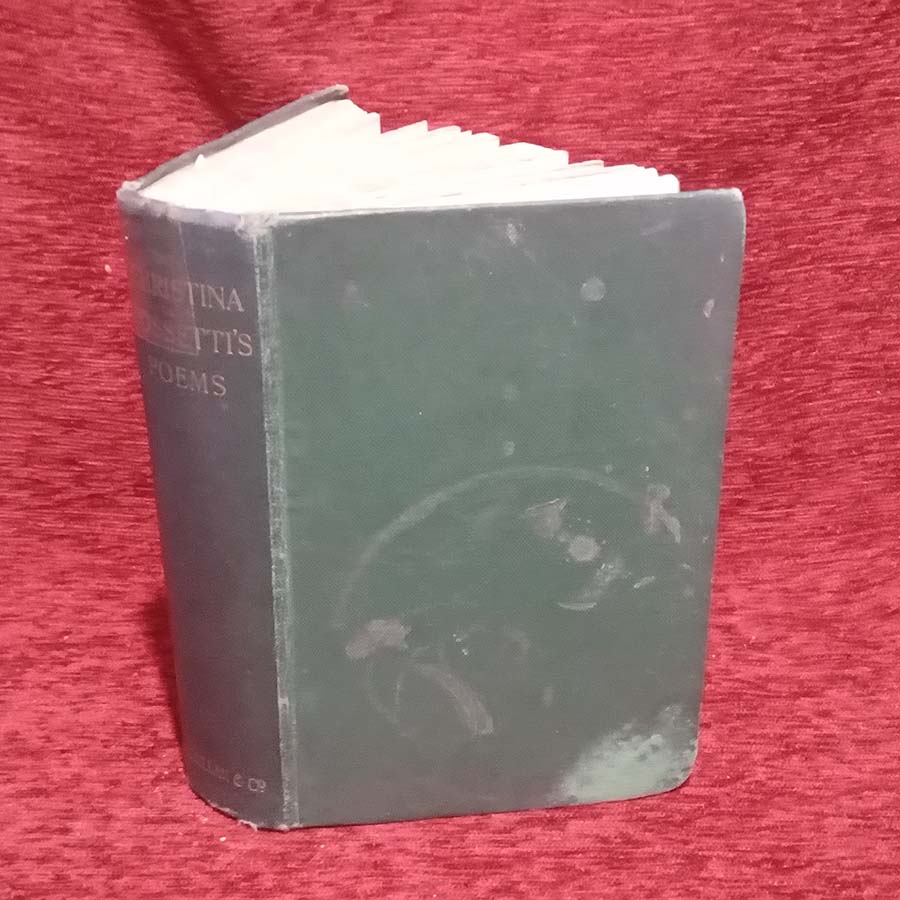
AI-assisted note, based on the text and a physical inspection of this copy.
The Poetical Works of Christina Georgina Rosetti, published in 1904 by Macmillan and Co, serves as a fascinating cultural artefact that encapsulates the Victorian and Edwardian literary landscapes. This collection, which brings together the various poems that Rosetti crafted throughout her life, showcases not only her lyrical prowess but also reflects the aesthetic sensibilities of the early 20th century. The cover design, typical of the time, features an ornate illustration that hints at the romanticism and symbolism prevalent in her work. The book’s binding is solid, a testament to the quality of early 20th-century publishing, while the paper, though yellowed with age, retains a tactile quality that invites readers to engage with the text intimately.
Christina Georgina Rosetti, born in 1830, is a notable figure in Victorian literature, often celebrated for her innovative and evocative poetry. She was the sister of poet Dante Gabriel Rossetti and a key member of the Pre-Raphaelite movement. Her works are marked by themes of love, loss, and spirituality, often imbued with a distinctly feminine perspective. Rosetti is perhaps best known for her poem "Goblin Market," which has garnered significant analysis and admiration. Despite her contributions, she has not maintained the same level of mainstream recognition as some of her contemporaries, suggesting a somewhat obscure position within the broader literary canon. It is striking how her work resonates with modern audiences, even as her life remains less documented than that of many of her peers.
The year 1904 was a time of significant cultural change. The Victorian era had given way to the Edwardian period, marking a transition in societal norms and artistic expression. The optimism of the early 20th century was palpable, yet it coexisted with the lingering shadows of the past, including rigid gender roles and class distinctions. Rosetti’s works reflect the complexity of this milieu, grappling with the tensions of desire and duty, as well as the broader societal changes occurring at the time. Her poetry often calls into question the expectations placed upon women, making it particularly relevant in the context of the evolving roles of women in society. The publication of her collected works in this era also underscores a growing interest in preserving the literary heritage of previous generations, as publishers sought to compile and celebrate the voices that shaped English literature.
The book’s format, a hardback with a cloth cover, is emblematic of the era's publishing trends, which favoured durability and aesthetic appeal. The typeface is elegant, yet accessible, allowing readers to immerse themselves in Rosetti’s verses without distraction. The layout is traditional, with poems presented in a straightforward manner, reflecting the conventions of the time. This straightforward presentation belies the complexity and depth of Rosetti’s poetry, which often employs rich imagery and intricate symbolism. Her ability to weave emotional depth into her work is palpable, making this collection a significant cultural object worthy of exploration.
As for the author herself, Christina Georgina Rosetti occupies a unique niche in literary history. Despite her familial connections and the acclaim she received during her lifetime, she has often been overshadowed by the male figures of the Pre-Raphaelite Brotherhood. Her poetry, while celebrated for its emotional resonance and technical skill, has not always been accorded the same critical attention as that of her male contemporaries. This marginalisation speaks to broader patterns in literary history, where female voices have frequently been relegated to the periphery. The publication of her collected works in 1904 can be seen as an attempt to reclaim her place within the literary canon, yet the ongoing struggle for recognition continues to this day.
The Poetical Works of Christina Georgina Rosetti not only serves as a testament to her literary prowess but also as a reflection of the cultural dynamics of her time. The book stands as a bridge between the Victorian ideals of the past and the nascent modernism that would soon take hold. Her poetry often grapples with the spiritual and the visceral, exploring themes of death, love, and existential reflection. Such themes resonate deeply with readers, transcending the barriers of time and place, inviting contemporary audiences to delve into the emotional landscape she so vividly portrays.
In conclusion, The Poetical Works of Christina Georgina Rosetti is more than just a collection of poetry; it is a cultural artefact that encapsulates the tensions and transformations of its time. The book's physical presence, combined with Rosetti's powerful voice, creates an enduring legacy that continues to inspire and provoke thought. As we engage with the pages of this collection, we are reminded of the importance of preserving literary voices that have shaped our understanding of humanity, particularly those that have been overshadowed by history. Crappy Old Books encourages readers to rediscover such treasures and explore the rich tapestry of literature that has emerged from the past.