AI-assisted note, based on the text and a physical inspection of this copy.
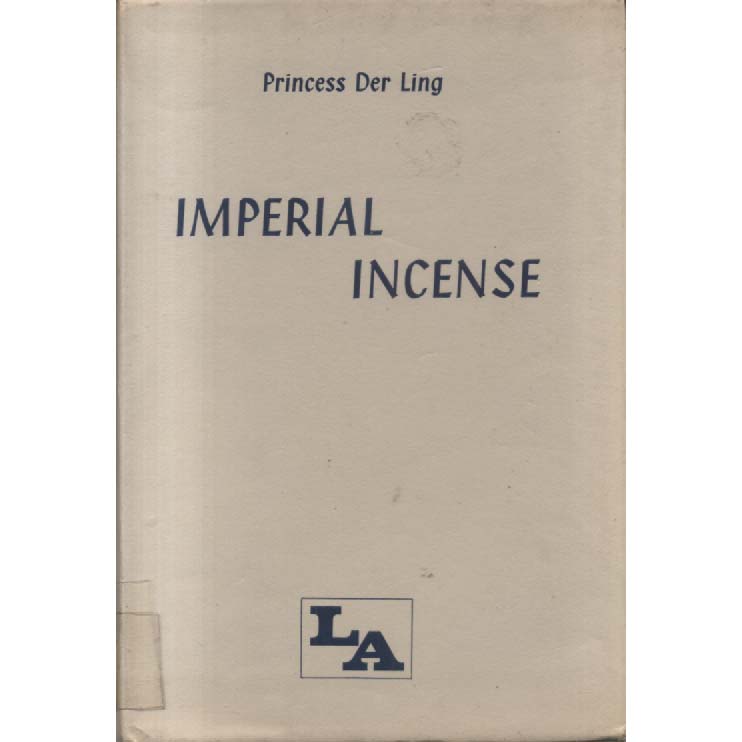
“Imperial Incense” by Princess Der Ling is an intriguing artefact of both literary and cultural history, published in 1968 by Stanley Paul. From the outset, the book's cover design captures the eye with its vibrant hues and intricate illustrations, evoking a sense of exoticism and the allure of the East. The paperback format, slightly worn around the edges, speaks to its age and the tactile nature of print media that was prevalent in the late 1960s. The choice of a soft cover reflects a period when such bindings were common for works that aimed to reach a wider audience, yet the glossy finish hints at a desire for a more polished presentation, perhaps to align with the romanticised views of the East that were popular in Western culture at the time.
Princess Der Ling, the author, is a figure whose life straddles the lines between Western and Eastern cultures, particularly with her deep connections to the last days of imperial China. She served as a lady-in-waiting to the Empress Dowager Cixi, a position that not only placed her in the heart of Chinese aristocracy but also gave her a unique vantage point to observe the cultural and political turmoil of her time. However, much about her life remains elusive; she appears obscure in the broader pantheon of literary figures, with limited documentation available about her post-imperial career or her impact on literature. As a result, her writings, including “Imperial Incense,” seem to carry the weight of personal testimony and historical nostalgia, yet they often lack a detailed context that could enrich our understanding of her work.
Published during a time of significant cultural upheaval, “Imperial Incense” reflects the 1960s fascination with the Orient, as Western societies began to grapple with post-colonial identities and the romanticism surrounding Eastern philosophies and aesthetics. The era was marked by a growing interest in spirituality and alternative lifestyles, which often drew from Eastern practices. The book's themes and insights into Chinese customs and traditions would have resonated with an audience eager to explore and understand a culture that was both foreign and alluring. The late 1960s also witnessed a rise in the publication of travel literature and memoirs that promised exotic experiences, positioning Der Ling's work within this broader trend.
The content of “Imperial Incense” delves into the intricacies of Chinese culture, customs, and the opulence of the imperial court, offering a glimpse into a world that was rapidly disappearing. Der Ling’s narrative is steeped in personal anecdotes and observations, creating a texture that is both vivid and nostalgic. However, the writing can lean towards the romantic and idealised, which may not resonate with contemporary readers who seek a more nuanced depiction of cultural realities. The prose, while occasionally lyrical, sometimes feels heavy with the weight of its own nostalgia, which may detract from the authenticity of the experiences being shared.
Structurally, the book is composed of a series of essays or vignettes that blend personal memoir with cultural commentary. This format allows for a varied exploration of themes, but it can also lead to a disjointed reading experience, as the narrative shifts from one topic to another without a clear overarching arc. Readers might find themselves captivated by certain sections, only to be left yearning for further development in others. The episodic nature of the book may also reflect the fragmented state of the world at the time, as societies struggled to reconcile tradition with modernity.
The print culture of the late 1960s was characterised by a burgeoning interest in niche topics, with publishers eager to tap into the growing market for books that explored non-Western cultures. Stanley Paul, the publisher behind “Imperial Incense,” was known for producing works that catered to the curiosities of the era, often positioning themselves as purveyors of knowledge on exotic subjects. This book fits neatly into that catalogue, appealing to readers who were not only interested in the aesthetics of the East but also in the deeper cultural implications that came with it. The choice of publisher suggests a strategic decision to align with the trends of the time, aiming to captivate a readership that was increasingly looking beyond their own cultural horizons.
In examining “Imperial Incense,” one cannot overlook the role of physicality in the experience of the book. The pages, slightly yellowed and bearing the marks of time, contribute to the sense of history that surrounds the text. This physical decay can be seen as a metaphor for the fading of the imperial world that Der Ling describes—a world that, while lush and vibrant, was inexorably being swept away by the tides of modernisation and change. The book serves as both a relic and a reminder of an era that many would prefer to romanticise, yet it also invites critical reflection on the complexities of cultural representation.
Ultimately, “Imperial Incense” is a cultural object that encapsulates a moment in time when East met West in a dance of fascination and misunderstanding. It stands as a testament to Princess Der Ling’s unique perspective, offering insights into a world that is both captivating and, at times, problematic in its representation. While it may not achieve the literary heights that some might hope for, it provides a valuable entry point into the exploration of intercultural narratives during a pivotal moment in history. For those interested in the intersections of culture, nostalgia, and the imperial past, this work serves as a curious artifact worthy of exploration, particularly through the lens of Crappy Old Books.