AI-assisted note, based on the text and a physical inspection of this copy.
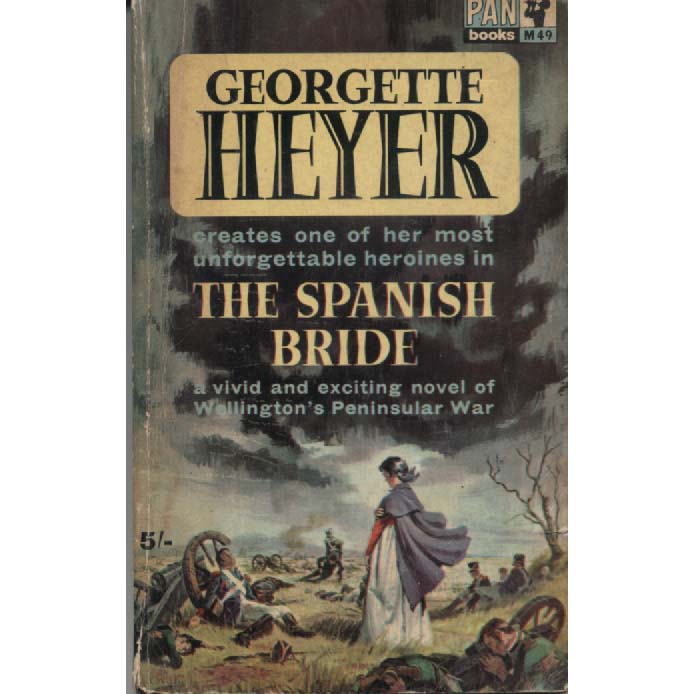
Georgette Heyer’s "The Spanish Bride," published in 1964 by Pan Books, presents itself as an intriguing blend of historical romance and adventure, set against the backdrop of the Peninsular War. The cover art captures this essence with a vibrant, romantic illustration that evokes the period's charm, showcasing a sense of elegance and drama typical of Heyer’s work. The paperback format, with its slightly worn edges and soft cover, invites readers into a world where the past collides with the light-hearted intricacies of romance. This is a novel that embodies both the nostalgia of its era and the enduring appeal of its genre, reflecting a time when historical fiction was gaining popularity among readers looking for escapism and adventure.
Heyer, a prolific writer often credited with popularising the Regency romance genre, has a legacy that resonates deeply within literary circles. Known for her meticulous research and witty dialogue, she crafted narratives that provided both entertainment and a sense of authenticity regarding historical settings. While "The Spanish Bride" is not her most widely recognised work, it stands as a testament to her ability to weave complex characters into rich historical contexts. Georgette Heyer remains a significant figure in publishing history, often celebrated for her contributions to romantic fiction, though she may not be as universally known as some of her contemporaries. Her works continue to influence modern romance writers, marking her as a key player in the evolution of the genre.
Published during a transformative era in the 1960s, "The Spanish Bride" arrived at a time when society was grappling with significant cultural shifts. The decade was marked by a rebellion against traditional norms, yet it simultaneously embraced nostalgia for earlier times, as seen in the popularity of historical novels. Readers in the 1960s were drawn to stories that offered both romance and adventure, reflecting a desire for escapism amidst the tumult of contemporary life. The resurgence of interest in historical settings provided fertile ground for Heyer’s novels, allowing them to thrive and resonate with an audience eager for a mix of wit, charm, and historical intrigue. The cultural milieu of the 1960s, with its shifting attitudes and the burgeoning feminist movement, also influenced the portrayal of women in literature, as they began to seek more agency and complexity in their roles.
The narrative of "The Spanish Bride" revolves around the romantic entanglements and adventures of its protagonist, offering readers a lens into both personal and historical conflicts. Heyer’s signature style is apparent throughout, blending sharp dialogue with well-crafted characters, though some readers may find the pacing uneven compared to her other works. The book captures the essence of the time period it depicts, providing a rich tapestry of life during the Napoleonic Wars, yet it also reflects the conventions of romance literature that were prevalent at the time of its publication. The interplay of historical context and character-driven storytelling creates a captivating reading experience, though contemporary audiences may find certain tropes dated or less relatable.
In terms of print culture, "The Spanish Bride" is emblematic of the era's publishing trends, where paperback editions began to dominate the market. The choice of Pan Books as a publisher signifies the accessibility and mass appeal of Heyer's work, making it available to a broader audience. The physicality of the book, with its slightly yellowed pages and the scent of aged paper, adds to the reading experience, inviting nostalgia and a tactile connection to the past. The popularity of paperbacks in the 1960s allowed readers to enjoy literature in a more casual setting, reflecting a shift away from the more formal, hardbound volumes that were once the standard. This democratization of literature enabled a wider range of voices and genres to flourish, with Heyer being a notable figure in this movement.
While "The Spanish Bride" may not possess the same recognition as some of Heyer’s other novels, it still stands as a worthy addition to her oeuvre and offers an engaging experience for fans of historical romance. The book's charm lies in its ability to transport readers to another time, filled with adventure, love, and the complexities of human relationships. The combination of Heyer’s keen eye for detail and her knack for character development creates a narrative that, while perhaps not groundbreaking, remains enjoyable and reflective of its time.
In conclusion, "The Spanish Bride" serves not only as a cultural object but also as a snapshot of the literary landscape of the 1960s. Georgette Heyer’s deft storytelling and historical insights continue to resonate, even as the conventions of romance evolve. For those looking to explore the roots of the genre, this book offers a delightful glimpse into the past, making it a notable entry in the collection of Crappy Old Books.