AI-assisted note, based on the text and a physical inspection of this copy.
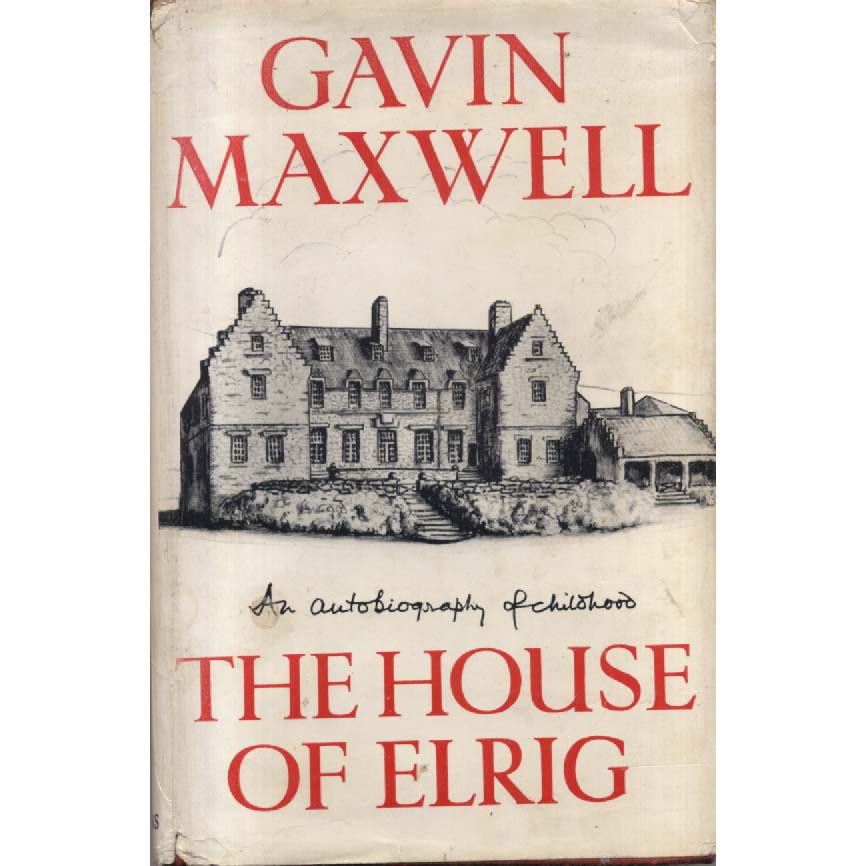
Published in 1965 by Longmans, *The House of Elrig* by Gavin Maxwell emerges as a fascinating relic of mid-20th-century literature. The book's cover design, featuring a rustic landscape that evokes a sense of both solitude and nostalgia, perfectly encapsulates the era's penchant for simplicity and authenticity. With its paperback format, it boasts a tactile quality that invites readers to engage physically with the text, a hallmark of print culture during a time when paperback novels were becoming increasingly popular as affordable entertainment. The paper itself has weathered the years, displaying a slight yellowing that adds to its vintage appeal, while the typeface remains clear and legible, a testament to the quality of its production.
Gavin Maxwell, while more widely known for his earlier works, particularly *Ring of Bright Water*, seems to occupy a unique niche within British literature. Born in 1914, Maxwell was a naturalist and writer whose experiences in the Scottish Highlands deeply influenced his narrative style and thematic choices. His life was marked by a profound connection to nature, which he often explored in his writings. However, while his earlier works garnered significant acclaim and visibility, *The House of Elrig* does not seem to have achieved the same level of recognition or influence, suggesting that it may be somewhat overshadowed by his more famous titles. This raises questions about why some works endure in the cultural memory while others fade into obscurity.
The year 1965 was a transformative period in British society, marked by a sense of optimism amidst the backdrop of social change. The post-war era had ushered in new cultural movements, with literature reflecting growing interests in nature, identity, and the environment. This zeitgeist is palpable in *The House of Elrig*, where Maxwell's observations of the natural world serve as a counterpoint to the rapid urbanisation and industrialisation happening throughout the UK. The book resonates with a longing for a simpler, more connected existence, echoing the sentiments of a generation grappling with the complexities of modern life.
In exploring the contents of *The House of Elrig*, one finds a blend of personal reflection and vivid descriptions of the Scottish landscape. Maxwell's prose flows with a lyrical quality, often invoking a sense of place that transports readers into the heart of the Elrig estate. His relationship with the land becomes almost a character in itself, illustrating the deep ties between humans and nature that were beginning to be recognised more widely during this era. The narrative is imbued with a sense of melancholy and beauty, as Maxwell navigates themes of isolation, belonging, and the passage of time.
The book is also notable for its exploration of the tensions between human existence and the natural world. Maxwell's observations are often tinged with a bittersweet awareness that the natural landscapes he cherishes are under threat from modern encroachments. This perspective aligns with the burgeoning environmental consciousness of the 1960s, where literature began to reflect a growing awareness of humanity's impact on the earth. In this sense, *The House of Elrig* can be seen as an early precursor to later environmental literature, making Maxwell's work relevant even in contemporary discussions about conservation and sustainability.
Despite its merits, *The House of Elrig* may not resonate with all readers. Some may find its pacing slow and its reflective nature challenging, particularly in comparison to more action-driven narratives that were increasingly popular in the 1960s. However, for those willing to engage with its contemplative tone, the book offers a rich tapestry of imagery and emotion that captures the essence of a time when literature sought to reconnect individuals with the natural world. This thematic richness is perhaps what keeps the book alive in the hands of niche audiences and collectors of Crappy Old Books.
In conclusion, *The House of Elrig* stands as a cultural artefact that encapsulates both the literary style of its time and the broader societal sentiments of the 1960s. Gavin Maxwell, though perhaps not as widely recognised as some of his contemporaries, carved out a distinct space in the literary landscape that invites readers to reflect on their own connections to nature. While this book may not have achieved the fame of his earlier works, it remains an important piece for those interested in exploring the intersections of environment, identity, and narrative. As Crappy Old Books continues to unearth such treasures, *The House of Elrig* serves as a reminder of the enduring power of literature to evoke a sense of place and belonging.