AI-assisted note, based on the text and a physical inspection of this copy.
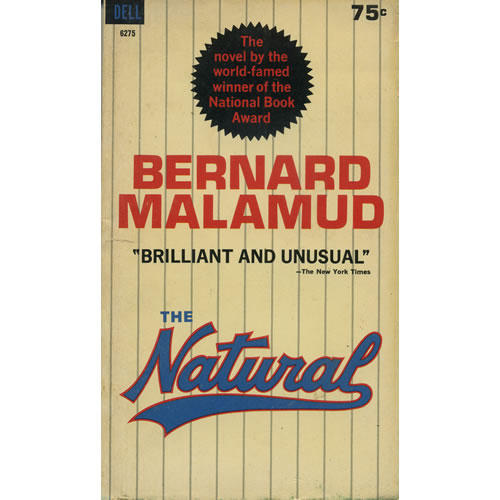
Bernard Malamud's "The Natural," published in 1965 by Dell, is a novel that has garnered a mixed reception over the decades, often oscillating between being lauded as a classic and critiqued for its overtly symbolic narrative. The cover design of this paperback edition encapsulates the era’s aesthetic, with its bold typography and striking imagery that evokes the fervour of American baseball culture. The choice of a baseball bat against a backdrop of green, reminiscent of a well-manicured field, immediately communicates the novel’s central theme while also appealing to a mid-20th-century audience that was becoming increasingly enamoured with both sports and the narratives surrounding them.
Malamud’s prose is imbued with a sense of grandeur that often elevates the narrative beyond mere sports fiction. Readers are treated to a tale that intertwines the mythos of baseball with deeper existential questions, reflecting the broader American experience of the time. The paperback vibe of "The Natural" is palpable; it’s the kind of book you might find dog-eared and well-loved in the hands of a passionate reader, suggesting that the story resonates with those who seek not just entertainment, but also introspection through the lens of sport.
The author, Bernard Malamud, is a significant figure in American literature, known for his explorations of Jewish identity and the human condition. Born in 1914 in Brooklyn, New York, Malamud gained prominence in the mid-20th century and is often associated with the post-war literary movement that sought to address complex social and moral issues. He is perhaps best known for his works such as "The Assistant" and "The Fixer," both of which showcase his skill in blending realism with allegorical depth. While "The Natural" may not be his most celebrated work, it nonetheless contributes to his legacy as a writer who navigated the complexities of modern life through rich, character-driven narratives. However, Malamud remains a somewhat obscure figure compared to his contemporaries, and there is limited biographical information readily accessible about his influences and personal life.
Published during a transformative period in American history, 1965 was marked by significant social upheaval, civil rights movements, and a burgeoning counterculture. Baseball, often dubbed the "great American pastime," was not just a sport but a cultural touchstone during this time. The novel reflects the complexities of the American Dream, encapsulating both the aspirations and disillusionments that characterised the era. As young men idolised baseball heroes, Malamud’s protagonist, Roy Hobbs, emerges as a complex figure who embodies the struggle between talent and fate. This duality is particularly resonant in a time when the nation grappled with its identity and the promises of success.
The narrative of "The Natural" unfolds with a sense of inevitability, as Hobbs' journey through the world of baseball becomes a metaphor for the pursuit of greatness amidst personal failures and societal expectations. Malamud crafts a story that is rich with symbolism; the game itself becomes a stage for exploring themes of morality, ambition, and the quest for redemption. However, some readers may find Malamud's heavy-handed use of allegory somewhat off-putting, detracting from the raw, thrilling potential of the sport. This tension between the exhilarating nature of baseball and the weighty moral undertones presents a dichotomy that may not sit well with every reader.
Visually, the 1965 Dell edition represents the publishing norms of its time, with a design that balances commercial appeal with artistic sensibility. The use of colour and font reflects a period when paperbacks began to emerge as a dominant form of literary consumption. The tactile experience of holding a paperback, combined with the immediacy of its cover design, invites readers to delve into its pages, while also serving as a cultural artefact that speaks to the changing landscape of literature and publishing in the 1960s.
In examining "The Natural," one cannot overlook the impact it has had on both literature and film, with the novel later adapted into a well-known movie in 1984. This transition from page to screen allowed the story to reach a wider audience, but also sparked debates about fidelity to the source material and the interpretation of its themes. The film's iconic imagery and score have since become intertwined with the cultural fabric of baseball, further solidifying the novel's status as a significant, albeit controversial, piece of American literature.
In conclusion, "The Natural" by Bernard Malamud stands as a complex cultural object that merges the world of baseball with profound philosophical inquiries. While opinions on its narrative style and allegorical depth may vary, its place in the canon of American literature is assured. The book serves as a reminder of the enduring power of storytelling, particularly in how it reflects and shapes the cultural zeitgeist. For those looking to explore the intersections of sport, identity, and the American Dream, this novel is well worth a read. Crappy Old Books has provided a platform for revisiting such works, allowing us to engage with the literary past in meaningful ways.