AI-assisted note, based on the text and a physical inspection of this copy.
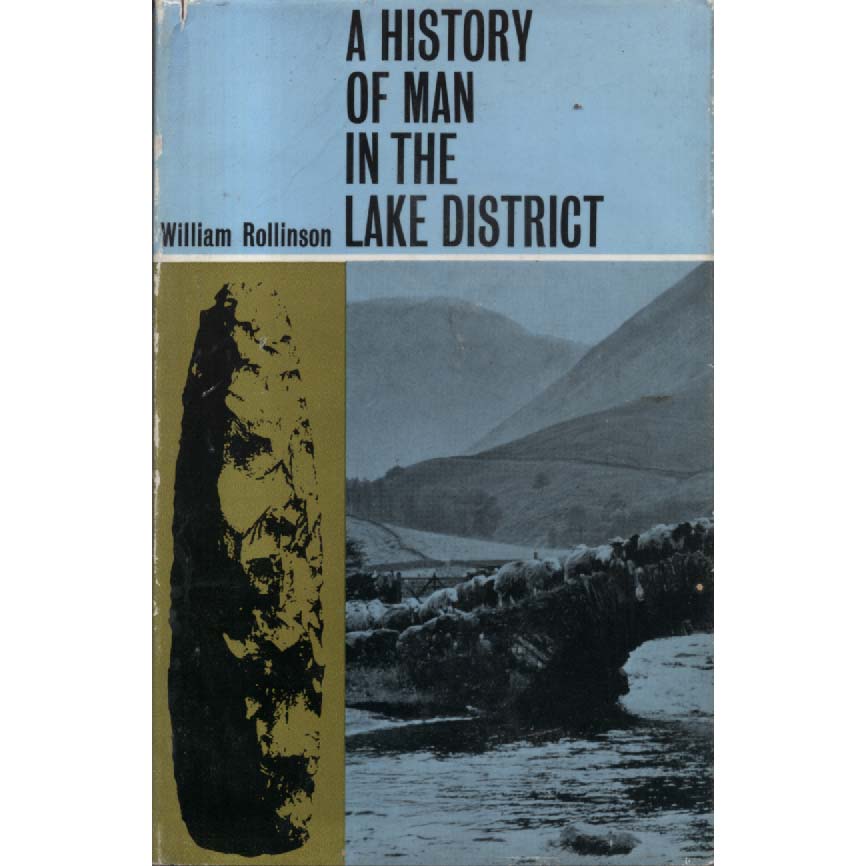
"A History of Man in the Lake District," penned by the somewhat obscure William Rollinson and published in 1967 by JM Dent, presents a curious snapshot of the intersection between humanity and the rugged landscape of one of England's most beloved natural treasures. The book’s paperback cover, a collage of serene lakes and craggy mountains, hints at a romanticised view of the Lake District, a region often associated with the likes of Wordsworth and Coleridge. The design reflects a mid-20th-century aesthetic that aims to entice readers with pastoral imagery, suggesting a deep connection to nature while inviting introspection about human existence within it.
Upon delving into the text, one is struck by the earnestness of Rollinson's exploration. He crafts a narrative that weaves together historical anecdotes, cultural reflections, and geographical insights. The writing is imbued with a sense of nostalgia and reverence for the Lake District, yet it also reveals the complexities of human interaction with this natural landscape. The prose, while occasionally pedantic, possesses an earnest charm that resonates with readers who share a love for both history and the great outdoors.
William Rollinson remains a figure shrouded in relative obscurity. There is scant information available about his life and career, which seems to have not garnered significant attention in mainstream literary circles. This lack of documentation might suggest that he was perhaps a local historian or an enthusiast of the Lake District rather than a widely recognised author. Consequently, Rollinson’s voice in this work may reflect a passionate amateurism rather than that of a polished literary figure, which can be both an asset and a flaw in the narrative's delivery.
Published in 1967, this book arrives at a time when Britain was undergoing significant social and cultural shifts. The post-war period saw a burgeoning interest in environmental conservation and a renewed appreciation for the countryside, as urbanisation continued to sweep across the nation. In this context, Rollinson’s exploration of the Lake District can be seen as a response to the changing tides of modernity, advocating for an awareness of the historical layers embedded within the landscape. The 1960s also marked a time of burgeoning outdoor activity, as hiking and nature appreciation became increasingly popular, making Rollinson's work particularly relevant for an audience eager to explore the natural world.
The cultural significance of the Lake District itself cannot be overstated. It has long been a source of inspiration for poets, artists, and writers, embodying the Romantic ideal of nature as a refuge for the human spirit. Rollinson adds another layer to this narrative, examining how the landscape has shaped human experiences and vice versa. His portrayal of the area serves as a reminder that the mountains and lakes are not merely scenic backdrops but active participants in the stories of those who inhabit them.
The book's structure is somewhat disjointed, with chapters that seem to flit between eras and themes, which can make for a challenging reading experience. The lack of a cohesive narrative thread may frustrate some readers, while others might appreciate the fragmented approach as reflective of the complex history of the region itself. This duality underscores the book's larger themes: the interplay between nature and humanity is rarely linear, and Rollinson captures that essence, albeit in a haphazard manner.
Despite its quirks, "A History of Man in the Lake District" is a commendable effort to document the interplay of culture and environment in a region rich with history. It serves as a reminder of the importance of understanding our surroundings, especially as modernity encroaches upon the natural world. Rollinson's reflections resonate with anyone who has wandered the paths of the Lake District, offering a perspective that intertwines personal and collective histories.
In conclusion, while William Rollinson may not be a household name, his contribution to the understanding of the Lake District's cultural landscape is noteworthy. The book, with its mid-20th-century charm and earnest exploration, stands as a testament to the era's growing appreciation for both history and nature. For those intrigued by the nuances of the human experience within the natural world, this volume from Crappy Old Books is an intriguing read, albeit one that requires a patient and contemplative approach.