AI-assisted note, based on the text and a physical inspection of this copy.
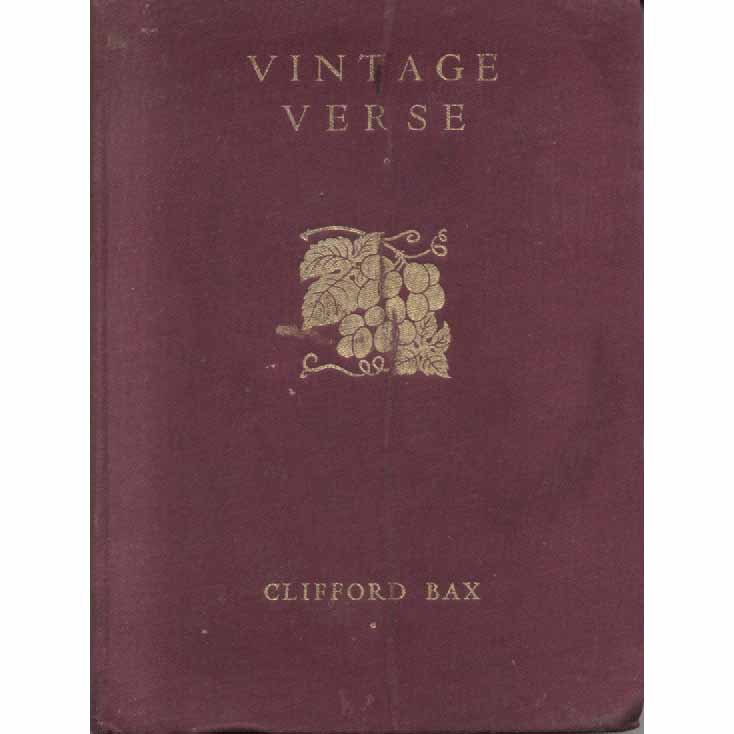
“Vintage Verse” by Clifford Bax, published in 1945 by Hollis and Carter, embodies the essence of mid-20th-century poetry collections, serving as a time capsule of lyrical experimentation and cultural reflection. The book’s cover features a somewhat whimsical design typical of the era, with bold yet muted colours that evoke a sense of nostalgia. The typography is elegantly rendered, capturing the eye while suggesting a depth of thought within its pages. The paperback format, slightly worn and dog-eared in appearance, adds to its charm, making it feel like a beloved relic rather than a pristine new release. The tactile experience of flipping through the pages, with their slightly yellowed edges, transports the reader back to a period when poetry was not only a literary pursuit but a cultural touchstone.
Clifford Bax, the author of this collection, remains a figure whose biography seems to hover in the shadows of literary prominence. Born in 1886, he was a British poet, playwright, and essayist, contributing to the literary scene primarily in the early to mid-20th century. Despite having a notable presence in literary circles, he does not possess the widespread recognition of his contemporaries. His work, while appreciated by certain audiences, appears largely eclipsed by the literary giants of his time. Bax's obscurity may stem from the niche nature of his themes and styles, which often leaned toward the avant-garde, appealing to a specific subset of readers rather than the general public. The relative scarcity of comprehensive biographical details about him further reinforces this impression, as his oeuvre remains somewhat underexplored.
The year 1945, when “Vintage Verse” was published, was a pivotal time in British history, marked by the aftermath of World War II and the beginning of a new societal landscape. Poetry during this period often grappled with themes of loss, hope, and the human condition, reflecting the collective psyche of a nation striving to rebuild. The cultural milieu was rich with artistic experimentation, and poets were often at the forefront of challenging traditional forms and exploring new modes of expression. Bax’s collection fits snugly within this context, offering readers a glimpse into the emotional and intellectual currents flowing through post-war Britain. The pieces within “Vintage Verse” not only echo the sentiments of their time but also serve as a commentary on the changing nature of art and society.
The content of “Vintage Verse” is a mélange of styles and themes, showcasing Bax’s range as a poet. The verses oscillate between the whimsical and the profound, often blending the personal with the universal. This juxtaposition not only highlights Bax’s skill but also invites readers to engage with the text on multiple levels. The language is often lyrical, with a musical quality that can transport the reader into a dreamlike state. However, some may find the density of imagery and occasional obscurity of meaning challenging, reflecting the era’s penchant for complexity in poetic expression. This aspect may alienate casual readers while appealing to those with a deeper interest in literary analysis or the historical context of the work.
The cultural significance of “Vintage Verse” lies not only in its content but also in its position within the broader literary landscape. As a product of its time, it encapsulates the transitional nature of post-war literature, where poets began to explore themes that were both deeply personal and reflective of greater societal issues. The book serves as a reminder of the power of poetry to articulate the inexpressible and to forge connections between individuals and their experiences. In this sense, Bax’s work, while perhaps not widely celebrated, occupies an important niche in the canon of 20th-century poetry, embodying the spirit of experimentation and introspection that characterised the era.
In conclusion, “Vintage Verse” stands as a testament to Clifford Bax’s unique voice within the tapestry of British poetry. Its publication in 1945 situates it at a crucial juncture in history, where art and society were inextricably linked in their quest for meaning and understanding. The aesthetic appeal of the book, coupled with its poetic content, makes it a worthy addition to the shelves of those interested in the nuances of literary culture. Although Bax may not be a household name, his contributions warrant exploration, and “Vintage Verse” serves as an accessible entry point into his artistic vision. Crappy Old Books celebrates such works, encouraging readers to delve into the overlooked gems of literary history and to appreciate the diverse voices that have shaped our cultural landscape.