AI-assisted note, based on the text and a physical inspection of this copy.
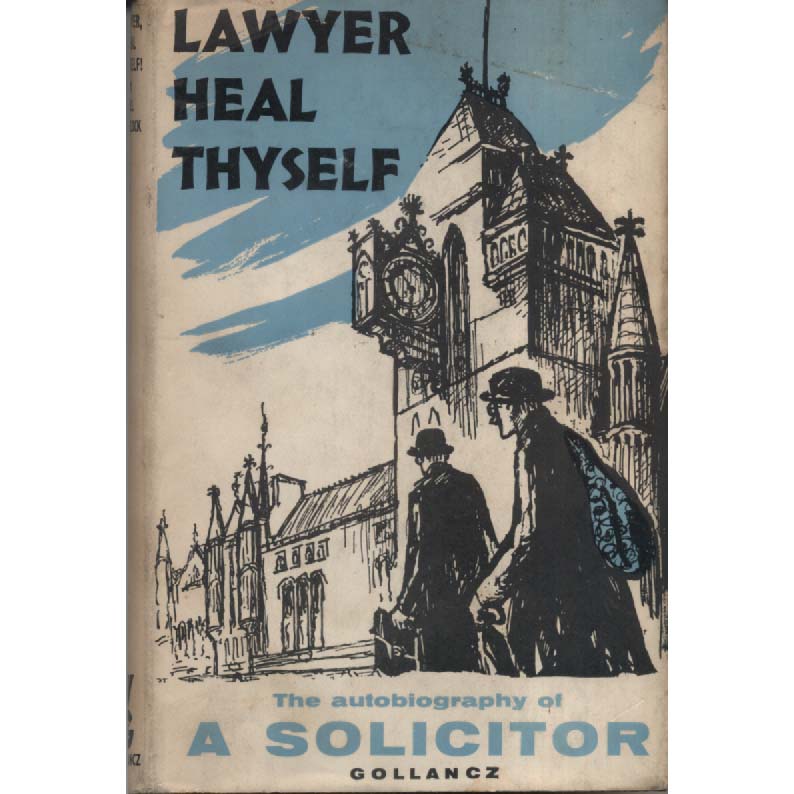
Lawyer Heal Thyself by Bill Mortlock, published in 1959 by Gollancz, serves as an intriguing cultural artifact from a time when the legal profession was undergoing significant scrutiny and transformation. The cover design, typical of the Gollancz imprint, features a striking yet somewhat austere aesthetic that reflects the gravitas often associated with legal discourse. The dominant colours are a muted palette, perhaps suggesting the seriousness of the subject matter, while the typography is bold and straightforward, indicative of mid-20th-century publishing trends. This book carries the weight of its era, encapsulating the post-war societal shifts when professions like law began to see a more critical examination from the public and media. The paperback format adds an element of accessibility, suggesting that Mortlock aimed to reach a wider audience beyond the traditional legal circles.
Bill Mortlock himself remains an enigma in literary history. There is a notable scarcity of detailed biographical information about him, which renders him somewhat obscure in the context of 20th-century literature. What is discernible is that he occupies a niche within publishing history, particularly in legal literature. Mortlock’s work does not appear to have garnered widespread acclaim or recognition, and he does not seem to have left a significant mark on the literary landscape beyond this title. This lack of documentation raises questions about his influence and impact, as well as the extent to which he might have engaged with contemporary legal issues in his writings. The absence of a robust biography invites speculation about his motivations and the broader context of his work.
The publication year, 1959, situates this book in a period of transition for both society and the legal profession. The 1950s in Britain were marked by a burgeoning questioning of authority and traditional structures, stemming from the aftermath of World War II. The legal profession was not immune to this scrutiny; lawyers were increasingly seen as both protectors of the law and as figures of authority that could not be trusted unconditionally. Mortlock's title, Lawyer Heal Thyself, cleverly plays on the notion of self-examination and accountability within the profession. It reflects a growing consciousness about the ethical responsibilities of lawyers, as well as the societal expectations that accompanied their roles. This period was also characterised by a rise in consumer culture, and literature became one of the avenues through which individuals sought to engage with pressing social issues, whether through fiction or non-fiction.
The contents of Lawyer Heal Thyself delve into the complexities of legal practice, possibly addressing themes of integrity, self-reflection, and the inherent contradictions within the legal system. The book's title suggests a focus on the moral dilemmas faced by practitioners, and it may challenge the reader to consider the broader implications of legal practice on society. Mortlock’s exploration of these themes is particularly relevant in a time when public trust in institutions was beginning to wane. The book could serve as both a mirror and a critique of the legal profession, encouraging lawyers to introspectively examine their roles in a rapidly changing world. This self-reflexivity is a hallmark of literature from this period, where authors sought to grapple with the tensions between societal expectations and personal ethics.
The Gollancz publication itself adds an interesting layer to the cultural context of the book. Known for its commitment to high-quality literature, Gollancz was a significant player in the British publishing scene, particularly in the mid-20th century. The publisher often prioritised works that engaged with contemporary issues, making Mortlock’s offering a fitting addition to their catalogue. The imprint is synonymous with books that provoke thought and discussion, so Lawyer Heal Thyself aligns with the publisher's mission even if Mortlock’s individual influence remains ambiguous.
In terms of print culture, the 1950s also saw the rise of mass-market paperbacks, which were becoming increasingly popular among the reading public. This shift made literature more accessible, allowing for a wider range of voices and topics to enter mainstream discourse. Mortlock's choice of the paperback format aligns with this trend, suggesting an intention to reach beyond the confines of academic or legal audiences. The book’s presence in this format indicates a desire to engage with a broader societal conversation about law and ethics, appealing to lay readers who may not have legal training but are nonetheless affected by the legal system.
In conclusion, Lawyer Heal Thyself is not merely a book about law; it is a cultural object steeped in the complexities of its time. Bill Mortlock, despite being a less-documented figure, offers insights into the ethical landscape of the legal profession during a transformative period in British history. The book’s publication in 1959, paired with its Gollancz backing, situates it firmly within the broader cultural currents of post-war Britain, where literature began to question traditional authority and reflect on the individual’s role within societal structures. As a part of Crappy Old Books, it serves as a reminder of the rich tapestry of literary history, encouraging readers to engage with the ethical dilemmas of the past while reflecting on their relevance today.