AI-assisted note, based on the text and a physical inspection of this copy.
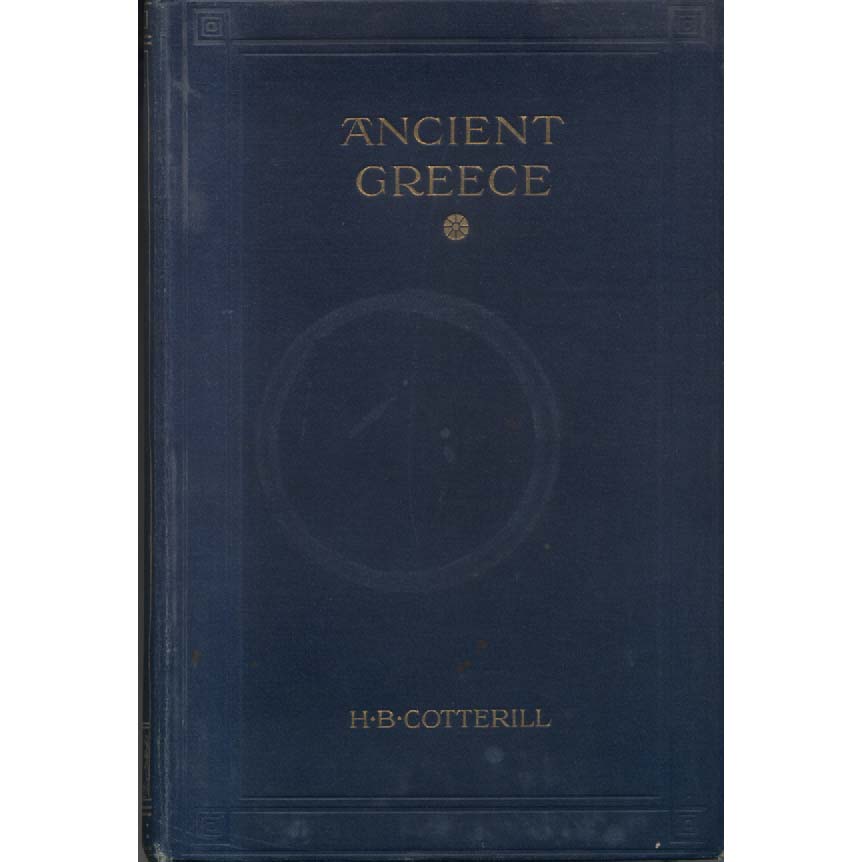
In the realm of historical literature, "Ancient Greece" by HB Cotterill presents itself as a curious artefact from a bygone era. Published in 1913 by Harrap, this book encapsulates a specific moment in the cultural and intellectual history of the early 20th century. The cover design is typical of its time, with an ornate illustration that hints at the grandeur of ancient civilisations. The faded colours and intricate typography evoke a sense of nostalgia, drawing readers into a world that seeks to romanticise the ancient past while also reflecting the prevailing attitudes of its own time.
As a cultural object, "Ancient Greece" is a fascinating study in contrasts. The paperback vibe, with its slightly yellowed pages and brittle spine, speaks to the durability of the subject matter even as the physical form of the book shows signs of age. The print culture of the early 1900s was marked by a burgeoning interest in classical studies, and Cotterill’s work can be seen as part of that larger movement. It likely catered to an audience eager to connect with the historical narratives that shaped Western thought, even if the scholarly rigor of such works is often questioned today.
HB Cotterill appears somewhat obscure within the literary canon, with limited documentation regarding his life and career. There is little information about his other works, and he does not seem to be widely celebrated in literary circles. This absence of record leaves readers speculating about his influence and the depth of his engagement with classical studies. It is possible that Cotterill was merely a product of his time, contributing to the popular discourse around ancient history rather than pushing any boundaries or sparking significant debate within academic circles.
The year 1913 was a significant one for many reasons, not least because it was on the cusp of monumental global changes. The cultural milieu of the era was characterised by a fascination with antiquity, as scholars and the public alike sought to understand the roots of Western civilisation amidst the rapid industrialisation and societal shifts of the time. This was a period when the arts were thriving, and intellectual movements were beginning to question traditional narratives. Cotterill’s exploration of ancient Greece likely reflects the zeitgeist of a society attempting to reconcile its classical heritage with the modern world it was rapidly becoming.
Readers of "Ancient Greece" might find that the text oscillates between being informative and somewhat dated. Cotterill’s prose, while earnest, can feel stilted to contemporary readers who are accustomed to more nuanced interpretations of history. The book tends to present a glorified view of ancient Greek culture, often overlooking the complexities and contradictions inherent in such a vast subject. This simplification may appeal to those looking for a straightforward introduction to the topic, yet it risks alienating readers seeking a more critical examination.
The illustrations within the book do serve to enhance the reading experience, providing visual context to Cotterill’s descriptions. However, these images, much like the text itself, can feel emblematic of early 20th-century interpretations of classical art and architecture, often lacking the depth that modern scholarship would demand. As such, "Ancient Greece" stands as a testament to a particular viewpoint, one that was both a reflection of its time and a precursor to the evolving discourse around ancient history.
In conclusion, "Ancient Greece" by HB Cotterill is an intriguing relic from 1913, encapsulating the era's fascination with antiquity while also revealing the limitations of its scholarly approach. It is a book that may find a niche audience among those interested in the historical context of its publication or who appreciate the aesthetics of early 20th-century print culture. For anyone delving into the complexities of ancient Greece, however, this work serves more as a starting point than a comprehensive guide. Crappy Old Books offers us a glimpse into such curiosities, reminding us that even the most flawed texts can hold value as cultural objects in their own right.