AI-assisted note, based on the text and a physical inspection of this copy.
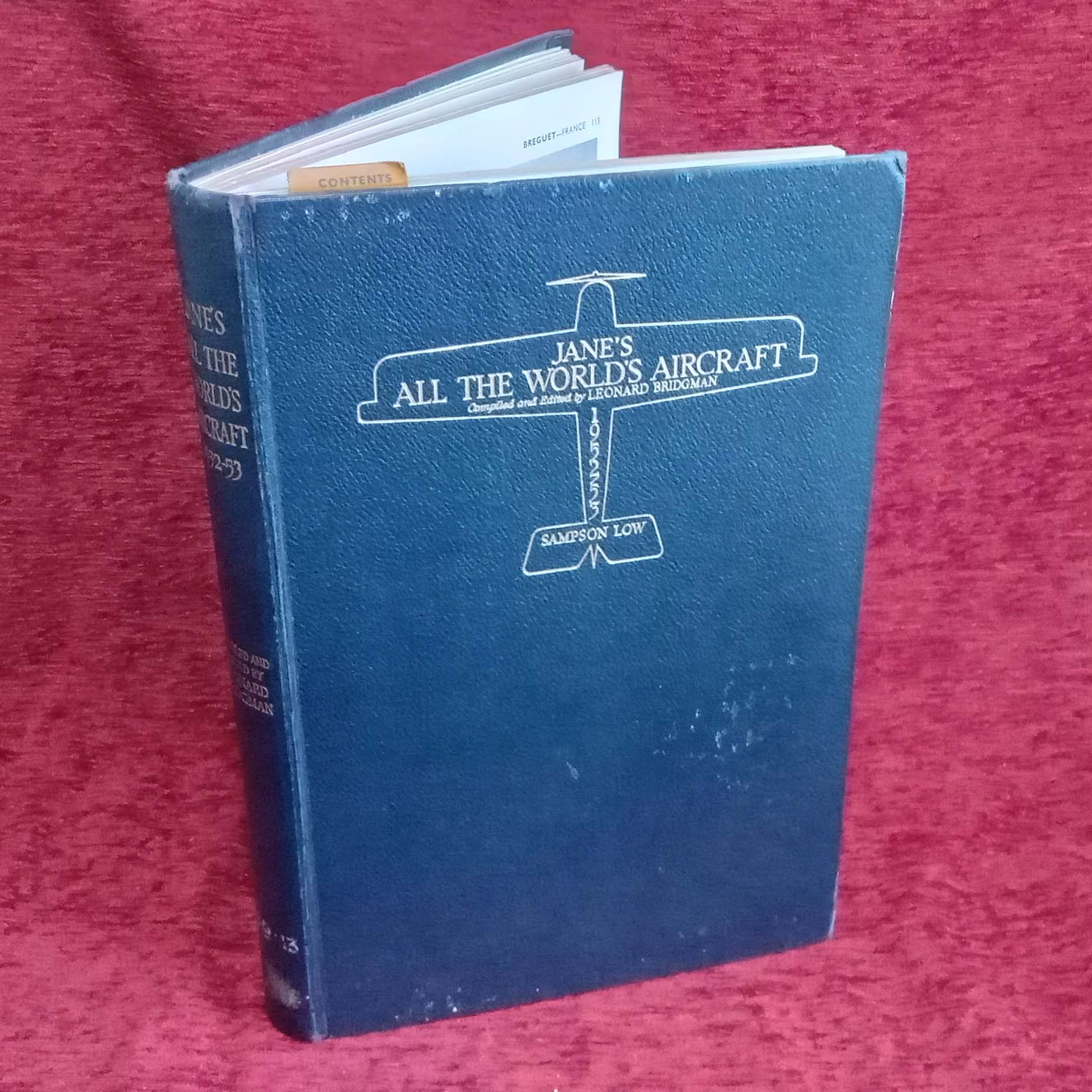
“Janes All the Worlds Aircraft 1952-53” is a remarkable relic of mid-20th century aviation literature, published by Janes in 1953. The book serves not only as a comprehensive reference but also as a cultural artifact reflecting the post-war technological optimism that defined the era. The cover design is a testament to the utilitarian aesthetic of the time, featuring a bold, straightforward layout with the characteristic Janes branding that signifies authority and thoroughness in military and civil aviation. The book's matte finish, typical of paperback publications in the early 1950s, suggests a durable yet accessible product for aviation enthusiasts and professionals alike. The overall vibe is very much that of a serious publication aiming to inform rather than entertain, aligning with the utilitarian nature of technical manuals of the period.
The contents of the book present a meticulous compilation of aircraft specifications, design features, and operational capabilities from various manufacturers around the world. This makes it an essential volume for anyone interested in the evolution of aviation technology during a pivotal time in history. The layout is methodical, with sections dedicated to different types of aircraft, making it straightforward for readers to locate the information they seek. The combination of technical data, photographs, and diagrams embodies the spirit of the age, capturing the rapid advancements in aeronautics that occurred in the years following World War II.
The author, credited simply as Janes, refers to the esteemed Janes Information Group, which has been a cornerstone of aviation and military reference publishing since its inception. The group has a long history of providing exhaustive and reliable information, establishing itself as a trusted source for professionals in the fields of defence and aviation. The anonymity of the author reflects a corporate identity rather than an individual’s artistic vision, which is common in technical publications where the focus is on the collective expertise rather than on a singular creative voice. While Janes as an entity is well-regarded, the specifics about its founding members or early contributors are less documented, leaving a somewhat enigmatic aura surrounding the origins of this influential publishing house.
Published in 1953, this volume arrived during a significant period of technological transition and geopolitical change. The early 1950s were marked by the Cold War, which spurred an intense arms race and a corresponding boom in aerospace technology. Nations were investing heavily in aircraft development for both military and civilian purposes, and Janes’ publication served as a crucial resource for professionals navigating this rapidly evolving landscape. The sense of urgency and competition in the air was palpable, and the detailed information provided in this book not only reflects the advancements in aircraft design but also the broader societal preoccupation with air power and its implications for national security.
The cultural significance of “Janes All the Worlds Aircraft 1952-53” cannot be overstated. It stands as a reflection of a time when aviation was becoming a symbol of modernity and progress. The book encapsulates the optimism of the post-war environment, where the boundaries of possibility were being pushed by technological innovation. It also highlights the growing importance of air travel in everyday life, as commercial aviation began to take shape as a viable mode of transportation for the masses. The meticulous attention to detail and the authoritative tone resonate with a sense of seriousness that characterises the technical literature of the time.
In conclusion, “Janes All the Worlds Aircraft 1952-53” is more than just a reference book; it is a window into the past, capturing a pivotal moment in aviation history. The combination of its authoritative compilation, the aura surrounding the Janes brand, and its contextual relevance to the post-war cultural landscape makes it a noteworthy item for collectors and historians alike. Crappy Old Books invites readers to appreciate such works not only for their content but also for the cultural contexts that birthed them, reminding us of the stories that lie within the pages of seemingly utilitarian texts.